Archives

Fly Guy

Fly Guy has come a long way. When this children’s character was first introduced in the book, Hi! Fly Guy,  he was in the fiction genre. He became so popular for the younger readers that there are currently 15 books in this series. But, he has been branching out into nonfiction and is now going on grand adventures! This excites me because readers that are in early chapter books will enjoy these entertaining books while learning facts about the subject.

These books are called Fly Guy Presents and have a variety of topics ranging from firefighters, to bats, to space. Scholastic has a website that you can see all of the titles of the books, including the fiction and nonfiction titles. There is also a little bit about the author and illustrator, Tedd Arnold as well as some activities that compliment the books . CLICK HERE to go to the website.

As I had mentioned earlier, Fly Guy has been on some amazing journeys and here are some pictures of him traveling around in space. Notice that there is vocabulary, pronunciation, and actual photographs of the subject being discussed. I wish I could take a trip with him!


Logos Press

imgres.jpg

Logos Press is a classical curriculum publisher that offers a wide variety of materials and online classes. I have taught the NOEO science in the past and the students enjoyed the trade books and experiments.

“NOEO Science provides a quality homeschool science curriculum for elementary students, including award-winning experiment kits, fascinating books, and easy-to-use instructor’s guides. Many homeschooling parents do not have a science background and may feel a bit intimidated about teaching science at home, especially when it comes to the experiments!”  (quote from NOEO website)

NOEO specializes in Chemistry, Biology, and Physics for grades 1-8 and all books and experiment kits are included in the price. NOEO kits are terrific since everything is already assembled for you and you aren’t running to the grocery the night before trying frantically to locate unflavored gelatin or glycerine.

There are also online classes available for high school in the following areas: theology, history, literature, integrated humanities, math, science, languages and electives. The classes look interesting and would prepare your student for college.

If you are interested in learning more about Logos Press CLICK HERE.


Student News Daily

phone-with-news-in-hand-and-coffee-SL

A tutee’s (one who is being tutored) mom sent me this website that I think will be beneficial to teaching history. Student Daily News is a website that posts current event articles from around the world.

StudentNewsDaily.com is a non-profit current events website for high school students.Our goal is to build students’ knowledge of current events and strengthen their critical thinking skills.This is done by providing comprehension and critical thinking questions along with published news articles and other current events items from various news organizations.We provide resources that will enable students to become informed viewers and readers of the news.

There are several categories that constitute the site and you can either check the website at your convenience or sign up and have the articles delivered to your email box.

There is a Daily News article

Daily Best of the Web

World Events

Media Bias

Editorials

News Quizzes

Political Cartoons

I love the features at the end of the articles.  There is  a quiz about the article and background for your student to have some knowledge in order to read the article and explain anything that might be needed to understand what is being read.

Here is the link to check it out. CLICK HERE


Cat in the Hat Learning Library

9780375858680

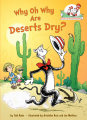
Are you looking for a fun series that your beginning readers would enjoy? Check out Cat in the Hat, a collection of nonfiction books that are interesting and also help young readers since they are set to rhyme.

Elections, nocturnal animals, the Ice Age, inventors, nutrition, and space are just a few of the topics about which your child can read.  The Cat in the Hat website has printable worksheets, activities, and lesson plans too. You can use these are part of your science and social studies curriculum choices if you wish.

Do you have a student who is not fluent with their reading or one who is just beginning to read and would enjoy audio books? There is a section to go to purchase these resources. So, go! Explore and discover all the places you and your child will go. ( Sorry, I couldn’t help it; some words are taken from one of Dr. Seuss’ books.)

To begin your adventure CLICK HERE

Gardening Do’s & Don’ts

Growing flowers can be so much fun as you watch the seeds begin peeking out of the soil and begin growing. I have learned a few things as I have gardened with my boys and hopefully can pass on some experiences so that you can have a successful garden.

Do’s

  • Read the growing instructions before purchasing your seeds. See if the plants require sun or shade or a mix.
  • Observe the plot of land where you are going to plant your flowers to see how much sun it receives in a day. If you are planning on growing something like sunflowers, be sure it has at least 6 hours of sun per day.
  • Select seeds that can be directly sown into the ground if you are not feeling adventurous in growing flowers from seed. Cosmos, zinnias, and poppies are great to try; I have had great success with all of these. Sunflowers come up readily in my garden from my bird feeders so I think they would work nicely too.
  •  If you would like to try and grow flowers from seed choose flowers that are easy to grow. It is disappointing to purchase seeds and then  find out that they require extra care than you had intended to give them.
  • Some plants are easy to start indoors and grow rather quickly such as marigolds and sunflowers. These are great for beginner gardeners as they are hardy and give you a thrill of seeing the plants flourish.
  • If beginning your plants indoors, begin 6-8 weeks before danger of frost has passed (May 15 here in SW Ohio). It is also okay to begin later, but this is the earliest you want to begin. Use seed starter soil and containers or peat pots so that you can transfer them outside after danger of frost is past.  I decided to grow my seeds in empty egg shells this year. I just thought it was a cheap way to use what I have on hand and perhaps the calcium from the egg would help?? The seed packet in the picture below is the Black Krim tomato, but the same principle applies for flowers. Follow the directions to plant and moisten the soil with a spray bottle.
  • Continue to keep your seeds’ soil moist and keep them in a warm, sunny place so that they can germinate.
  • Plant your flowers once they have two (or more) sets of true leaves.
  • Plant on a cloudy day if possible. Water seedlings in well, but don’t overdo it. Add a small amount of fertilizer  to give them a boost. After all, you want to give your flowers all the help needed to grow strong and healthy.

Don’ts

  • Don’t forget to plan where you are going to plants your flowers. Be sure you have the room for everything you want to grow.
  •  Resist being skimpy when sowing the seeds. Use the whole package if possible. Not every one of them will germinate and it is easier to thin out the plants than not have enough. If you are growing plants indoors, place two or three seeds in your peat pots or containers.
  • Avoid overwatering your seeds/seedlings or they will rot.
  • Steer clear of crowding your seedlings once they have begun to grow. Thin plants according to the directions once they have a set of true leaves or if you see them competing with the other plants. Choose the healthiest looking plant to keep.
  • Stay away from the mistake  I made in forgetting to mark where you have planted your seeds! I pulled up the seedlings thinking they were weeds. 😦
  • Plants begin to get “leggy” if they do not have enough sun because they are stretching to get every bit of those rays they can. Keep your seedlings in a sunny place that receives 6 or more hours of sunlight. If you do not have a spot that receives sunlight like that, place the seedlings on a tray so you can move them.
  • Hold off from directly planting your seedlings into the ground when they are ready. You want to first give them 5-7 days to “harden” outdoors. Pick a couple of warm days and place the seedlings in the shade. The plants need to become acclimated to the outdoors before you plant them in the ground.

IMG_2467

Dale built a cold frame (picture above)  for me to harden off plants a couple of years after I began growing plants from seeds. He saw that this hobby was becoming an annual event and thought this would be helpful. It is just plywood on the sides, heavy plastic and a garden stake to be used to close the cover. It has been a big help, but you can just keep them in shade as I did for the first couple of years. Dale just notched the pieces of plywood so that it can be easily taken apart and stored. Here are directions for a different type of cold frame if you would like to build one. Cold Frame 

IMG_2470

Hardening seedlings in cold frame

  • Lastly, don’t forget to pick your flowers and take them indoors to be enjoyed in your home and with others.

Happy gardening! Please feel free to post pictures of your gardening experiences;  I’d love to see them!