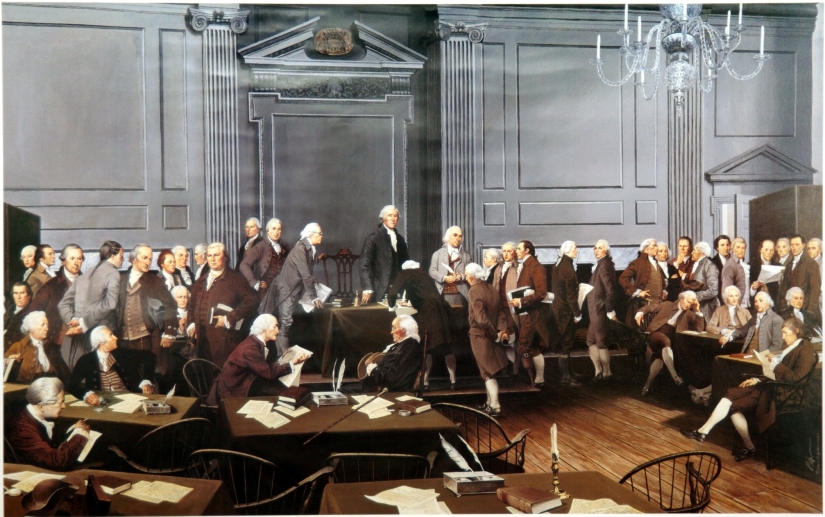
Hillsdale College is offering a FREE online American History class that will be on Monday,February 25.The course title is History 102: American Heritage. You can click on the link below to find out more about the course and get registered. This would be great for either you or your high school student to watch.
Archives
Unit Studies: Ideas and Benefits
I am a member of an egroup that is for homeschool families here in Cincinnati. A homeschool mom was asking about ideas for unit studies and here is my response to her.
A great place for unit studies is the internet. You can begin with a lapbook. There are wonderful topics of study on homeschool share that can be downloaded for free. They are literature-based and you can use as much or as little of the lapbook as you like. My boys really enjoyed them and I did too. I would call these lapbooks “unit studies” as that applies loosely to the idea of studying topics as a whole. A unit can vary in length from a day to a year.I have a few ideas to help get your creative juices flowing in terms of unit studies…
My oldest son is a wonderful writer and artist. He enjoyed the freedom of being able to write what he wanted in lapbooks instead of being told what to write. He could draw things as well. My youngest enjoyed the fact that there wasn’t a lot of space to write. He wasn’t intimidated by a scary “whole page” that I, on many occasions, put in front of him! He didn’t like to actually “write” so he would dictate facts or ideas sometimes to me, which I thought was fine since the idea was to get him to think and tell me what he knew. I found that when he had to write with a pencil or pen he’d write as little as possible. I am glad my oldest son enjoyed writing- that was a huge blessing to have one who did! He is still a wonderful writer, maybe unit studies help foster that?
I also encouraged drawing and thinking about what I read aloud to the guys by giving them a binder filled with blank paper. As I read to them the boys could draw what they thought was important, such as a battle, an event, a science concept, etc. You can have pictures to help your son if he can’t imagine anything to draw or can’t “picture” it. He can also write a poem, a short summary, or a list if he doesn’t like to draw. You might be able to find coloring sheets to go with the topic being studied or he could create a model or a diorama.I still have my oldest son’s history notebook and I showed it to him the other day (11 years later). He actually remembered drawing some of the pictures and could tell me a little about the stories. He said, “I thought I was really quite good when I did these.” Of course I told him he was and still is a good artist! 🙂 Quite amazing that he was able to recall some of those events when he saw those pictures as I don’t think I could dredge up much of what I had read to him!
One time the boys and I studied Native Americans and they each made a teepee in our small living room. It was so fun as I watched both of them “tell stories” through drawings like the Native Americans originally did on their portable homes. Ian drew scenes of baseball, hunting dragons and buffalo and deer (quite the mix!) and Malcolm drew trucks and Indians with bows and arrows shooting at buffalo (also quite the mix of modern and the past).It was great watching them help each other set up and sit inside of their creations. I used washable markers, sheets, and wooden poles that Dale had purchased from the hardware store. lol We did it another time because it was such a big hit and my brother-in-law gave me Tyvek. That was virtually indestructible! I let them wear “war paint” and they had a blast with that too.
You can incorporate any hands-on project into what you are studying. That was the beauty of doing units. I had one extremely bright, creative, slightly mischievous son and another son who couldn’t sit still for more than a few minutes and joined right in on the mischief or created his own special scenarios. This provided a great outlet for both of my very different learner-type sons.
If you want unit ideas KONOS has more than you can imagine. So, if you use the older editions just pick and choose what interests you. The old books have a million projects and if you happen to use those, don’t try to do everything. It would take you years to get through it! It is a fantastic resource.I checked out her website and she has a lot of options to choose from do-it-yourself to it’s already done for you. I see it says semester long projects, but I bet they could be stretched out to a year as they are a bit pricey.
My advice is to start out with one or two units and ask your son what he’d like to do. I always found the enthusiasm level went up when the unit was chosen by one of the guys. You can set parameters if you want to direct what is being studied. You can also do a google search for free unit studies and you will be able to find quite a few. I always used a traditional math curriculum in conjunction with the units, but incorporated nearly all of the other subjects into the unit.
I am really glad we did unit studies as it gave confidence to my sons and provided a creative outlet . Unit studies also gave me “permission” to do some things that I think I otherwise would have said no to (like the teepee), thinking that doing something like that wasn’t “school” because it is, it just looks a bit different. 🙂
Kindergarten Readiness: Social Studies, Math, Science, Art and Music Part III
This is a series on readiness skills and resources for preschoolers taking the next “Big Step” to kindergarten.
This week I want to look at mathematic concepts and science. Behind each skill is a website that has worksheets to print or online games to play. This is the last in the series. 🙂
Social Studies
- Recognizes basic traditions such as birthdays
- Understands that people live in different parts of the worlds and have different customs and traditions
- Explores simple maps and visual representations of neighborhoods or communities (Making a map)
Mathematics Concepts
- Compares the size of groups of objects using language such as “more,” “less” and “same as” (kidzone website is a great resource!)
- Arranges objects in size order (big to small, or small to big) (havefunteaching has answer keys for self checking if you want to set up a work station)
- Uses comparison words, like “bigger,” “smaller,” “heavier,” etc.
- Understands concepts of none, some and all and more than and less than
- Identifies and draws a square, circle and triangle (practice worksheets for shapes)
- Correctly counts four to ten objects (tlsbooks has a large variety of worksheets)
- Knows that the final number counted represents the total number of objects in a set
- Recognizes some numbers, 1 – 10 (FREE Number sense worksheets)
- Can distinguish numbers from letters, and understands that numbers relate to quantity
- Understands the effects of addition and subtraction
Science
- Shows interest and asks questions about objects and events observed in their environment (create a scavenger hunt list)
- Notices common properties and differences among objects and materials
- Knows some facts about common plants and animals, such as what they eat and baby names (Baby animal names online game)
- Recognizes some objects in the sky such as the sun, moon, clouds and lightning(Check out this adorable solar system lapbook)
Creative Arts & Music
- Recognizes and names basic colors (Colors and Shapes matching cards)
- Draws recognizable shapes and simple objects (see link above or Shapes and Colors worksheet)
- Tells a story with pictures
- Moves to a beat
- Explores with common musical instruments
- Enjoys improvising or copying musical patterns
Kindergarten Readiness: Reading and Writing Skills Part II
Last week I looked at Motor, Reasoning and Language Skills for preschoolers taking the “Big Step” toward kindergarten. This week these are the skills for Reading and Writing. The above picture is from my niece, isn’t it sweet? 🙂
Reading Skills
- Looks at books or pictures on their own
- Pretends to read books by reading the pictures
- Tries to read in everyday situations (signs, labels, etc.)
- Recognizes rhyming words (worksheet 1, worksheet 2, more rhyming worksheets! A list of ending sounds to rhyme with your scholar)
- Blends sounds into words
- Recognizes some common words in print (flashcards Use flashcards for a matching game, online sight words game)
- Recognizes many uppercase and lowercase letters (worksheets, online alphabet games)
- Recognizes some letter sounds (A lot of sound activities pinned for you! Click on the website under the picture you are interested in seeing.)
- Relates stories to personal experiences
- Puts events of a story in order (beginning, middle, end) Idea: Pick a favorite book and read aloud to your child. Ask them to tell you what happened at the beginning, in the middle of the story and the end. If this is overwhelming to your child, start with identifying the beginning and increasing it to the telling about the end. Do what happened in the middle after both of the others have been mastered.
Writing Skills
- Tries to write words (practice sheets, more practice sheets)
- Asks you to write words or notes to others
- Attempts to write own name and recognizes their own name in print Idea: Provide paper and stickers for an extra incentive and fun way to display their name. Create a place to display their work such as the refrigerator or a cork board.
Kindergarten Readiness: Working on Skills in Preschool Part I
“How do I know if my child is ready for kindergarten?” moms ask me when trying to determine when they should start educating their child. While I am no expert, I do have a checklist of skills this week regarding motor, reasoning, language, reading, and writing skills to help you. (www.leapfrog.com) I have also listed resources, both worksheets and online games if you are working with your preschooler to prepare them for the “Big Step”. There are so many terrific links to check out and worksheets to download here for your student to enjoy and have fun with learning.
Motor Skills
- Can put puzzles together (for purchase, online puzzles)
- Cuts with scissors (printable worksheets)
- Holds pencils and crayons correctly “Why does it matter?” It can help with comfort, legibility, fluidity, brain development, and less stress on your joints. (Here’s a video you can watch to help with correctly holding a pencil. Do you have a left-handed student? This picture will help. left hand grip)
- Builds with blocks (wooden, duplos)
- Tries to tie own shoes (video)
- Enjoys outdoor activities, like running, jumping and climbing In other words, your child is physically active.
Reasoning Skills
- Matches or groups objects according to size, shape or color (Check out these worksheets: tangrams, comparing shapes, coloring shapes )
- Groups objects that are the same and can describe how they are the same or different (online game)
- Understands concepts of in/out, under/over, on/off, front/back, etc. (Directional worksheets)
- Shows an understanding of the passing of time, including concepts of before and after, and today, yesterday and tomorrow
Language Skills
- Talks in sentences
- Follows one- and two-step oral directions (A fun activity that incorporates following directions, shapes, and movement, free worksheets)
- Uses sentences that include two or more ideas
- Uses descriptive language
- Knows by heart and recites some common nursery rhymes and songs (A website of common and not-so-common nursery rhymes!)
- Pretends, creates and makes up songs or stories
- Tells or retells stories and/or everyday experiences (Write down stories your little one dictates to you. Make into a book and have them illustrate it.)
- Asks questions and expresses curiosity
- Expresses ideas so that others can understand
Next week I will have Reading and Writing Skills and resources for you. Have a great week!
~Lisa


