Archives

Filing School Papers

f84c6308b877dacf70ce1522c1dc786bSchool has begun and I am already feeling the crush of paperwork bearing down upon me! Am I the only one  feeling this way?  Ugh! Are you feeling the crush too? How can you document your school year to be able to show me (an Ohio certified assessor) how much your student accomplished without feeling horrible about the lack of organization?

Now is the time to begin so that you are not overwhelmed in the spring by all of the paperwork that has been accumulating. You can organize papers so that all you have to do is contact me to set up your portfolio review. No wading through papers and workbooks, deciding on what to take. I am giving you a list of ideas to help organize and discard papers so that your house is not overrun by math papers, science labs, maps, and workbook pages.  Pick and choose from the items listed, but do not do every one of them! 🙂 Hopefully, one of these will work for you as your child finishes their school work.

Create a binder for each subject to put a sample in it. This can be done every Friday, or it can be collected once a month. If you are collecting samples monthly, just pick the same time each month; ideally, the beginning or end.

Use folders to place a work sample of each subject. Using different colors for subjects will help you to have an easy filing system. For instance, a yellow folder for language arts, a red folder for math, etc., that you can quickly drop a sample into the appropriate subject folder. At the end of the year you can grab the folders and put them in a cute school bag to take with you.

Accordion pleated file systems for each of your children keeps everything organized in one convenient location. You can label the tabs with subjects for filing. An assessor does not need to see every scrap of paper and doodle that your scholar has done. Trust yourself and choose paperwork and samples that represent the work being completed.
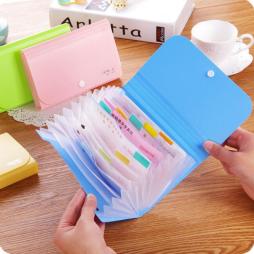
a6-multi-layer-font-b-file-b-font-folder-font-b-accordion-b-font-paper-storage

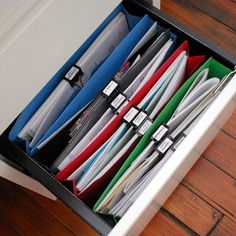
Hanging folders with labeled tabs of the subjects are an efficient and out-of- sight way to organize paperwork. I have a four drawer filing cabinet that I recently acquired and I wonder how I have lived without it for all of these years!

Binder Clips Gather each month’s samples of work and  clip them according to the subject. Place in a folder and label the month or the subject, whatever is best for you.

Systems that I have tried and do not work well in my opinion are:

baskets– everything falls to the bottom and nothing is organized. I just have to go through the heap at a later time!

rectangular plastic containers or filing boxes- the same as mentioned above. I just have more time to keep adding papers to the jumble that is collecting and multiplying. Now, if you actually use the file box and put folders in it, then it is a thing of beauty (sigh).

cloth bags– another collection sight that I never look at until I can’t find something. In fact, the other day I was trying to find some files that I thought were in my filing cabinet and I stumbled upon this bag that was filled to the brim with who-knows- what. I felt that I should look into it as it had been sitting near a bookshelf for several months. I was pleasantly surprised and quite relieved that is was the files for which I was looking! Needless to say, the cloth bag was a terrible filing system.

What, pray tell, do I keep when gathering samples?  I kept one page of a concept that had been introduced or mastered. If introduced, I added a paper later that showed progress (or not 😦 ) and then mastery or  continued help. I did not always follow through with the concept, but I tried to as much as possible. Allow your child to select samples to showcase too. Many children are interested in what I think of their work and are excited to show me things they have done. It can also help them to put forth their best and take pride in their work.

Throughout the year if my student had a difficult time with a concept, I would pick out that paper and write on a post-it note what was the difficulty. This helped me see progress that is made throughout the year or something I needed to evaluate or ask for help to have my student understand the concept.

If your student is doing schoolwork online, then see if there is a progress report, quiz or test that can be printed off to include in your files. If not, take pictures throughout the year of screenshots of work. You do not necessarily need to print off the pictures, but put them in a file that you back up regularly.

If you are using workbooks and don’t want to tear out papers until the end of the year you can use those cool skinny post-it note flags.  You can mark the pages throughout the year that  you want to take to your portfolio review appointment. It will take just a few minutes in the spring to remove the pages.

If you are going on field trips throughout the year, take pictures! I love seeing all of the places homeschool families visit. You can send pictures to me prior to your appointment or bring your camera along. One homeschool family makes a yearbook that I enjoy reviewing.

Do you have a project that is too big or a map or timeline you have created that is on the wall? You can snap a photograph of that too or create a video! No need to bring it with you. I understand the amount of time and hard work that has gone into projects.

Please feel free to leave a comment if you have questions. I will be happy to address them.

Have a great week!

~Lisa


5 Ideas for First Weeks of School

4436827429_b293d25f1d_z

I can hardly believe how time is flying by and school has begun! Maybe you are just beginning or are waiting to take the plunge next week. Here are some things to consider when beginning your year:

1.Start with an abbreviated schedule. For your first week or two start with reading and math. Add history and science and your other subjects the next week or two.

 2. Review what you learned last year if you have students who are in first grade or older. You can review ideas and concepts with your preschoolers and kindergartners such as colors and numbers.

3. Keep lessons short. The first week or so is hard for everyone to focus, including you, homeschool teacher. 🙂 You can quickly add more time as everyone gets into the swing of things.

4. Read a book aloud. This is a great way to capture the attention of your students, add reading comprehension and have some great bonding time. This can be done in the morning or after lunch.

5. Give lots of praise and positive reinforcement when your student has done a good job. A word of encouragement foes a long way!

Speaking of, you are doing a great job! Have a great week of teaching. 🙂

~Lisa


Planning

calendarAh, yes! Planning is something that we need to do when homeschooling so that we can accomplish what we subjects we have determined to study. Some people thrive at this while others dread it. Depending upon what the task is, I can look forward to planning or I can dread it and stop dead in my tracks. So, how do I help myself gain momentum and complete the task of planning?

) I deliberately choose things I am almost certain to complete in order to gain the mental fortitude I need to tackle the harder things. Let me give you some examples. My plan today consists of things that begin with P. No, I am usually not this clever!

  • Panera (I am going to meet a gal to pick up a Mystery of History book that I am purchasing from her. I WILL NOT go in the store and pick up that free birthday treat that is awaiting me! I’ll see how that goes!)
  • Portfolios– I have several families to review their work.
  • Portfolio Notes I have to schedule time to write notes for the families.
  • Plan meals (only a week at a time for my small family)
  • Purchase groceries
  • Prepare dinner

I try to estimate how much time each of these is need in order to be completed and usually add one more thing to do on my list for good measure. lol

Panera– 30 minutes

Portfolio reviews– 3 hours

Portfolio Notes- 1.5 hours

Plan meals- 30 minutes

Purchase groceries- 1 hour

Place groceries in their proper places (Sorry, I had to an alliteration!) 15 minutes

Prepare dinner- 15 minutes

TOTAL— 6.5 hours That’s a good day right there! 🙂

The most difficult task on my list is the portfolio notes because I like to think over what I am going to say an review notes one more time. It also takes me a terribly long time to type. But, I guess that is better than hand writing them (maybe… lol).

Make a list of 5 things you would like to get completed today and write them down. Remember, keep them manageable. Check at the end of the day to see how well you did. Of course, if you have a large project, just do that for the day. Break it up into 5 smaller tasks and I am sure you will feel that you can cross that off your list. If you don’t get it all done, carry it over to the next day and do not feel guilty!

Have a great week!

~ Lisa


Online Study Helps

images-1

Did you know that if you wish for something to go from short term memory to long term memory that you need to practice, practice, practice? Think back to when you first started to learn something, whether that was learning to tie your shoes, type, or learn a skill such as cooking, it took repeated times before it became “automatic”.

I remember the first homemade spaghetti dinner I made for my husband included Italian breadsticks. I hadn’t worked with yeast before so I didn’t know what the bread should look like when it was ready. I followed the directions and let it “rise”. After the prescribed time I took the dough out of the bowl, and began making the bread sticks. For some reason the dough still looked to be the same height as when I had originally begun. As I put them in the oven I thought maybe they would rise a little more from the heat. Well…when they came out of the oven they looked the same as before they went in, but since I was a new baker I thought that was what they were supposed to do. I proudly laid the breadsticks on my new husband’s plate along with a plate of spaghetti and sat down to eat my spaghetti dinner too. We each took a bit of the breadstick and about broke our teeth! They should have been called “breaksticks” instead! Of course, I had to throw the entire batch away, but I did learn a lesson. I would have to practice making the dough again and again to get them “just right”.

That pathetic and funny story is a reminder to me of teaching a new concept to my students. When my students first come to my classroom they don’t know all the countries and capitals of the world and where they are located. But, they can learn them so when I say, “Cuba”, they will know it is off the eastern coast of the United States and its capital is Havana. Through repetition, facts and processes can go from ignorance (as in my breaksticks), to knowledge, to automatically remembering (automaticity).

If you are like me, your eyes gloss over and you don’t think you can take looking at the 8×8 flashcard  with your son or daughter one-more-time!  I am here to offer help (and relief) for your children to practice those facts that are foundational for learning through online games or . I am including websites for older students as well since they are in need of these helps as well.

Elementary/ Junior High

sheppardsoftware is a website that I refer many parents to because it has fun games that provide drill.

Fun Brain has reading and math games that your child can play and for a reward on a job well done can play other games afterwards

ABCya! has games from preschool through fifth grade that include phonics, reading, math, logic, social studies and  keyboarding, just to name a few!

Studyladder is interesting because it provides online lessons and worksheets as well as drill. Areas of study are: math; English; science, health, safety; and language.

Junior High/ Senior High

quizlet is a great tool to use to create flashcards, but it also has a wonderful feature to be able to use a variety of ways to review. You can even have your student take a quiz that automatically grades it. You can record this for a grade if you choose.

studystack is a flashcard creator, but you can also use other cards that have been created. There are many subjects to choose from and several ways to play. Some of those ways are hangman, crossword puzzles and letter scramble.

studyblue (high school/ college) can be used to create flashcards or search for sets other people have created. They are ways to share flashcards with others and there is a free version, as well as two pay versions.


4 End of the School Year Details

images-1

Many of you will be finishing homeschooling in the next few weeks. Let me give you three cheers and a high five! Congratulations on accomplishing completing a year of teaching. As you wrap up your year, here are four details to remember:

  • Celebrate the accomplishments of your school year. You did it! You taught your child something new this year that they did not know previously. It could have been addition or subtraction facts, how to read, or the discipline of finishing within a deadline.  Head to the nearest ice cream parlor to treat yourself and your student on a job well done.
  • Check to see what the requirements are for you to continue homeschooling. In Ohio you either need to have your child take a nationally normed test or have a licensed teacher, such as myself, review your student’s school work.
  • Evaluate what worked this year, what needs to be changed. Did you have a successful school year with the spelling program that you used? Then, do not change it! If there were struggles, was it because of the curriculum or is there a possibility of something else occurring, such as a learning difficulty?
  • Take a break! You and your child deserve a break after a long school year. Take some time off to replenish and renew yourselves. If you are concerned about losing ground on reading or math skills, then just do a little bit of reading and reviewing math facts  each week.

Have a great week!

~Lisa