Archives

Baking with Children

Baking with your child is a fun way to incorporate several subjects and also have a yummy reward for your hard work! I’d say this is a win-win situation for everyone. 🙂

Reading– Children are reading labels and directions in order to prepare the baked goods.

Following directions– What a terrific way for children to practice following directions! I remember vividly the first time I made brownies without my mom’s help. I was so excited to make them because I love chocolate and we didn’t have dessert all that often. I couldn’t wait to smell them baking and was anticipating eating the warm and delicious dessert with a glass of cold milk. Well…I didn’t read the directions carefully and instead of using 1/4 cup of water, I added 1-1/4 cup! I was devastated that I had to throw the batch away, but it did teach me a valuable lesson early on to read the directions twice and carefully before beginning!

Math– part of learning fractions is being able to understand the concept of a “part” of something. This can be easily demonstrated by showing your baker the measuring spoons where you can see that 1 teaspoon is a fraction of a tablespoon. You can also teach adding fractions by doubling a recipe. It can be difficult for a child to grasp that 1/4 +1/4 equals 1/2, but when able to have a hands-on experience, can help those who struggle with this concept.

Science– Chemistry can be seen in action as children combine ingredients in order to get baked goods to rise. I have a book that I want to share with you that explains in simple terms to children what is taking place when leavening agents are added to recipes. Muffins and breads are yummy ways of seeing the results of adding baking soda and/or baking powder to create them.

I bet your mouth is watering thinking of a yummy dessert. Plan for some fun in your school day; create great memories, and yummy treats. You can always make extra and take them to a neighbor to brighten their day.

Happy baking; here is a book to help you with young bakers. Pictures are below for you to have an idea of what it looks like. Enjoy!

~Lisa


Sketchnotes

09136a12aac0396f5235393afba8fa5c

Doodling, drawing on the paper, writing words in the margins, do you have a child like that? Do you think that this is a sign they are not paying attention? I just read that this is actually a terrific way or remembering. It involves more senses and interaction with what is being said or read and it has a name! Sketchnotes.

Sketchnotes are particularly beneficial to someone who has ADD or a hard time paying attention. It is the idea you are capturing key concepts and big ideas and recording them visually. Some benefits to this type of notetaking are:

  • The spontaneous marks make you think about the subject.
  • It engages all learning modalities: visual, auditory, reading and writing, and thinking.

One of my sons always had a hard time focusing in class with lectures or in church when it came to sermons. He said that making doodles on his paper helped keep him engaged. It looks like now the science backs up what he already knew to be true. It’s great that we can homeschool and allow our children to find what works for them.

If you are intrigued by this, I have a great website by an artist that gives you exercises to practice this technique. I am not an artists, but based upon the advice he gives and the drawings he has made available on his blog, I think I can draw these with some practice. Okay, a lot of practice. 🙂 Click here to learn more ->SKETCHNOTES


Cat in the Hat Learning Library

9780375858680

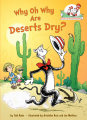
Are you looking for a fun series that your beginning readers would enjoy? Check out Cat in the Hat, a collection of nonfiction books that are interesting and also help young readers since they are set to rhyme.

Elections, nocturnal animals, the Ice Age, inventors, nutrition, and space are just a few of the topics about which your child can read.  The Cat in the Hat website has printable worksheets, activities, and lesson plans too. You can use these are part of your science and social studies curriculum choices if you wish.

Do you have a student who is not fluent with their reading or one who is just beginning to read and would enjoy audio books? There is a section to go to purchase these resources. So, go! Explore and discover all the places you and your child will go. ( Sorry, I couldn’t help it; some words are taken from one of Dr. Seuss’ books.)

To begin your adventure CLICK HERE

Poetry Reading

519mo1yUG9L._SX320_BO1,204,203,200_

I have a confession to make; I am not generally a fan of poetry. I don’t know why, but maybe it is because I am not a woman of few words. lol Poetry is an art in which the economy of words reigns supreme and ideas are not generally stated, but have to be correlated to other ideas in order for you to get the meaning. I think to myself, “Just come out and say what you mean!” But, enough of my issues and let me pass on to you a poetry book that I do like.

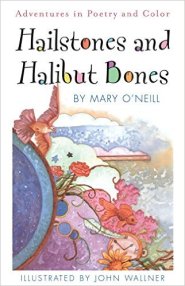
Halibut Bones and Hailstones: Adventures in Poetry and Color was written in 1961 and is comprised of 12 poems of color.  The way that Mary O’Neill describes each color is something that I “get.” Here is the poem about yellow.

“Yellow is the color of the sun
The feeling of fun
A duck’s bill
A canary bird
And a daffodil
Yellow’s sweet corn
Ripe oats
Humming birds’little throats
Summer squash and Chinese silk
The cream on top of Jersey milk
Dandelions and Daisy hearts
Custard pies and lemon tarts.
Yellow blinks on summer nights
In the off-and-on of firefly lights.
Yellow’s a topaz,
A candle flame
Felicity’s a yellow name.
Yellow’s mimosa, 
And I guess,
Yellow’s the color of…HAPPINESS!”
Language Arts Idea: After you have read a poem on a specific color, how about having your children write a poem abut that color? If they cannot do it on their own then have them partner  with you or another one of your children and create one together.
Art Idea: Illustrate the poem or create a border to frame it.

MathStart Books

Have you ever heard the term living books? Charlotte Mason, a British educator who lived at the turn of the twentieth century, coined the phrase. One of the things that she believed was that children learn best by reading good literature. Thus, the term, “living books”.

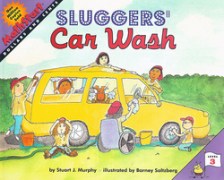
I have a math series of living books written by Stuart J. Murphy called MathStart that is for preschool through middle school, which  you can use to introduce or reinforce mathematical concepts through a story.  I recommend that you read these books together to discuss the topic if it is a new concept and then provide the opportunity for your child to read them independently to review and reinforce what you discussed.

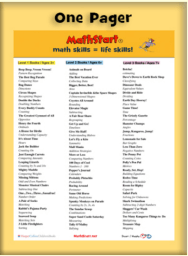
There are 63 titles in the series, and while I am not going to list every title, I will give you an idea of what topics are covered and provide you with a link of all the titles in this great series at the bottom of the post.

1077741

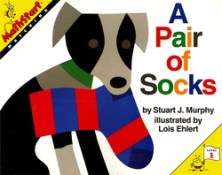
Level 1 Ages 3+

Matching

Pattern Recognition

Directions

Opposites

Comparing Amounts


5240413_orig

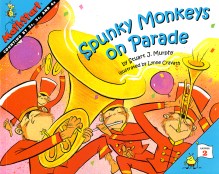
Level 2 Ages 6+

Counting by 2s, 3s, and 4s

Adding

Subtracting

Understanding Halves

Probability


7366547

Level 3 Ages 7+

Dollars and Cents

Subtracting

Fractions

Angles

Multiplying

You can click on the picture of the books above to see the description and free activities asssociated with it or go to the MathStart website for details on each title. MATHSTART

You can click on the book list to review all of the titles in this great series. 

Screen Shot 2016-06-06 at 5.09.23 AM