Archives

The Question of Cursive Handwriting

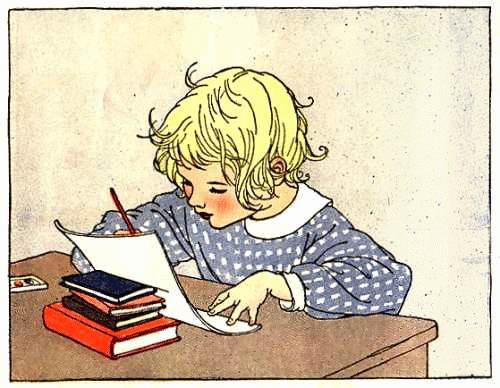
How important is it to teach cursive handwriting? This question comes up annually when I am doing portfolio reviews for families. While it is not stated as an area of academic study required by the state of Ohio to home school, I think it is important for students to be able to write it and read it. I think our goal as educators of our children is to provide them with an excellent education and this includes being able to read all forms of written manuscripts, both manuscript and cursive. I also think every person should be able to communicate in some form of handwritten form, whether that be manuscript or cursive.

However, I am not of the mindset that a young elementary student should learn cursive first as some textbook companies have been emphasizing because everything a student is reading in the primary grades is written in manuscript. I concentrated on reading and writing manuscript with my children before I introduced cursive in third grade. Can you start cursive earlier than third grade if a student has mastered manuscript? Absolutely! Girls especially enjoy writing in cursive.  When is cursive taught in schools? Generally, it is introduced in the spring of second grade or at the beginning of third grade. Some schools are not even going to be teaching it any longer. (What?!)

Why teach cursive?

Cursive is taught in early primary grades by a certain publishing company of textbooks because they say that when you are writing cursive you do not need to lift your pencil off the paper like you do when writing in the manuscript form. Valid point, but I chose to stay with manuscript and have my children master that before moving into cursive. I think introducing manuscript and cursive is a big task when also trying to learn how to read.

When writing in cursive you are almost always using a forward motion. This is not the case in manuscript. What do I mean by that? Think for a minute how the manuscript letter /b/ is formed.  First, you draw a straight line down.  Then, you trace that line 1/3 of the way from the bottom up. Next, you proceed to make a curved line as in a circle, moving forward, but then in order to complete the circle you must lastly go back toward the line. That is not the case with the cursive /b/.  First, you start at the bottom of the line and draw a diagonal line to the top. Next, you do go backwards a little as you start down with your straight line to the bottom of the line. Next, you make a curved line like you would if you were starting up a hill on a roller coaster, about half way up the part of the letter you have  formed thus far. Finally, you make a small half circle that dips down and the back up. I am sure that this isn’t the best description, but you’d have to be in my living room for me to demonstrate. I look pretty funny as I am sitting at my computer drawing b’s in the air.

A person needs to be able to sign their name to documents. As of present, this includes everything from a driver’s license, to a marriage certificate, to a car or house loan. I think it would be regressing if your child just signed a document with an X, don’t you?

Handwriting doesn’t depend upon technology. I just don’t trust electricity to be there 100% 24 hours a day. A pencil is portable and can be applied to a piece of paper without the use of electricity. Not every house is equipped with all of the latest technology and it’s more affordable to have a stack of scratch paper or a whiteboard to jot down a message than a laptop or computer.

Not being able to write limits a person. Handwriting is a form of communication. I know this is obvious, but I thought I’d state it anyway. I just returned from vacation and while I was away I sent postcards to all of my students I tutor. If I didn’t know how to write I wouldn’t have been able to do that.

Points to Consider:

  • Have your student(s) practice letter formation in the air with exaggerated motions before writing to paper. I have found this to be a great way to help my son who was left-handed. I would stand in back of him and he would form the letter. If he needed help it was easy for me being right-handed to put my hand over his and help him if he needed it.  Students become frustrated if they are trying to learn how to write and have to keep erasing their mistakes.
  • Make a “goo bag” to practice letter formation. You can make a batch of instant pudding and put a small amount in a quart sized plastic ziplock bag. Place the sealed baggie on the table on its side. Letters can be formed by pressing down on the outside of the bag to create a white “line”. Stand behind your scribe so you can see how the letters are being formed. Reward your student ‘s hard work afterward with the yummy pudding.
  • Teach the formation of each letter and have your student master this before they add their own artistic style. If they do not learn the letters and begin to change them from the beginning they most likely won’t be able to read traditional cursive. One of my students had “learned cursive” during the summer before being in my class and turned in a paper the first day of class. It was beautiful, but I could barely read it due to how much the letters were altered. I also asked them to read a passage that was traditional cursive and they couldn’t do it.
  • If using the Italic style for cursive, be sure they can read standard cursive handwriting. I love the Italic and it is easier to transition from manuscript to cursive, but moms have said their scribes couldn’t read the more traditional style of cursive.

Cursive Curriculum

There are several styles of cursive to choose from and the one that I have taught has been Zaner-Bloser. A homeschool products catalog that I have enjoyed over the years is rainbow resource They have terrific write-ups about each of the products that they sell and their prices are the best I have found overall. I have also found many products through Christian Book Distributors. They also have write-ups about products that i have found beneficial.

A Reason for Handwriting  This series has scriptures that are copied after the letters have been learned. The publishers have a transitions book that will be helpful in teaching cursive.

Horizons Penmanship Grades 1-5  Cursive is introduced midway through 2nd grade. Correct placement of hands, letter formation, and posture are all covered. Each book has a them that is used throughout the book.

Looking for an online program? Handwriting Worksheets would be a great place to start. This program allows you to create your own worksheets, everything from single words to paragraphs.

The Donna Young website actually shows “how to” animations of letter formation, including how to connect the letters, which can be difficult for some children. There are a great number of resources on this website if you need help. click  here

Handwriting Without Tears Many families with boys love this program and say this is easier than anything else they have taught.  It is simple and straightforward.

Practical application

Provide opportunities for your student to write. Why not send a note to grandparents? There is nothing like getting a note from a grandchild and most likely they will write back. 🙂

Write a note to Dad and put in the car before he goes off to work. That will make his day!

Send a card to someone and have your child sign their name in cursive.

Write out copywork or spelling words in cursive. The more one practices the better one becomes.

~Lisa~

Online Courses and Schools


As your students get older and study more difficult subject matter, you may think you have to enroll your student in school because you cannot teach upper level courses. I understand how you feel, but there are a variety of options now that you can feel confident that your teen can get a great education from top quality teachers and programs.

Not to the junior high/high school level yet, but need options? Some of you may have circumstances where you need some help with classes. There are several programs that offer distance learning throughout a child’s academic career.

Here is a sampling of what is available. There are many more classes and programs from which to choose. I hope at least one of them I listed will meet your needs.

Online Classes

Mathematics, Science I just found out about Think Well.  A mom who I know had her two daughters complete courses in mathematics. She said the girls enjoyed the classes and  both of them are in college now. To preview, click here

Composition Write at Home provides writing coaches for middle school and high school students. Online writing courses are offered or you can pay for individual papers to be graded. Teachers provide helpful feedback for your student. Click here to view the demo.

Latin, Greek, Ancient History, Art and Architecture I had the privilege to be in a co-op with Regan and Amy Barr several years ago. They have been  teaching interactive online classes since 2005 and my son and I took the Imperial Murder Mystery eons ago. (Sorry for the bad joke, I couldn’t help it!) Class offerings are for students ages 10 and older. Lukeion Project

Free College Online Courses There are over 500 courses here!  I saw several I would like to take myself. 🙂 Open Culture

Kahn Academy Here is the mission statement of Kahn Academy: “With over 3,200 videos on everything from arithmetic to physics, finance, and history and hundreds of skills to practice, they are there to help you learn what you want, when you want, at your own pace.”

The Potter’s School “integrates academic scholarship and biblical worldview to prepare students for college, career, and life.” I know two of the tutors that are on staff and they are excellent. If you look at the list of tutors you will see they are an international group and have interesting fields of expertise. Your student can take honors classes and receive a diploma that is accredited. tps

Bob Jones Distance Learning You can choose several options for the courses you take through Bob Jones: online; hard drive, or DVD. I know several families who chose this option for their students and many have enjoyed using the program. bjuonline

ABeka Academy is a distance leaning program for gradesK-12. I have a friend whose first grade daughter LOVED her teacher. She sent her a Christmas card and the teacher sent her a thank you note. They are planning on taking a vacation this year to Pensacola, Florida where the school is located in order for her to meet her teacher. What a huge endorsement for this program! ABeka

K12 is a program that your student is enrolled in and you are not actually “homeschooling”. Families sometimes find themselves in a situation where they cannot teach the classes themselves, but sending your student is not an option either. This program offers a viable option for that type of circumstance. Online classes are for students grades K-12 and you can choose from public, private schools  or individual classes. click here

If you have found a program you have used and like please post a comment for others to investigate. Have you used one of the programs that I have written about and would like to share about your experience? Please do so as your insight can help others make a better informed decision. Have a great day!

~Lisa

Feeling a Little Spacey? Resources for Space Science

Put on your space suits and get ready for a tour of the galaxy! We are going to be looking at some great websites today. I have used every one of these sites (except for the water rocket) with my 8th grade Earth/Space class, but activities can be adapted for all aged children.

Answers in Genesis has a large video on demand collection that you can watch to introduce, develop, or review concepts on topics you are studying. This particular video discusses the flaws in the Big Bang Theory and is directed toward middle school age and older.

Are you ready for your tour of space? First things first, how does a space suit actually work? Here is a great site that explains how that bulky suit actually works. space suit

Budding scientists (and their teachers too) can explore how a rocket works by making your own low tech one with film canisters and Alka-Seltzer tablets. This was a favorite of my class. rockets

Need film canisters? Film canister launcher? Steve Spangler has all you need for the above-mentioned experiment and more. If you want to get your student(s) interested and excited about science check out his videos. Your child(ren) will be saying, “Can we do that experiment?” after each one you watch. stevespangler

Do you have a family member who would love to build a water rocket? This looks like a lot of fun. I never did build this for my class, but I am sure we would have thoroughly enjoyed it. click here

If you are not familiar with the website from NASA you will want to look at this amazing resource! There is a gallery of pictures for your studies that is perfect for every topic of space. You can see a new picture each day! Our universe is so incredible and NASA has been able to capture a fragment of it for us to enjoy. This picture is a solar flare of the sun that occurred on July 4, 2012. No wonder it’s so hot this year.  For you to see more spectacular images click here.

Planets, asteroids, stars, and our moon are a few topics this free astronomy network has to offer. Planets for Kids

Do you remember all the order of planets? Chances are that if you do, you had some type of mnemonic to help you recall. Here are several sayings to help your space explorer remember their order. click here

Poor Pluto! It’s no longer considered a planet but, you can read all about its discovery and why it is no longer classified as one. Read all about it.

When teaching students, I find it beneficial to provide additional resources and explanations if possible since many of these concepts are difficult to grasp. It’s one thing to “see” a solar eclipse, but another to actually understand what is occurring. Here is a website that explains what happens during an eclipse: click here. Lunar eclipses are explained on this site too.

Can you explain the phases of the moon to your student? How about using a styrofoam ball and a light? Here is a great hands-on activity that provides an “Ah-ha!” moment..  NOTE**  As mentioned previously, the activity calls for a styrofoam ball, but I found it to be beneficial to use one that is smooth and can reflect the light source you are using. This allows the student to have a more accurate representation of the moon’s surface. Ask your child before beginning the activity to tell you what causes the phases of the moon. Review what occurred after completing this activity. moon phases

Did you know each crater on the moon’s surface that we can see is named? Did you know that ancient people thought the craters looked like a rabbit? Of course you did! Crater Crazy is an article about the creation of the craters and how you can make your own. crazy Here’s another moon crater activity for further explanation or exploration. NASA

Did you know from our perspective on earth it looks like the planets move forwards and backwards? This is called retrograde motion and here is a website to explain what we “see”. motion

Do you want to add some history or have your student do a report? Here are some books that will help:

One Small Step: Celebrating the First Men on the Moon, Jerry Stone “This celebration of the 40th anniversary of the Apollo 11 moon landing is a collection of keepsakes and memories that bring that historic moment of pride an accomplishment to life for a new generation. A stunning lenticular cover animates man’s first steps on the moon; an embossed textured page inside reproduces footprints in lunar soil; stickers, replicas, mission patches, fold-out newspaper pages, collecting cards, removable novelties and more complete this spectacular commemorative book.” (amazon)

Look to the Stars, Buzz Aldrin “Written by one of the first astronauts to go to the moon, Mr. Aldrin recounts the history of space exploration as he discusses that man has always had a fascination with space and has looked to the stars.” (amazon)

One Giant Leap, Robert Burleigh “Commemorating the 40th anniversary of man’s first walk on the moon, this book for younger readers is a tribute that transports readers to the stars, where they will experience the moon landing just as Neil Armstrong and Buzz Aldrin did in 1969.” (publisher synopsis)

The sky’s the limit, so whatcha’ waiting for? Get out there and explore! Signing off from Jupiter (Court, that is). Have fun exploring our wonderful universe.   5-4-3-2-1… Lift-off!

Online Math Games

Summer is a great time to review math facts so that your student doesn’t forget all of the knowledge that they worked so hard to gain throughout the year. How about using some fun online games to help?

Fun 4 the Brain This website has games that children review and learn addition, subtraction, multiplication, and division.

Math is Fun has tutorials on various math topics and practice for grades 1-6 and algebra too.

Math Play There are games on this website for grades 1-8!

Looking for math worksheets? Math-Aids creates worksheets and flashcards and you have several options from which to choose. There are so many topics to choose from that I think you will find something for each of your students since it is multi-age beginning at kindergarten and includes some geometry worksheets. click here

Math playground has games for a variety of math levels, including fractions, geometry, and algebra. check it out!

Looking for games that focus on fractions? How about math games?

Softschools has games and online practice for all mathematical operations.

Play Kids Games not only has games to play, but you can also have your student print out the results of the games. It’s a great way to track practice and improve skills.

Happy Playing!

~Lisa~

Bible Curriculum and Resources

Some of the moms who come for portfolio reviews have asked if I can recommend some bible curriculums. I must say, that it is hard to find something beyond bible stories. I do have some ideas for you to check, but please add to my list if you have found a resource you like. I have not personally used these purchased curriculums, but they have come recommended to me.

Big Book of Bible Truths Book I These stories are from a Presbyterian minister and look interesting.

The Big Book of Bible Truths Book II These stories are by the same author as the previous listing.

Bible Truths, Bob Jones University Press This curriculum is for Pre-K through 12th grade and came highly recommended by the ladies in my bible study. 🙂 This is the description from the BJUP website for Bible Truths Grade 2: “A Servant’s Heart (4th edition) guides teachers as they help students understand God’s truth for practical living. Included are scripturally supported overviews of key biblical doctrines, a daily lesson plan, unit memory verse and hymn, supplemental read-aloud stories, unit review activity sheets, reproducible learning activity pages, instructions for one-on-one and group learning activities, a glossary of biblical terms, and a CD of corresponding reproducibles. Lessons also integrate a missionary story and an application novel.”

Looking for a bible reading plan? Here are several that would be easy for an older student to do or you to read aloud to your child(ren). click here

Your Story Hour has been around a very long time! I can actually recommend these because we owned several CD’s. They are interesting and   these stories are about Christians who did extraordinary things.  You will recognize quite a few of the people that are featured. I think you and your children will enjoy these. In addition, there are interfaith  bible lessons and quizzes that can be either downloaded, sent to your home, or done online.

Just in time for this post is a FREE Giveaway for 20 character books. Titles included in this series are: God I Need to Talk to You about Disrespect; God I Need to Talk to You about Sharing; and God I Need to Talk to You about Whining . Here are more details.  click If you don’t win, you can still buy the books for $2.00 each.