Archive by Author | Lisa McAfee

Using Glyphs

I posted this yesterday and thought more explaining was needed in order for you to try and incorporate this idea into your homeschool classroom. Have fun! 🙂

“Glyphs? What are they?” you ask.  If you thought it sounded similar to hieroglyphics you would be right as that form of written language is associated with pictures. Glyphs are a nonstandard way of collecting data through either coloring or creating pictures. I have found them to be helpful with students for a variety of reasons. Each glyph ask questions about a certain topic and the reader then follows the directions based upon the response they gave. You can have your student do a glyph involving general questions or you can pick a specific subject. Students then either create a picture or color one that you have chosen. This happens by answering a series of questions you have written or you can find ones already done for you. Some questions could include, ” If it is Spring, draw a tulip and color it red. If it is Summer, draw a daisy and color it pink.” Another choice could be, “If birds build nests in the spring, draw and color the nest  grey. If birds build nests in the fall, draw and color the nest  brown.”

You can create your own glyph activity using free coloring pages found on the internet. I created a Spring glyph that you can download and this one does not include cutting, but rather coloring. Here are the directions. You can download them and the coloring page that I used for this glyph with the links I have provided following the directions.

  • If you like ice cream, color the ice cream cone brown.
  • If you do not like ice cream, color the ice cream cone red.
  • If it is Summer, color the sun orange.
  • If it is Spring, color the sun yellow.
  • If you like to go to the beach color the pail blue.
  • If you do not like to go to the beach color the pail green.
  • If you have planted seeds for your garden, color the seed packet purple.
  • If you have not planted seeds for your garden, color the seed packet pink.
  • If you like science color the balloons orange.
  • If you do not like science color the balloons black.
  • If you like to swim instead of ride a bike, color the flowers pink and purple.
  • If you like to ride a bike instead of swim, color the flowers orange and red.

Spring Glyph directions, coloring page

How about a space glyph?  You can check comprehension of a topic by the color chosen for each object. If you were studying space travel students color a rocket based upon the responses given. You can download my glyph or  you can make up your own questions, depending upon your need.Space Glyph, Count Down coloring sheet

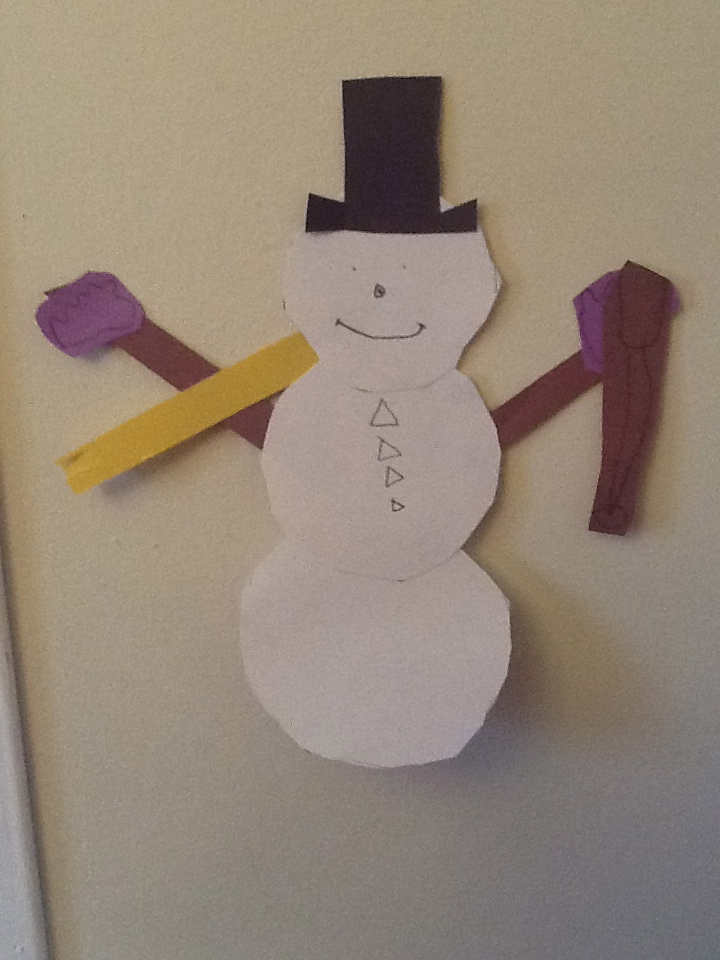
In early March I used a snowman glyph with a student I am teaching where he had to make the mouth of the snowman based upon what type of activity he’d rather do on a winter day. I decided that he would create and cut out the shapes for the snowman instead of drawing them as this helps with small motor skills and creativity. You can find the glyph instructions by clicking here. Here is what the snowman looked like when it was finished. I think it turned out well. 🙂
IMG_0088

So, why use glyphs?

  • Glyphs help students with decision-making and critical thinking.
  • Students practice following directions.
  • The glyph can be used as a language arts activity about the subject. A paragraph can be written about the topic of the glyph. This can help a student with paragraph writing since they could just take the data they have already been working with and make it into a paragraph.
  • Graphs can be made from the glyphs if you have more than one person participating. For instance if you had a glyph that pertained to summer activities you could graph one of the responses such as, “How many people like to go to the beach?”
  • Independent work can be encouraged through this activity. If you need to work with your preschooler and your second grader is waiting for you, have them complete a glyph.
  • You can tailor glyphs to fit your needs. Use this as an assessment tool in order to see if the topic was understood.
  • Students can create their own glyphs, which is a higher thinking process.

Being a Blessing

alone-15155_640I have been recently challenged in being a blessing to others. What do I say and how do I act towards others? I’d like to also encourage you this week to be a blessing to not only your family, but to someone else. Here are some ideas:

Family

  • Start school an hour later if you have older students. 🙂
  • Go on an unexpected field trip.
  • Read a favorite book together.
  • Have a friend over to play.
  • Older students- have a friend over or allow them to take the car for coffee with a friend.
  • Fix a favorite snack one afternoon.
  • Have dessert first!
  • Play a game together.
  • If you have assigned chores, let them have a day off or pick a chore to do that is usually theirs.

Friends

  • Set up a play date.
  • Send a card.
  • Call and tell them one or two things you admire about them.
  • Make a meal or a dessert.
  • Offer to keep a their children for an afternoon.
  • Have coffee with someone you want to get to know better.

Thank you for being a blessing to me by reading my blog. Honestly, the feedback that I get from you keeps me writing and wanting to be a blessing to others. Have a great week!

~Lisa

Nature Studies: Snow

Snowflake1Studying nature should be a part of  every homeschool as it provides opportunities to observe and learn about the “real thing” and having firsthand experiences instead of reading about it in a book. In nature studies, each child has a nature notebook in which they draw pictures of the object and keep a record of observations they have made. It may be difficult to engage your student in the drawing portion of the nature study at the beginning, but with practice (child) and consistency (you), the nature study becomes a foundation of not only  art, but science, writing, and reading.

It looks like we are in for an early spring snowstorm here in the midwest, so how about making the most of the snow that is coming our way? You can do this study whether we get a little or a lot of the white stuff. ** If  you live in a different part of the country you can still do this as well, but you’ll have to use the internet instead of the real thing. 🙂

Some items to have in readiness for your snow nature study:

  • ziplock bags (to bring back to the house your items of nature you want to observe in detail)
  • a notebook
  • pencils (colored pencils too)
  • magnifying glass
  • camera
  • field guides, reference guides or electronic devices

If we are fortunate to still have snow falling when you begin, go out and capture snowflakes for observing. Put a piece of dark construction paper in the freezer for a few hours before you go out so the snowflakes will adhere to the paper without melting before you observe them. You can also use a dark piece of clothing if you don’t have paper. Notice how each snowflake is different. Sketch a few of the snowflakes.

Blue Snowflakes 121610

carlettasroundthebend.blogspot.com

Because the snowflakes will melt before you will be able to draw them, take some close up pictures to be used when you return inside. If you don’t have the opportunity to catch snowflakes you can search the internet for snowflake pictures and have your scientific student draw one or more of their choosing. Write down details of what you see. You can also download the observation sheet I have made for younger students to put in a nature notebook. Adjust the observation sheet as needed. Nature Notebook page- snow

More outdoor snow ideas for observation. Remember to do what you can outside and take pictures to refer to when you return to the house.

  • Observe the way the ice and snow adhere to the branches of trees, bushes, and plants.
  • Measure the depth of snow. You can write this in your notebook along with the date.
  • Observe animal tracks. Can you determine what animals made the tracks? Use an animal track book or an online guide such as this one: track guide
  • Is the snow easy or hard for making snowballs? Is the snow a “wet snow” or a “dry snow”? If you aren’t sure, shovel the driveway. (Tricky way to get chores done. 🙂 )
  • Put out bird feed. What birds come to eat your delectable treats? Write down the types and count the number and variety. You can do this for a few minutes if you have younger children or you can do it for 30 minutes with older students. Use a bird identification book or this internet source : online bird guide I love birds and consider them my “pets”. They are practically perfect in every way, no vet bills, no scooping up their daily messes, etc. I have this marvelous electronic field guide I use to help me identify newcomers. The app is called iBird.
  • Did you find something interesting? Can it be brought in the house? Put it in your ziplock bag. Do not take it in if it will destroy something (living or nonliving).

Once you have returned to the house, continue to draw pictures of what you observed or download the pictures you took while outside. Write the scientific names of  the drawings. Using the colored pencils, color in the drawings, coloring as true-to-life as possible and record the date.

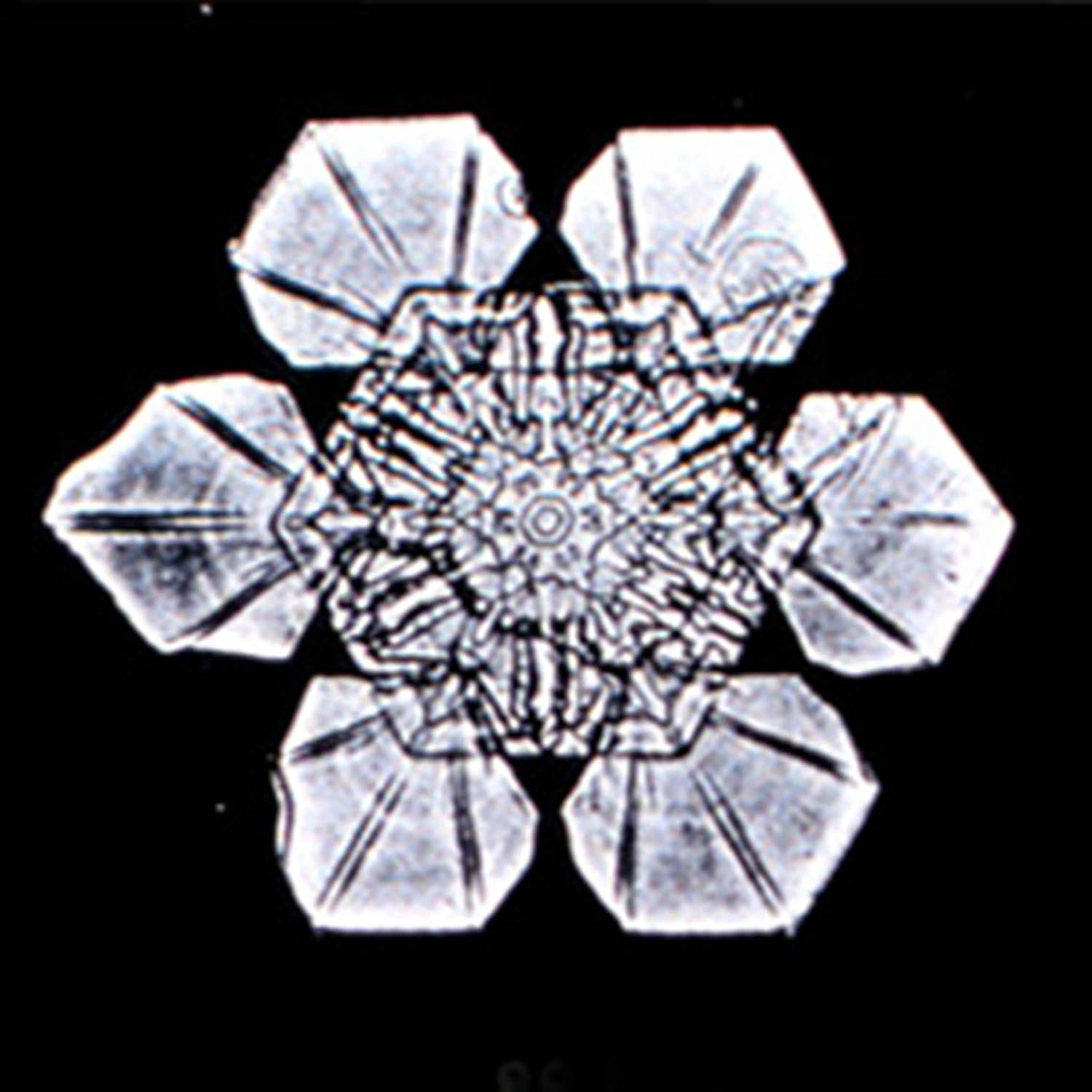
Note: The black and white snowflake photograph at the beginning of my post is one of Wilson”Snowflake” Bentley’s pictures. “Under the microscope, I found that snowflakes were miracles of beauty; and it seemed a shame that this beauty should not be seen and appreciated by others. Every crystal was a masterpiece of design and no one design was ever repeated., When a snowflake melted, that design was forever lost. Just that much beauty was gone, without leaving any record behind.” -Wilson Bentley

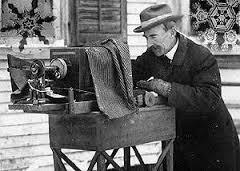
If you are interested in reading about him or his work, you can click here. There is also a children’s book called Snowflake Bentley or you can get as an audiobook . Here he is photographing snowflakes.

url-1

You can also add poetry about snow to your nature study notebook. The poems can be illustrated if desired. Here is one of my favorite poems by Robert Frost.

Stopping by Woods on a Snowy Evening

Whose woods these are I think I know.
His house is in the village, though;
He will not see me stopping here
To watch his woods fill up with snow.

My little horse must think it queer
To stop without a farmhouse near
Between the woods and frozen lake
The darkest evening of the year.

He gives his harness bells a shake
To ask if there is some mistake.
The only other sound’s the sweep
Of easy wind and downy flake.

The woods are lovely, dark, and deep,
But I have promises to keep,
And miles to go before I sleep,
And miles to go before I sleep.

Robert Frost

Have a great time and enjoy the snow. It is here for a limited amount of time. (Yippee because I am ready for Spring.)

~Lisa

The Book of the King

I have some good news for students who like adventure stories.  I found a new book series for upper middle and junior high students that I am excited to tell you about. It is called the Wormling Series by Jerry Jenkins and Chris Fabry.  It is has all the great elements of an adventure story: good; evil; dragons; kings; an unlikely hero and an invisible kingdom. This would also be a terrific read aloud series for your family.

If you think this sounds similar to the Bible, you would be correct in your assumption. It is fast-paced and leaves you with enough questions to make the story moving along and wondering how the enemy will be defeated. I am looking forward to reading more of these books in the series.

Click Here to see all the titles in the Wormling series.301591

Just a Little Longer!

This weekend was Daylight Savings Time and that makes me happy. I love Spring and the longer evening hours. It seems like I accomplish more when it is stays lighter. I just wanted to give you a few things to think about as you wrap up your winter and head for spring.

1. Stay focused.  Look ahead at what you have left to do for the school year. (That is if you finish in the spring, if not, what do you have planned for the spring?)

2. Take a quick evaluation. First, assess your student. Where are there weaknesses/ strengths? Is there an area that needs to be addressed now and do you need to continue it for next year? Or will a few weeks of studying before summer break be adequate? Last, assess your curriculum. What did you like/dislike about the curriculum you used this year? Do you need to make changes for next year?

3. Plan some outdoor activities. Yes, take advantage of the weather and do some science projects (planning/planting a garden, nature walk, field trips, etc.)

4. Have fun! Take some time to do something fun with your husband and plan another activity with a girlfriend. You’ll feel energized and gain a new perspective on life. 🙂