Archive | December 2014

Helping Children Become Good Readers

I have asked a friend of mine, Becky Boerner, to write a post for my blog today. The information for her blog is listed at the end of her article. Enjoy!

image

https://usplash.com

One of the ways we help our children become good readers is to give them direct instruction on how to be one.   The most effective and simple way I know to help your child become a good reader is by sharing your thought process with them as you read a book to them.    By sharing your insights and the insights below, you are helping your child to become a good reader.   I have divided up the process of  reading to before, during, and after.  Each part shares what a good reader does and then gives you some things to say to your child to share your thinking process.

Before reading- A good reader will think about what is the purpose of what I am about to read.  They will ask, “Am I trying to gain information on a topic or find out what happens in a story?”  By stating what you think the purpose of a story or text is  out loud you are modeling what good readers do.

A good reader will look at the title, pictures, headings, bold face print and begin to ask wondering questions.  You can ask these out-loud before you begin a story with your child.   I wonder what this story is about?  I wonder why that person is doing this on the cover?  I wonder what is going to happen in this story? I wonder if this is similar to another book I read?  I wonder if this relates to something else I have been learning?

During reading- A good reader will form pictures in their head about what they are reading.   You can facilitate this with your child by  sharing what pictures are in your head as you read a story.  “I am picturing the little girl sitting by the lake.  What do you see in your head?”  At first your child may say “nothing.”  That is fine.  Encourage them to make pictures in their heads of what they are reading and keep sharing the pictures that you have.

A good reader continues to ask wonder questions during a reading. You can pause in the middle of story and wonder out loud to your child. I wonder what what will happen next?  Did that make sense? I wonder why that happened? I wonder if this information verifies what I already know about  this topic or if it is new to me?

A good reader will reread a passage that did not make sense.  You can say to your child “That really did not make sense to me.  I am going to reread it.”  Then reread and discuss the passage.

A good reader is able to make inferences when reading. You can say to your child, I think that character is implying (blank)   I think the author is trying to say (blank)   Making inferences is a big part of reading comprehension.  Let your child know what you are inferring to make sense of a story or text.  It will help them learn to inference.

After reading a story or text- A good reader will check to see if the predictions they made came true.  You can model this by saying,” I was not right about that prediction and this happened instead.  It happened just like I thought it would.  My predictions were right. ”  You can also talk about any predictions your child made. For non-fiction you might say ” I did learn about (topic) just like I thought I would. I thought this what have better information on (blank).  This verifies what we learned on our field trip.”

Good readers are able to retell a story or summarize what they read to someone.  By sharing your retelling of a story, or sharing what you have learned, you model what a good reader does.  Asking your child to retell a story, or summarize is also helpful.

I try to do the above type of reading with my kids  1-3 times per week.  I do not think you need to do it every time you read something to them. At first it seems strange to stop in the middle of a book and reveal your thinking to your child.  But it is a very powerful way to instruct them on becoming a good reader.  It becomes more natural the more you try it.  Your child wants to hear what other good readers are thinking about. Especially when that good reader is you.

You as a parent are a good reader and by modeling your thought process you give your child a true gift.  You are drawing them into the group of good readers, and that is a gift that lasts a lifetime.

Becky Boerner M.Ed.
Ohio Homeschool Assessments
This was first posted on http://ohiohomeschool.blogspot.com/

10 Indoor Activities for Preschoolers

imagesRunning and jumping are natural extensions of what preschoolers are all about, but sometimes it can be a bit much when having to stay inside. With just a little guidance  those wiggles can be a lot of fun. What are some ideas that you can do with your preschoolers? Here are some to try.

Bubble blowing is a lot of fun to do indoors. Try this activity during bath time. The soap bubbles dissolve in the water and no sticky mess to clean up.

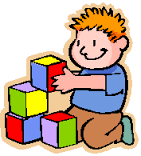
Building with wooden blocks is a tried and true activity. Keep the blocks in a large bin for easy clean up and storage. Have a contest to see who can build the highest or the widest structure.

Sock toss is always fun when folding laundry. Set up the target, which can be the laundry basket. Socks can be either individual or made into a sock ball.

Hide and Seek can be played by hiding a stuffed toy and then walk through the house with your little one saying if they are “hot” (getting close to finding it), or “cold”, going further away from where it is hidden.

Create an indoor fort was one favorite activity my boys loved to do. Get an old sheet or two and drape over a table.  Put favorite books and a snack for your preschooler to enjoy.

Simon Says can be a game to introduce or reinforce body parts. How to play is that when you says “Simon Says”, each person must do what has been commanded. For instance , Simon Says, “Touch your nose.” If you do not say Simon Says, but give a command,the person who did it is out. But, with little ones I wouldn’t say anyone is out. I just remind them of the rules and keep going.

Hand puppets with your odd socks keeps preschoolers entertained for quite awhile. Allow them to decorate with googly eyes. Read a favorite book to your child and have them act out the parts of the book or have free play.

Post Office I just thought of this as I was throwing away junk mail. Let your little one play mail carrier. Save your mail for a few days so that this can be played. Make  mailboxes from old shoeboxes. Decorate the box and have your preschooler practice their name and address by writing on it with crayons or washable markers.  Sort the mail into magazines/ catalogs and envelopes. Put the mail in a bag and then deliver it to the mailboxes.

Grocery Store is so much fun for little ones. Save your empty cereal boxes, soup cans (cleaned, of course!), and paper products such as paper towels and napkins. Have one person be a cashier and the other person be the customer. Either purchase play money or make your own out of green construction paper.

Statue Game is a game for moving and listening. Play some music and have your little one move around. Pause the music and have your preschooler “freeze” like a statue. Start the music again and have your little one move again. Practice fact movements when the music is fast paced and moving slowly when the music is slower.

Have fun!

~Lisa

10 Indoor Activities for Little Ones

images

When the weather is not conducive to being able to go outside, what can your little do? Check out thees activities you can do with your toddlers and early preschoolers. Don’t have little ones? I am going to have a series of activities for different ages. Next week will be activities for older preschoolers. 

Little Ones

  • Dress Ups A container of “costumes” is always a big hit. Items to include for boys and girls are things like a: hat, sunglasses, tutu, tie, belt, scarf, boa, jewelry, play fireman hat, and a play construction safety helmet. The thrift store and stores who have cheaper ticket items (such as the Dollar Tree) can help you stock your costume stash for not a lot of expense. Better still, ask other people if they have some items they would like to contribute.
  • Playdoh is an all-time favorite. Put a piece of wax paper on the table to keep the dough from sticking to your table. If you have a biscuit  or cookie cutter, let your child(ren) make shapes. Be sure and let your little one know that they can’t eat their creations!
  • Sugar Cookies Speaking of eating cookies, what about making a big batch of sugar cookie dough and allow them to cut out shapes with you? After they are cooled let them decorate them.
  • Pom pom sort A bag of pom poms of various sizes can be used to create sorting activities. Sort according to size (big, little), color, texture (fuzzy/prickly). You can add cotton balls to the mix as well for more things to sort.
  • Lids and bowls were always a thing my boys loved to play with. For some reason, my boys loved to have them all in a drawer or bin. They loved taking them out, throwing them on the floor, and of course. banging them together. If you have a headache, you may want to do this on a different day!
  • Ball/ Bean Bag Toss Find  a container or laundry basket and something soft to throw for target practice. This is terrific for developing gross motor skills.
  • Obstacle Courses can be created by using tape to walk along as a “balance beam” and  follow in a zig zag or serpentine pattern; you can include a chair to climb up and down on; and pillows to jump onto. The possibilities are endless!
  • Paper Plate Trail. Have colored or paper plates taped down on the carpet and have your chid jump from one to another. Call out a color if they know that. If you are working on numbers, write a large number on the plate and call the number for them to jump onto.
  • A Balloon Bop is a great way for little ones to get moving. How many times can they hit the balloon with their hand before it falls to the ground? How many times with their head? Name a different body part to keep your child interested and reviewing body parts. Calling out the number of times the balloon is hit will help them learn their numbers.
  • Water Station Fill up the kitchen sink and add various containers for your youngster to fill and empty. Plastic items such as cups, cereal bowls, food storage containers and measuring cups and spoons were my boys’ favorites.

Book Lists for Middle School

imagesI am sorry I couldn’t come up with an interesting title for this topic, but being direct works too. 🙂 It’s easy to keep up with reading ahead of your children when they are young readers, but it becomes more difficult as the books get longer. I am posting some lists here for you to be able to determine which ones are appropriate for your student. I don’t like getting caught off guard and trying to find a book while I am at the library. There are thousands to choose from at the library and I wander around pulling books off the shelf, reading the insides of dust covers.  After spending several moments of doing that, I  realize that the book is not suitable for my student and have to begin all over again. Thus, wasting time while I could be doing something else. I hope to save you from the same fate.

Middle School Lists

Suggested Classic List  This particular list has done part of the work for you as it has a description behind each title. don’t be intimidated that it says 8th grade if you are wanting a book for a 4th grader because there are titles that are lower leveled readers.

Good Reads Classic List This list has 83 titles listed and a rating/ review of each book.

Classic Middle School  This list has levels behind them, and I am not sure I agree with all of the placements, but you can determine that for your reader. A blogger has taken this list and written a description for each of the books. For details on specific books Click Here

Have a good week!

~Lisa


Homeschool Magazines

stack-of-magazinesTo me, there is just something about reading magazine articles that I find inspiring and invigorating. The articles have proven to be the extra boost that I have needed when I have been “stuck” on a particular issue, whether that was helping a late-blooming reader or helping me raise sons. I would return to articles that I had read in the past and gain new insights or affirmation that I was on the “right track”. Here are several well established magazines or magalogs that have helped me over the years.  Some are free and some cost money, but I have found the money to be well spent!

Homeschooling Today has several free online articles that you can read to see if you would like to subscribe to their publication. This is a quarterly magazine and will be delivered to you in the mail and as a digital subscription. This magazine has articles about parenting, science,  art studies, and special needs, to name a few. Wouldn’t it be nice to get something in the mail that you actually want and is beneficial? ($29.99 yearly)

Practical Homeschooling is published five times a year by Mary Pride, a homeschool veteran and bestselling homeschool author.  Some articles that are listed are ideas for help with teaching when you have a newborn and character studies for preschoolers. ($17.95 yearly)

The Classical Teacher is a Christian Classical Education magalog; a magazine and catalog in one.  It’s free and is published quarterly. While they do discuss and address issues from a Classical perspective, they have excellent articles that will help you homeschool. There is an articles tab up at the top of the page or scroll down to the bottom of the page to see them.

 Schoolhouse Publishing has a magalog that is produced quarterly. This year’s catalog features an article about homeschooling boys, and believe me, Susie Kemmerer knows since she has nine sons! This is primarily a catalog, they do have short articles and helpful book reviews throughout.

Have a great week!

~Lisa