Archives

5 Reasons You are Qualified to Teach your Child

This question has been asked at least once by every homeschool parent in their homeschooling journey. But the answer is, “Yes!” You are definitely qualified. Let me allay your doubts about your abilities and qualifications.

1. You are a parent.

That is an obvious statement, but it’s because you are the greatest advocate for your child. You want the best for them and that includes a quality education. I bet if your son/ daughter said they would love to learn about dinosaurs you would be looking for videos, books, and resources to help foster that interest, even if you are not interested in it. That is a quality of a great teacher.

2. No one knows your child better than you.

You know when your child is getting overwhelmed; when they are interested in continuing; when they are interested in a subject and really, really really want to delve further into a topic. The classroom cannot provide more than just the necessary things needed for your child’s education since they have so many children to teach, specific topics to cover, and a limited amount of time for each subject. You have the choice to spend what time you need or want on a particular subject.

3. You can tailor your daughter/son’s education to fit them.

Perhaps you have a child who is squirmy, or a child who is quiet and doesn’t enjoy large, noisy discussion groups. You can make your child’s learning environment fit their unique learning style.

4. You don’t need a teaching degree.

You are uniquely qualified to instruct your daughter/son in more than just reading, writing, and arithmetic. Although, it goes without saying, teaching school subjects is essential and must be taught. Consider this, you instruct your child all day in matter such as: personal hygiene; caring for the house; being empathetic; serving others, and the list continues. Ohio has a provision that everyone, no matter your own education, can homeschool their child. CLICK HERE for more information and see item #9.

5. You don’t have to teach every subject.

There are a few people who can teach every subject from K-12, but that person is as rare as finding a real diamond ring in the box of cereal where there is a toy surprise inside of it. There are so many resources now that you can find a class for that particular subject. Here are a few ideas to help teach those difficult subjects.

  • Curricula Cathy Duffy Reviews has a list of curricula to help you decide which one is best for your family.
  • Online
  • Community programs and classes
  • Fellow homeschool moms
  • Co-ops (after all of the Covid-19 restrictions are lifted)

To learn more about the laws of homeschooling in your state, go to Home School Legal Defense or Home School State Laws.

Have a great week! ~Lisa~

Using Wordless Books for Language Arts

Students of all ages like well crafted wordless books. Young readers/ writers and those who are struggling can tell a story when given these types of books. There is not a right way to narrate what is happening and children do not have to create a story line since it is already in the book.

Here are some ideas to get your child talking and the pencil moving.

  • You can partner write with Post-it notes the events of the story. You can take turns telling the story and writing the details. If your child is reluctant to write, then you can be the scribe.
  • For new/ struggling/ reluctant writers, they can use Post-it notes and just write brief words that some of the characters would say. For instance, “Help!” or “Watch out!”
  • Write and/or illustrate a sequel to the story.

A favorite of mine and my students is Mr. Wuffles! by David Wiesner. Mr. Wuffles is a cat who has a plethora of toys, but is not interested in any of them. Well, he is interested in one, a spaceship. What ensues is sure to make your student want to tell you what is happening.

I hope you get to try this activity with your writer. Have a great week! ~Lisa~

Homeschool: Teaching Music

One of the requirements you may have to teach when you are homeschooling is music. You do not need to do anything so ambitious as enroll them in music lessons or teach them how to read notes. Although, if you want to do that, it would be great! You can introduce your daughter/son to musical instruments with books such as these titles. If you click on the books it will take you to the site to learn more about them and purchase if you so choose.

Zin! Zin! Zin! A Violin by Lloyd Moss is a lyrical book teaching children about instruments and how each one adds to the richness of the orchestra.

Here is a video of the book that has a short musical piece as each instrument is introduced for children to see and hear it.

A Child’s Introduction to the Orchestra by Robert Levine is terrific book because not only does it teach about the various instruments in the orchestra, but it has song selections too.

Have a great week! ~Lisa~

An Act of Kindness

9EFF25E0-DC0B-4D57-AFE3-9FB2B1158F94.JPG

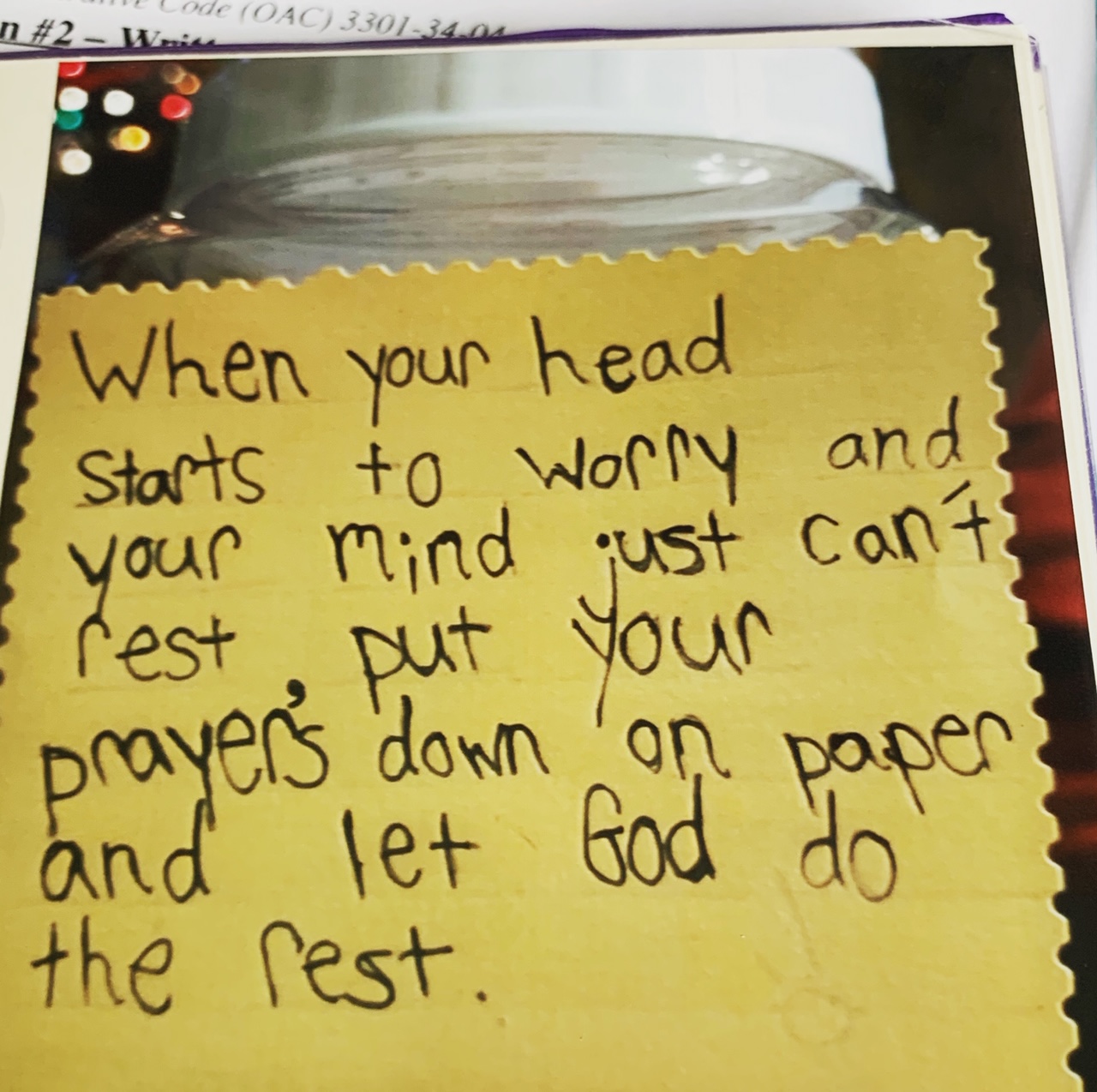
I had the privilege of doing a portfolio review this past month for a wonderful and thoughtful young lady. Her mom said she wanted to let her neighbors know that they are not alone during these difficult times. She bought plastic containers, filled them with wrapped candy, and attached this note to each one. We can make someone’s day with a simple act of kindness. This would be easy for you and your children to do for school and would count for Language Arts and Handwriting.

Have a great week! ~Lisa~


Getting Ready for the New Year

Screen Shot 2020-07-12 at 4.00.57 PM

freepik.com

We are already into the second week of July and school will be starting before you know it. Maybe you are just beginning to homeschool or maybe you are starting the last year of your homeschooling. Either way, everyone needs to plan what they will be doing for the year. So, I have three things for you to consider doing over the next few weeks.

  • Pick a curriculum- What will you be using this year for school? This requires some investigating on your part. If you are new to homeschooling, I recommend that you find something that is already planned out. This can be traditional textbooks, online programs, distance learning opportunities, etc. It is much easier to modify a curriculum instead of having to create your own. After  you have that first year under your belt you will have a better idea of what works for your child and what does not.
  • Consider your home and classroom work space. Where will you have school? I think having a dedicated area to do school is great, but it may be that you work at the kitchen table. Do what works best for your family. We began with a schoolroom and ended up migrating as the year went on. After a couple of years I just had all of us meet at the kitchen table. 🙂
  • Complete the Home Education Notification Form. (<- Click on the bold words to get a copy.) It is only used to notify the school that you are going to homeschool your child for the school year. It must be completed and turned into the superintendent no later that the first day of when your child’s school building begins the academic year. I would suggest you send it by registered mail with a return receipt. This is so you have record that they received it. It gets very busy for the superintendent’s office and your paperwork could get lost. If that should happen, you have a record that they received it.

Item #6 is for you to just list a few general topics of what you intend to teach your child for the school year. For instance, in math you can list for your child who is of first grade level the topics of single digit addition and subtraction, counting money and telling time. This is for informational purposes and you can change your mind as the year progresses. Your daughter may sail through addition and subtraction and you decide to add multiple digit addition. That is great and there is no need to contact the school and let them know your topics have changed. She may struggle with telling time and you decide to wait until a later date to teach this. This is perfectly fine too. The superintendent is just seeing that you have some topics for your child to learn.

Item #7 on the form is for informational purposes as well. You can list resources that you will be using, but you do not need to make an extensive list of every book you are going to use. You may not have even come across a fabulous resource yet and discover it as the year continues. That has happened to me on several occasions. You can list the textbook (if you are using one) as well as other resources or programs. For instance, in Social Studies you might use Story of the World, various videos, maps of the world and United States and  and app such as Stack the States.  Again, the superintendent is looking to see that you have a plan of what resources you would like to use.

Have a great week! ~Lisa~