Archives

5 Steps to Organizing Homeschool Paperwork

At this point of the year, you probably have completed several weeks of school and if you are not filing papers, there may be a pile of your scholar’s graded work growing taller each week in a corner of the schoolroom. Believe me, I struggle with this myself! This is currently what I have on my desk. It’s a manageable pile right now, but if I don’t clean it up you know what’s going to be happening. It’s going to look like a mountain in a short time.

IMG_4771

Here are the steps I am going to take so that I can organize those papers and get them off my desk (hopefully).

1. Determine a place for each paper. Use binders and triple hole punch the papers. You can add tabs if you wish that would be according to month quarter, or semester. I find it easier to organize by subject, but you can do it however you wish.

2. Determine the number of papers you are going to keep. Do you have too many papers? After you have checked your daughter’s or son’s work, decide which papers highlight the week. If you are doing a portfolio review/assessment, save the papers that show your student is: learning a concept, or is developing knowledge of the content, and/or papers that show mastery. As I stated previously, keeping the papers in one large binder or separate binders with the subjects labeled will help keep things organized. You do not need to keep every single piece of paper. Now, if your student is working in a workbook, use a bin to hold your workbooks or a shelf on which to keep them.

IMG_4774

As you can see from the picture, my bookshelf has some shelves that are taller than others, so I have a mixture of binders and books. The other thing that I am not showing you is that it is located in a clothes closet so that I can hide my binders. My husband and I share a small office space and he is much neater than I am. I try to keep my things from spilling into his space. 🙂

3.  File papers often. Do not wait until you have a pile that is so high that you just pick it all up and throw it in the recycling bin. Although, that is extremely tempting to do, isn’t it?

4. Make filing and organizing a part of your daily routine. If you do this every day then there won’t be a pile! If you do not have time to do it, then have your daughter or son file those papers. You can show her/ him where you would like the papers to be kept and, “Wa!La!” it is finished. Not only is there not a pile of papers, but you are teaching important household and organization tips that will serve them well for a lifetime.

5. Take pictures! If you have lots of artwork or projects, display them for a time and then let your child know that you are going to take a picture so that you always have a record of what they have done. You can create a photo collage at the end of the year that will be memorable.

5 Tips on Beginning School

apples-3616102__480It seems like summer has flown by (again!) and I like to start out the year with a few tips that I liked to do with my children.

  1. Begin the day with something fun. How about a fun read-aloud or a favorite breakfast? Not sure what books would be good? Here are some titles to consider: Swiss Family Robinson; The Great Brain; The Secret Garden; Caddie Woodlawn; Little House in the Big Woods; Miracles on Maple Hill are all books that the family will enjoy.
  2. Let your children know what you expect of them. I thought it was important to come to class dressed (no pajamas). This may not be the case in your house, so do not mention it if does not apply. We also discussed the importance of a good attitude and completing assignments cheerfully and on time.
  3. Get out the school supplies and let your son/ daughter label and organize their things. Let them choose what color notebooks they want for math, science, history, reading, etc. They can decorate their binders or notebooks too.
  4. Start out with a few subjects and gradually add more as the week progresses. We always had reading and math each day and started the year off with these. I would include a fun outdoor activity that was science related (a nature hunt or examining something such as a plant) and would try to end the day with a game of some sort for PE such as bike riding or swimming.
  5. Celebrate the first week of completing school with a favorite movie and some popcorn or go out for a treat.

Have a great year!  ~Lisa~


Teachers Pay Teachers

Sometimes I am just fresh out of ideas for teaching. You too? If you haven’t heard of Teachers Pay Teachers then may I suggest that you check out this amazing website? There are so many activities, PowerPoints, ideas, and worksheets that you could spend hours looking at all of the great items that are there. Tomorrow they are having a back to school sale for the things you want for your class. Use this promo code BTSBONUS18 to save up to 25% sitewide on A+ back-to-school resources.

Screen Shot 2018-08-20 at 5.54.40 AM


Clarifying Notification for Homeschooling in Ohio


imagesAre you ready for school? Have you filled out the Home Education Notification Form? Are you confused on what exactly is point number 6 and how is that different from point 7? After all, these are to be attachments along with the notification form and it can be confusing. This point states that you will “provide a brief outline of the intended curriculum for the current year.”

The word curriculum might have you confused since the term is interchanged with the textbooks, commercial curricula, and basic teaching materials that are listed in point 7. I Googled the word to the exact meaning and it says, “the subjects comprising a course of study in a school.” Did a lightbulb and a, “Oh! I see now!” just happen for you? 🙂

In case it is still not clear, I will continue… This does not need to be pages of everything you are intending to have your son/ daughter study this year because there are the crucial words brief outline included in the statement and that was intentional. So, let me give you an example of what that looks like. If you have a third-grade student and you plan on using Bob Jones Science as your main textbook, you can list three or four topics instead of copying the entire Table of Contents.  The topics that are studied throughout the year are animals, the solar system, skin, photosynthesis, sound, weather, rocks and minerals, motion, and food chains. Choose four from that list to use on your outline. Perhaps you are going to study clouds and weather patterns for a week, or your daughter/son is a rockhound and loves discovering fossils and reading books about them; you are going to plant a garden, and you are going to go to the planetarium and are going to watch a Brain Pop video about the solar system. Terrific!  Choose those the topics (weather, rocks and minerals, photosynthesis, solar system)  to list for your outline. The school is looking to see that you have given thought to the topics you are going to teach and are prepared.

Point number 7 requires that you submit “a list of textbooks, correspondence courses, commercial curricula or other basic teaching materials that you (the parent) intend to use for home education. ” After hours of research, talking to other homeschool families, reading reviews, and scouring the internet for what you think is the best curriculum for your student, this is the easy part! You’ve got this! You list what you are going to be using throughout the year to educate your child. If you are using My Father’s World, Teaching Textbooks, Reading Eggs, Liberty’s Kids videos, and library books, that will be great! The school is not looking at whether you are using the latest edition of a textbook. They are looking to see that you have given thought as to what you are using to teach your student.

How you decide to list points 6 and 7 is up to you. I wrote each of the subjects I was teaching and then listed the topics we were intending to study that year (point 6). On a separate piece of paper, I listed the books, videos, and a general statement of various library and internet resources since we used these resources extensively.


Independence Day Resources

Happy Independence Day! Aren’t you glad to live here in the United States of America where we have great freedoms (speech, assembly, religion)? I have some video resources for you to use for this holiday.

download

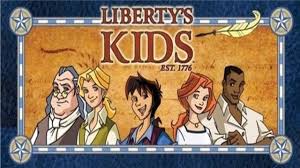
Liberty’s Kids– This is an animated series that has 48 videos about the American Revolution. Each of them is approximately 30 minutes long and cover different aspects of the war.  If you enjoy the series you can purchase them by clicking HERE.

Would you like an overview of the American Revolution? Here is a 9 minute video that explains it. * The narrator talks very quickly, so you will likely need to watch it a few times if you want your student to take notes. For the video only, watch below to avoid the sidebars of other video suggestions.


If you have older students and you would like them to learn more about the American Revolution, Khan Academy has 17 lessons with each having a slide show and documents pertaining to the war. There is also a quiz for your student to take afterward on the Declaration of Independence, The Article of Confederations, and The Constitution of the United States. Should you take a summer break, bookmark this resource to use in the future.

What exactly was written in the Declaration of Independence? Here is the document written for you to read: Declaration This same website also has lesson plans, questions, and activities. U.S. HistoryLesson Plans

If your student has an understanding about the American Revolution, then this music video will reinforce what the Declaration of Independence was about to the writers. (Set in a much more modern music style than 1776. 🙂 It’s Too Late to Apologize lesson. Here is the video. For the video only, watch below to avoid the sidebars of other video suggestions.

Enjoy your day! ~Lisa~