Archives

Poetry Reading

519mo1yUG9L._SX320_BO1,204,203,200_

I have a confession to make; I am not generally a fan of poetry. I don’t know why, but maybe it is because I am not a woman of few words. lol Poetry is an art in which the economy of words reigns supreme and ideas are not generally stated, but have to be correlated to other ideas in order for you to get the meaning. I think to myself, “Just come out and say what you mean!” But, enough of my issues and let me pass on to you a poetry book that I do like.

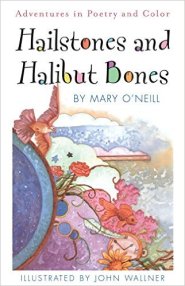
Halibut Bones and Hailstones: Adventures in Poetry and Color was written in 1961 and is comprised of 12 poems of color.  The way that Mary O’Neill describes each color is something that I “get.” Here is the poem about yellow.

“Yellow is the color of the sun
The feeling of fun
A ducks bill
A canary bird
And a daffodil
Yellows sweet corn
Ripe oats
Humming birdslittle throats
Summer squash and Chinese silk
The cream on top of Jersey milk
Dandelions and Daisy hearts
Custard pies and lemon tarts.
Yellow blinks on summer nights
In the off-and-on of firefly lights.
Yellows a topaz,
A candle flame
Felicitys a yellow name.
Yellow’s mimosa, 
And I guess,
Yellows the color of…HAPPINESS!”
Language Arts Idea: After you have read a poem on a specific color, how about having your children write a poem abut that color? If they cannot do it on their own then have them partner  with you or another one of your children and create one together.
Art Idea: Illustrate the poem or create a border to frame it.


MathStart Books

Have you ever heard the term living books? Charlotte Mason, a British educator who lived at the turn of the twentieth century, coined the phrase. One of the things that she believed was that children learn best by reading good literature. Thus, the term, “living books”.

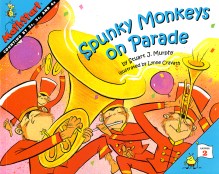
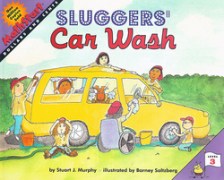
I have a math series of living books written by Stuart J. Murphy called MathStart that is for preschool through middle school, which  you can use to introduce or reinforce mathematical concepts through a story.  I recommend that you read these books together to discuss the topic if it is a new concept and then provide the opportunity for your child to read them independently to review and reinforce what you discussed.

There are 63 titles in the series, and while I am not going to list every title, I will give you an idea of what topics are covered and provide you with a link of all the titles in this great series at the bottom of the post.

1077741

Level 1 Ages 3+

Matching

Pattern Recognition

Directions

Opposites

Comparing Amounts


5240413_orig

Level 2 Ages 6+

Counting by 2s, 3s, and 4s

Adding

Subtracting

Understanding Halves

Probability


7366547

Level 3 Ages 7+

Dollars and Cents

Subtracting

Fractions

Angles

Multiplying

You can click on the picture of the books above to see the description and free activities asssociated with it or go to the MathStart website for details on each title. MATHSTART

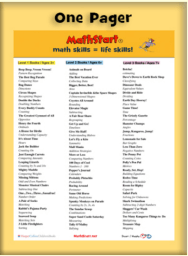
You can click on the book list to review all of the titles in this great series. 

Screen Shot 2016-06-06 at 5.09.23 AM


Online Math Games

imgres

Reviewing math facts can be tedious to both student AND parent! Can I get an amen? 🙂

Is it necessary? Yes!

Why? Automaticity only occurs when you know something so well that you don’t even have to think about it; you just do it! In order for that to occur, a new skill first starts out as short term memory. It hasn’t been mastered and therefore cannot be done without reviewing what has been taught.

Next comes reviewing. Okay, you might be thinking, we will review for a week and the concept will be remembered. Some things are like that, but unfortunately, most things are not.

For instance, how many times did you sing the ABC song with your little one and have your child recite the alphabet until  it became automatic? How about counting to twenty? I would say more times than you care to remember. The same applies with math facts (all basic operations: +,-, x, /). In order for something to go to long term memory and be automatic, the brain must have a “rut” along which that information travels down.  This comes from repeating the same information again and again and again and… Students falter in multi- digit multiplication and division if they do not have the math facts memorized.

How do you keep your patience and sanity while they are still in the process of repeating these facts? How about some online games? I have made a list of websites with free online games that have games for all operations.

ixl has games and activities from preschool all the way through pre-calculus. Of course, high school doesn’t have games, but they do have sample problems. Rats!

Math Playground This has more than just addition and subtraction. There are fractions, decimals, ratios and percents from grades 1-6.

Sheppardsoftware Addition, subtraction, multiplication, division as well as fractions, money, algebra, and place value are topics that can be reviewed here.

Interactive Sites for Education  There are more games on this website than you would want your child to spend on the computer!

Have a great week!

~Lisa

Derailment! Getting Back on Track

images

It happens to everyone; you are moving right along when suddenly something unexpected happens such as an illness, or an unplanned event and your schooling hits a snag;  your academic plans become derailed. How do you get back to your teaching and the children working on school lessons?

Take an assessment of what needs to be finished.

  • How many lessons do you need to finish and how many days will it take to complete them?
  • Can you consolidate lessons?
  • Can you shorten them? Instead of having your child do 50 multiplication problems, how about 25 of them?
  • Does your student already know the information and is it review? Give a quiz or ask orally key concepts to see if your student has gained mastery. If so, then go on to a lesson that is new and concentrate your studies there.

If there are quite a few lessons, consider comparing the next year’s curriculum to see what concepts will be covered and wait to teach that next year. Textbooks review to a certain extent the material that has been covered the previous year at the commencement of a new academic year so you can teach that then. If it is not going to be covered in the future and is important, then do these lessons.

Formulate a plan to finish.

  • How long will it take to finish this year’s lessons? Write it out so that you can see what that looks like. If it appears you are going to be working through the summer, do short lessons and do not do school more than a couple of hours. The hot summer days of July are usually a time when no one wants to go outside and play. This would be a perfect time to do school with math review games and reading.
  • Set dates for completion. For example, by Friday we will need to complete 3 lessons on long division. Don not make it overwhelming if you are just getting back to your school routine. This will make you feel overwhelmed and not feeling like you can move forward.
  • Call a friend for support and ideas if you are feeling overwhelmed.
  • Talk to your children if they are of an appropriate age and show them what needs to be completed and the amount of time it will take to complete school. Everyone likes to know there is an end in sight and it will help to hold everyone accountable.
  • Make it fun. Can you play math review games that accomplishes the same thing as a worksheet or watch a video that compliments your studies?
  • Don’t give up. If you have to continue next year with work that needed to be finished this year, then plan accordingly. You may need to take a short summer break instead of a long one that you are are accustomed to taking. I think you will see that you will get caught up rather quickly. Be sure to ask for help if you need it.


6 Kindergarten Activities

imgres

Looking for school ideas for your kindergartner? Here are six activities for your little one.

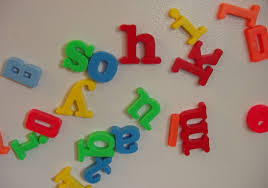
  1. Magnetic letters- You can purchase some magnetic letters and have your little one spell their name and simple words on the refrigerator or a metal cookie sheet with a lip to keep the letters from getting loose. Your child will gain confidence when they can spell words in the word families such as the -at family: mat, rat, bat, flat, etc. You can do this with a number of base letters such as -an (ran, can, tan, fan) or  -en (ten, hen, den), and so on.
  2. Sorting- There are so many things your kindergartner can sort! Here are a few ideas to help: buttons- sort by size, color, shape; blocks- sort by color; coins- color, size
  3. Make an alphabet book– This would be an ongoing project that you can have your little scholar work on over a period of time. Pictures can be drawn, cut out of old magazines, or find pictures online and print them off.
  4. Make a family book- This can be your immediate family and also extended family. I don’t know about you, but several of our relatives live out of town. Ask your family to send pictures so you can create a family album. This is a great way for little ones to learn about families- aunts, uncles, cousins, grandparents, etc.
  5. Counting- Math can be incorporated into many aspects of daily life and one way this can be done is by counting. Items to be counted include: coins, crayons, pencils, books, but probably my favorite thing to count is M&M’s! Not only can these be counted, but they can be sorted and a graph could be created for the number of candies for  each color.
  6. Make a card- Who doesn’t like getting a card, especially one in the mail? You could brighten someone’s day and also have your kindergartner work on letter writing at the same time.