Archives

Teaching to Interests

download

Teaching to your child’s interests is this week’s post, thanks to a friend of mine’s suggestion. So, how does one go about doing this? Do you need to ditch the textbooks? It’s really a great way to get your child interested in learning and can be done at any grade on any topic.

What really interests your son or daughter? I am sure you already know the answer to that question! Several years ago I tutored a young man who hated writing and just plain ol’ refused to do it for his mom. He was in 5th grade and his wise mother knew that he could not continue in his ways. Enter me, the tutor, to get this young man to write. I quickly found out that he was passionate about space travel and spent hours drawing models of ships. Not only did he draw them, but he had an extensive Lego collection of various types of Star Wars aircraft and other types of space modules. THIS was his passion and that’s how I reeled him in and got him to write. The first writing project was for him to describe the details of these spaceships.  Gladly writing, the young man enlightened me on a subject about which I knew nothing.This took several weeks before he exhausted this topic. Next, he went on to make paper towns and houses and writing billboards and descriptions to advertise houses that were for sale in his town.  Writing was not as tedious and gut-wrenching as he had thought. 🙂

If your daughter loves horses and your son is crazy about snakes (Just examples as we know anyone can be interested in these topics), why not incorporate these into your school day? You don’t need to get rid of your curricula, but you can use it to enhance what you are doing or replace a topic that is going to be covered next year. Horses or snakes (or whatever the topic) can be studied, drawn, read, researched, and written about, and a poster or PowerPoint can be created to wrap up the study. Look at all of the subjects we just included using those areas of interest: science, fine arts, language arts, and technology. You can even make up math problems involving that topic. For instance: 5 snakes were sunning themselves on the horse path. Along came 3 horses, but they got frightened and two ran away. How many were left? I couldn’t help myself! I had to combine both into a story problem. lol

images

Have a great week! ~ Lisa ~ 


5 Indoor Winter Activities Kids will Love

Wow! winter has been putting on a little show here in SW Ohio the past few weeks. It was so cold here for a period of time that the Ohio River had big sheets of ice on it! So, when inclement weather has you housebound with your youngsters, how do you keep them happy and still focusing on school? How about some winter-inspired activities?

  • Make paper snowflakes. You can back your creations with tissue paper either white or colored for some pizazz and hang them from the ceiling and close to a light source so you can see through the tissue. (art)
  • Play a Scavenger Hunt- Instead of just hauling the books out from their usual location, why not create a scavenger hunt to start out the day? Not only have the schoolbooks hidden, but add a treat for a special surprise. Clues could be:  Clue #1 Go to the room where you brush your teeth. (Hide the clue somewhere in the bathroom such as under the wastepaper basket or inside the vanity. Clue #2 Go to the place where we eat our meals. (Hide the clue under the tablecloth or a placemat or salt and pepper shakers, etc.) Clue #3 Look in the place where pots and pans are kept.  Clue #4 Find the place where you rest at night. Here you can have the books hidden under the bed. Clue #5 Bring all of your books to the schoolroom and there you will find the treasure to begin our school day. Your treat can be a piece of fruit, a cup of hot chocolate, a new Read-Aloud book, or whatever you think would be a fun idea to have as a reward. (reading, physical education)
  • Create Word Poetry– Do you have old grocery fliers or magazines that you can cut up for this activity? You can create a simple poem that has two lines that rhyme or you can create a free verse poem. You can make the poem’s theme as simple as food if all you have is grocery fliers or as elaborate as you like. Since we are in the middle of winter, what about that being the theme? (language arts)
  • DIY Window Clings– with a little bit of glue and some paint your son will have lots of fun making these. I bet you would enjoy making a few too! (art)

Window Clings

You will need for each color:

2 tablespoons White craft glue (like Elmer’s)

2 -3 drops Liquid food coloring

2 drops Liquid dish detergent

1 small paintbrush

Combine 2 tablespoons of glue with 2 drops of dish detergent. Add a few drops of food coloring and you are ready to make your design! Lay a page protector down so that you can paint your design (using your paintbrush) directly on it so it will be easy to pull off when it is dried. You can create your own designs or use cookie cutters and paint inside of them.  Make your design about 1/4 inch thick. If you make it too thick it will take a long time to dry. If you are using a cookie cutter, let the glue set for a few minutes before removing it. Let designs dry overnight, poke with your finger to see if they have set well enough to remove from the page protector without tearing.  Carefully peel off of the page protector and place on your windows.

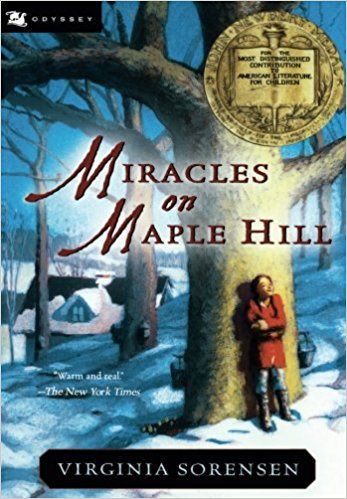
  • Make popcorn and cups of tea or hot chocolate and snuggle up with a great Read-Aloud book. I just finished the 1957 Newberry Medal, Miracles on Maple Hill, by Virginia Sorensen. This is a delightful book about a family who is in need of a miracle for their father who has come home from the war and how an old homestead restores him and his family.  (language arts)

51ZHiO8-jJL._SX345_BO1,204,203,200_


10 activities for Teaching Physical Education in Your Homeschool

download

Calisthenics, running laps, and taking showers are the first things that pop into my mind when I think of Physical Education. I believe this is because of the dreaded PE classes I had to take when I was in high school. I say dreaded because I wasn’t the athletic type and my endurance was pitiful. 😦 You can certainly do this as there is value in doing so, but here are some more ideas for your homeschool.

Sports teams and classes that are offered at the YMCA, gyms, or community centers can be counted as part of your Physical Education curricula. If that is not a possibility, then you can teach PE at home.  The main emphasis is providing activities for aerobic activity and fitness to your youngster.

Obstacle Course– You can create a simple course for your young athlete or make one more complex for your older child. If you are able to get outside you can incorporate a play set as part of the experience. Using a jump rope to walk along provides balance and you can lay it straight or fashion it into an S if your daughter needs a greater challenge. Have her throw a ball at a paper target, use a hula hoop for dual purposes to jump in as it is lying on the ground, and also set a number of prescribed rotations to complete. Crawling or hopping a certain distance gets those large muscles moving. The possibilities are endless. If you have an older student, have them create the course under your supervision. To make it even more fun and challenging, use a stopwatch and record the time it takes to complete the course. Each time your competitor can see if she can beat her previous time. To further extend this activity you can rearrange the course.

Indoor courses are fun and a wonderful energy- burner in inclement weather. You just need a large enough area to be able to set up your course. Normally I would not let my children walk on the couch, but part of the fun and allure for my boys to do this was they were allowed to crawl across the couch.lol  You can always put the cushions on the floor and have your son walk on them or hop from one to another. Here are additional things to do with your course. I have combined large and small motor skills since both need to be developed.  Tossing socks into a laundry basket; crawling under dining room chairs; lying down and scooting on your back; balancing a book on your head while walking to the next activity; hopping on one foot from one place to another; crab crawling; dropping 10 pennies in a cup; stacking plastic cups in a pyramid, etc.  I can see the wheels turning as you think about your own house and children. 🙂

Hide and Go Seek was a favorite activity for my children. This can be done indoors or out. Just a couple of rules need to be established. For instance, boundaries (outside- don’t go beyond the fence line or indoor areas that may be unsafe or you don’t want the children playing in or near).

Play Follow the Leader

Indoor bowling– Use 10 empty 1 or 2-liter plastic bottles and a tennis ball to play. Keep score and the one who reaches 50 wins. A variation of this would be to use a small beanbag and ten plastic cups that are in a pyramid. This would be a great challenge to older kids since this requires skill and patience.

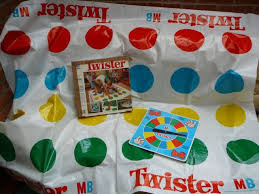
Play Twister If you don’t have the game, then create it by taping red, blue, green and yellow construction paper circles on the carpet and writing the directions on index cards. (right food red, left foot green, etc)
images-1.jpg

Balloon Games This is such a fun and inexpensive way to get your children moving. Blow up a balloon and have your child put it between their legs and walk from one end of the hall to the other end.

Balloon Tennis– You will need a 12-inch balloon, two paper plates, two paint stirrers, a glue gun, and masking or painters tape. Glue each stirrer to a paper plate to create your two tennis racquets. Using the tape, create a line (tennis net). See how many times the children can hit the ballon over the line. A point is awarded to the other person if you cannot return the balloon. The first person to reach 10 points wins. Balloon volley is the same idea- just without the racquets.

Body Balloonball– How many ways can you hit the balloon and keep it from touching the floor NOT using your hands? Keep score and if you have a partner, the first to use 5 different body parts gets one point. The overall winner is the first to reach 10.

Beanbag Toss– Your son can toss the beanbag at various targets on the floor (a laundry basket, see if he can land a beanbag inside a shoe, a paper towel that has a bull eye on it, etc.). If you have a little one and would like to incorporate more school subjects, how about a game that they need to toss the bag onto a certain color or a certain number? You can tape on the floor construction paper of primary colors and have additional papers with numbers. Call out directions (hit the green square. Hit the paper with the numeral 5 on it.) Let the game begin!

Tape Lines: Make 5-10 separate lines of tape, each about a foot apart, on your floor or carpet. Label the first one the “start” line and then give your kids simple instructions:

  • Long Jump: See how many lines they can jump over. Have them try and beat their best score each time. Experiment with arm swinging vs. arms behind their backs.
  • Run ‘n’ Jump: Now let them take a running start and see if they can jump even further!
  • Long Jump Backwards: Increase the difficulty by performing the tasks jumping backward.
  • Hop: How far can they jump on one leg?
  • Reach ‘n’ Stretch: How far can their leg reach with one foot on the “start” line?                                                                                                     Source: Whatmomslove.com

As with all physical activity, have your son or daughter stretch before and after so those muscles stay in great shape! 🙂

~ Lisa


Teaching Math in Your Homeschool

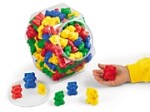
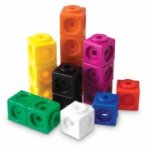
Using visual aids to teach mathematical concepts is vital when a student is first beginning to learn a concept. For instance: the difference between numeral and number. The definition for each of these according to Google is: a numeral is a symbol or name that stands for a number. Examples: 3, 49 and 12 are all numerals. So the number is an idea, the numeral is how we write it. Having objects on hand for your daughter to manipulate and interact with are extremely helpful. Children are concrete thinkers and using objects to count such as fruit or teddy bears or dinosaurs, etc., number lines, and unifix cubes for her to use will help cement these concepts.

Drill, drill, drill! When your son is first learning mathematical facts, it is important for you to review math facts daily until he knows them without having to add using his fingers.  Do you remember flashcards? Do you know why they have this particular name? You flash (quickly show) the answer to your mathematician first and then show them the problem. They repeat the answer back to you. As you continue to do this and you see that they are beginning to memorize the answers, you no longer will need to flash the answer.

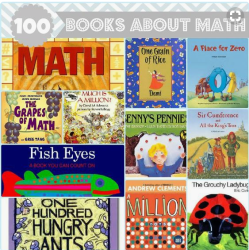
You can also play games to reinforce these concepts as well. I do not want to make this post extremely long, so next week I will share card game ideas you can play with your daughter or son. There are also math apps and books that teach mathematical concepts. I found a list of math apps and descriptions with them for you at Care.com Since today is Cyber Monday, Best Children’s Books has a sale going on today so you can snag a couple of great book titles for your child.  You can also find a fantastic list of Children’s books at Chasing SupermomScreen Shot 2017-11-27 at 6.16.46 AM

Have a great week! I hope you find some terrific new ideas to use in your homeschool with what I have shared with you today.

~ Lisa

Teaching Science in Your Homeschool

images-1

Teaching Science can be a daunting task for those of us who are not inclined toward that academic area.  When I first began teaching, we team-taught and I was assigned the area of science. I ended up failing miserably at each and every experiment I undertook to demonstrate to my middle school students. It left a bad taste in my mouth, but I decided that when I taught my own children they would not find out that it was one of my least favorite subjects. I think I succeeded pretty well in keeping that opinion to myself for the most part. 🙂 How did I do that? I found simple science experiments that would accompany the topic we were studying. Sometimes I used a textbook, other times I concentrated on a topic that I thought we could do on our own through hands-on experiences and videos or field trips.  Here are a few ideas that I hope will inspire you.

Experiential is the one word that I say works best for students. You can talk about why the sky is blue or what causes beautiful hues in the evening, but if you can show that to your daughter through a hands-on experience, how much more that will make sense! Here is the information about seeing the color blue in the sky:  Why the Sky is Blue  and here is a video. Doing the experiment yourself afterward would be really fun for your son to enjoy.


You may be saying, “That’s great, Lisa, but I am short on time and I am not sure how to find experiments.”

Great point, but with a little planning and searching on the internet, you can have some amazing experiences, experiments, and explanations for your daughter. Am I saying you need to do an experiment for each topic? While that would be nice, it is not always practical or possible. Look through your science book or topics you are going to be studying and find some simple science experiments or activities to do.

Needing some science lessons for your daughter to do with you? Teacher.org not only has lesson plans for grades K-12, you can download and print them too!

If you do not have the time or inclination, then find a science video demonstrating the topic. Steve Spangler is a scientist who does a fabulous job of creating excitement for science and also doing some really crazy things. Here is his website:  Spangler Science

If you have a middle school or junior high student, here are some experiments to try as well as outcomes of the experiments so you know what to expect. 🙂 Hot Chalk is a great resource and if you need a visual index of experiments,Education.com has over 1000 from which to choose.