Do your children enjoy watching the programming on PBS? There is good news–PBS KIDS launched over 40 new cross-platform games this month designed to help children ages 2-8 build critical math skills. They include PBS KIDS’ largest offering of interactive math content for preschoolers to date. The games comprise several suites, each of which is centered around a PBS KIDS media property – from CURIOUS GEORGE to THE CAT IN THE HAT KNOWS A LOT ABOUT THAT!. Available for free on the new PBS KIDS Lab website (PBSKIDS.org/lab), each suite links a set of games across platforms – accessible through computers, mobile devices and interactive whiteboards – so that kids engage with the same characters as they move from device to device. The content is also linked by a curricular framework, leveraging games on a variety of platforms to support key math skills. Check it out. It looks like a lot of fun!
Archives

The Old Schoolhouse Magazine
I am not sure if you have had the opportunity to read this great magazine or not, but I have enjoyed this resource over the years. It has some terrific home school articles that I find myself referring to more than once. This periodical also has product reviews that I think are helpful when you are considering purchasing curriculum.
“What is this magazine?” you ask. It is called the The Old Schoolhouse Magazine and this week you can read the electronic summer issue for free! Be mindful that the offer expires in less than a week. Enjoy!

Share this:

Apples (for the teacher and students)
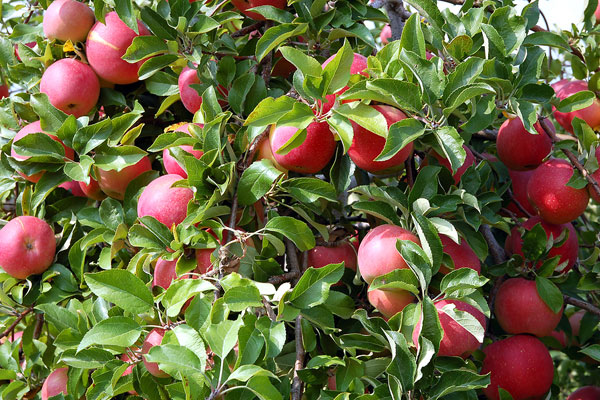 Delicious, Jonathan, Honeycrisp, Braeburn, and McIntosh are just a few of the varieties of apples that you can find at your grocery store. This month is apple month; what a perfect opportunity to teach a unit study about those yummy pieces of fruit!
When I think of one person who was responsible for the introduction of apples to the United States frontier, I think of Johnny Appleseed. His real name was John Chapman and he was born in Massachusetts in 1774. He spent 49 years planting apple trees in our region (Ohio, Illinois, Pennsylvania, Kentucky, and some say Michigan). His dream was to plant trees everywhere so that people did not go hungry. His favorite book was the bible and he was known for his kindness to both man and beast. He not only planted trees, but planted the Word of God as he was a missionary as well. Here are some website links for you to read more about his life:
Enchanted Learning’s website has several worksheets and activities concerning Johnny Appleseed and apples too. click here
Weekly Reader has an interactive story for children to read and also listen to as a narrator reads the story. There is also a quiz that can be taken online as well as printed. ***Note- The information says he planted seeds. He actually planted small trees and established nurseries that he visited throughout his lifetime, mostly here in Ohio! Okay, I guess technically he did plant seeds. I was inspired by his story as a young girl and planted a bunch of seeds in the backyard fully expecting them to come up, but they never did! They are actually difficult to grow from seed, no wonder I didn’t have any success. 😦
Speaking of stories, Johnny Appleseed: A Poem, Reeve Lindbergh is a book that I would have to rank as one of my all- time perennial favorites for fall. I love the poem and the illustrations. It is tastefully done with Americana artwork. As a side note, the author is Charles Lindbergh’s daughter!
You don’t have to go too far to see signs of Johnny’s influence in our area. A memorial in Spring Grove Cemetery in Cincinnati, OH is located on the summit of the grounds in Section 134. A circular garden surrounds a large stone upon which a bronze statue of Chapman stands, face looking skywards, holding an apple seedling tree in one hand and book in the other. A bronze cenotaph identifies him as Johnny Appleseed with a brief biography and eulogy. (courtesy of wikipedia.com)
Are you interested in museums? Urbana University, located in Urbana, OH, maintains the world’s only Johnny Appleseed Museum, which is open to the public. The museum hosts a number of artifacts, including a tree that is believed to have been planted by Johnny Appleseed. In addition, the museum is also home to a large number of historical memorabilia, the largest in the world. They also provide a number of services for research, including a national registry of Johnny Appleseed’s relatives. In 2011 the museum was renovated and updated and is now able to hold more memorabilia in a modern museum setting. (courtesy of wikipedia.com)
Now on to apples!
Here are some activities you can do with apples. Arrange a taste test for you, your children, and friends too if you like! Cut up a variety of apples and label each different apple as you go. For instance, Apple A could be Granny Smith, Apple B -Delicious, Apple C- Gala, etc. Distribute the apples and let everyone taste them. It would be a good idea to take a sip of water in between each apple slice so the previous taste doesn’t linger. After all of the samples have been tasted, have everyone vote on their favorite apple. Graph the results.
You can also make a graph of people’s favorite apple dish: apple pie, apple crisp, applesauce, carmel apples, peanut butter and apples, nutella and apples, apple fritters, etc. If you don’t know what some of these dishes are, or you have never eaten the dish,why not make them for a health/nutrition class?
An amazing website that Jerrie Cheek created has about apples will provide you with numerous apple related activities for all young elementary subject areas. She has poetry, books, fingerplays, art activities and more! She is a former classroom teacher so her ideas are for larger groups, but are certainly adaptable.
Here are a few of my personal favorites for books on apples.
The Seasons of Arnold’s Apple Tree, Gail Gibbons This is a nonfiction book that is well done and has been enjoyed by my family. This would be a book to read aloud to younger children while older children could read it on their own. You could create a chart that older students fill out that lists the differences in the life cycle of the tree. Apples is another book by the same author. This would be more appealing (“apeeling”lol) to preschoolers through grade 2.
The Apple Pie Tree, Zoe Hall This book tells the story of the life cycle of the tree as well as the role of honeybees and other aspects of trees such as a place for birds to build nests for ages 4 and up.
How to Make an Apple Pie and See the World, Marjorie Priceman Not only is this book about apple pie, but a world tour of the places from where the ingredients came!
Field Trip! Places to visit locally to purchase apples are listed below:
Irons Fruit Farm, Lebanon, Ohio There is a lot to do here as it is an orchard as well as a farm with pumpkins and a corn maze.
Jungle Jim’s, Fairfield, Ohio If you haven’t been here before you have to go at least once. They have a vast variety of everything, and apples are no exception. The Jungle features locally grown apples from Ohio and Michigan this time of year.
This unit wouldn’t be complete without an apple recipe or two for you and your children to make and enjoy!
Applesauce
4 medium apples
1/2 cup water
1/4 cup sugar
pan, knife, spoon to stir with, cinnamon, bowls and spoons
Peel, core, and slice the apples. Cut the apple slices into small pieces. Place the apples in the pan with the 1/2 cup of water. Simmer for 15 minutes. Stir in the 1/4 cup of sugar and add the amount of cinnamon to your liking. Pour into bowls and let cool before eating. I personally like it warm. 🙂
Easy Apple Crisp (courtesy of momswhothink.com)
Ingredients:
5-6 apples
1/8 teaspoon salt
1 cup uncooked oatmeal
1/3 cup butter
3/4 cup brown sugar
cinnamon
1/2 cup flour
white sugar
Directions:
1. Slice apples in baking dish (peeled or unpeeled).
2. Sprinkle cinnamon and white sugar over apples.
3. Mix remaining ingredients with a fork and sprinkle on apples.
4. Bake at 350 degrees F for 35 minutes.
Have a great time on your apple adventure. Think of me as you eat your Apple Crisp.
Share this:

Columbus Day
Today is the day we commemorate Christopher Clumbus’ voyage to the Americas. Here are some fun worksheets and activities to do.
Christopher Columbus Character for a play or story telling.
Christopher Columbus mini book to print along with a quiz!
Write a story about Queen Isabella and Christopher Columbus.
Math worksheet using a graph
Read and color sheets
Have you tried to do copywork with your children? This is a terrific passage to introduce to your students. It would also make a fun refrigerator piece or a letter to send to grandparents if you had your scholar copy and illustrate it. This poem is short and easy to remember for little ones if you’d like to have them memorize it and recite to Dad at the dinner table tonight.
In fouteen hundred and ninety-two
Columbus sailed the ocean blue (author unknown)
The poem Columbus would be ideal for choral reading, read aloud, memorization. or copywork.
Here are some book selections for Columbus Day. Click here to see the list.
The First Landing of Columbus in the New World, Washington Irving This is a short passage that can be read aloud and discussed with your older students. Questions: How does this vary from the stories you have heard? Summarize Columbus’ prayer when arriving on shore.
The True Story of Christopher Columbus,Elbridge S. Brooks This is an 14 chapter online book that can be downloaded if you so choose. First published in 1892.
Art Picture Study Here is a smaller picture of First landing of Columbus on the shores of the New World, at San Salvador Questions to ask:What is taking place? who is the man kneeling in front? What does the flag represent? Who do you think the man with the cross is and why is he in the painting?

Share this:

A Chance to Win a Math Game!
It’s always fun to win something, and especially something cool like an educational math game! I have met a great fellow blogger who has reviews about products. This month she has reviewed Math House Games. Check out her blog, Growing Fruit and enter the contest for your chance to win!
 Schoolmarm Ohio
