Archive by Author | Lisa McAfee

Thank You Giveaway

Screen Shot 2013-09-16 at 6.04.54 PMWow! I can hardly believe it; my blog  has over 20,000 views. That doesn’t even include how many times I have gone there to correct posts and check on visitors. 🙂

I feel like celebrating as I have to believe that I have helped someone along the homeschooling journey these past two years. Join me in my celebration by participating in my thank you giveaway. The prize is a $5.00 Amazon gift certificate. (You can buy several apps for your iPad or Smartphone) If you are interested in having a chance to win, here are several ways to enter. You can also read on to see how to increase your “chances”.

* Leave a comment below letting me know what you think about the blog. (positive and constructive criticism please 🙂 )

* Refer someone to my blog. Let me know you did that so I can enter you for another chance.

* Post it on your social media contacts.

* Follow my blog if you are not already.

* Post a comment about something you would like me to write about in the future.

The drawing will be next Monday, September 30 at 5:00 AM. I know, you are wondering, “Who gets up that early?!” I do. 🙂

Blessings to you and your family and thanks for being a reader.

~ Lisa


Congratulations to Angela! Please email me with your address so I can send you your gift card.

The Dreaded Part of Writing: Editing

Writing

(Photo credit: Wikipedia)

I think for the most part children like to write. Who doesn’t like to tell about something that happened to them? The part that I think students get bogged down in is the editing portion. I know I loathed, despised, abhorred doing this as a student. It just didn’t seem important and was painful.  After all, I knew what I was trying to say. in some way I felt exposed and vulnerable. Criticism was hard to take and I didn’t feel confident in what I wrote. Also, I just wanted to be done with the assignment and on to the next thing (like talking on the telephone or hanging out with friends).

Last week I wrote a post and I didn’t ever notice before that you can see how many editions you have made to it. I was surprised to see that I had edited it 25 times when I finally decided it was the way I wanted it to be before publishing it. 25, seriously?!  If you had told me that when I was a student I would have never believed you. 🙂

So, how do we help our students make a habit of self-editing? I’d like to offer some suggestions that I have found to be helpful over the years of teaching and tutoring in writing.

Write something every day. I am not suggesting everything is going to be edited, but to the contrary. If your child is writing and has a voice, he can express those thoughts without feeling that his writing is going to be “red-penned” and given back to “fix it”.

After you have given lots of opportunities to write, ask your student to pick one  piece they would like to write about more. This process will take place after your child has had several pieces that they have written so they have some choice on what to choose. You want your child to pick something that they have knowledge about and can actually add to their writing. For instance, let’s say your daughter loves horses or your son loves to play with Legos and they wrote about that one day. Your older student wants to talk about his favorite sports team or her favorite movie. In fact, that is all they want to talk about or do. Terrific, that means there is quite a bit of knowledge to work with to create a successful paper.

Have them read the piece they chose out loud, either to you, another adult (dad, grandparent) or to a sibling that can ask questions. In other words, now is not the time to have them read their paper to the baby. If you have a junior or senior high student, peer evaluation would be great. Have the person listening ask questions for clarification and always have them give positive feedback at the end. For instance, “I liked the way you began your paper. It made me want to read/hear more about it!”

If a student would feel we’re  in this together, I would suggest that you also write something and have your student ask you questions. Modeling writing is the best way for a student to grow and learn.

The author should highlight the sentence where the person asked questions so they can go back and edit their work. Make corrections and then read it again to the same person if possible. End on a positive note so the writer feels successful. This will let the student know that the process isn’t as painful as they thought and what they wrote was important. Keep on doing this as you have writing pieces that can be edited. Remember, don’t do this to every writing piece.

Publish it! Everyone likes to have an audience and to feel that someone found what they wrote to be interesting or engaging. There are a variety of ways to publish the edited work.

Young students can write, illustrate, and share at the dinner table with the family. The baby can listen this time. 🙂

Send it electronically to family members and ask them to write a comment about the edited work to the author.

Buy a hardbound blank book or one with lines to write the story. Have your author write a short bio piece in the front of it.

For older students they can create a blog and have people post comments. If you need an audience, post the blog link down below in the comments section and I will be sure to visit and leave a comment.

Happy editing!

~Lisa

On Your Mark. Get Set…

Go! We are off on a year of home schooling. Planning makes all the difference in the world in having a successful school year! Here are some questions to consider when you begin this year:

 What are your expectations for your student(s)?

What is your plan to get there?

Do you have a schedule for your school? How do you have textbooks, curriculum, and paperwork organized?

What type of support do you have to help make your school year successful?

When thinking of expectations for your student consider academic goals. Some that come to mind would be learning to read (younger students), writing a book report (middle school student), understanding and doing  mathematical operations before beginning algebra (junior high student), or dissecting specimens for biology (senior high student). List expectations for each subject area.

Don’t forget character traits and habits as part of your goals. Do you have a student who procrastinates, or is messy, or doesn’t complete tasks on time? Write down one area that you’d like to see your student improve in this year. Provide a plan, practice, patience and extreme amounts of encouragement to help them succeed. Once they have succeeded in that area, you can add another habit you’d like him/her to establish. Warning: Don’t overemphasize this, but work diligently on helping and give ginormous amounts of praise when you see progress. 🙂

Planning is a key to success in your homeschool. It doesn’t need to be a lesson plan book, but creating a system that will keep you on track will help you achieve the goals you establish for your school year. Besides lesson plan books you could create a journal of goals and ideas or you can have a spreadsheet. Pick something that fits your personality and teaching style.

Keep a master schedule for your school day. The beauty of homeschooling is that you can be relaxed, but the downfall can also be the same.  Here are some ideas to consider: What time will you start school? What time will you eat lunch? What time do you plan on finishing school? When my children were in elementary school we began very early because they were early risers. The rule was to be dressed, beds made, and breakfast eaten by the time we began. I didn’t want any excuses to be in the refrigerator or getting up from the table to do other non-school related activities once our school day began. As they got older and wanted to sleep in, I adjusted our time to start later. (8:30 or 9:00)

Do you have other outside activities throughout the week? Keeping a calendar of those activities helps you to say yes or no to extra things you might want to do. School is the priority, so be sure not to add a lot of extras that will keep you running during the week. I noticed that I was hurrying my boys through their schoolwork so we could go to co-op, sports activities, friends’ houses, and church programs. Life became harried and stressful for all of us. I had to learn that less is more. I had to stop and consider what was best for our school day before “adding one more thing.” A good piece of advice I have received is what do I drop if I add another activity? I am still working on that one!

Organizing all of your curriculum and paperwork will help you stay focused and not feeling overwhelmed. If you could see my kitchen table and school desk right now you’d say, “Sister, take your own advice!” I am actually going to spend part of today organizing my “stuff”  because I am feeling out of sorts with the amount of things I have pulled out to teach my junior high classes and tutoring.

Clutter can make me feel that I am out of control. Having a place for everything saves time and creates a much more peaceful environment. Find somewhere to store your things first and then find a place that is accessible to your children so they can put their books and papers away. Give them the responsibility of putting their school books and papers in their place (within reason, of course). Even little ones can have a box to put away their toys so that you aren’t cleaning up after everyone.  After all, our goal is for them to be independent.

Some ideas to help with organizing is to have plastic bins called workboxes. Each child has their own labeled box with their textbooks, binders and supplies. Each night you put their work for the next day in there and each day they get it out/ return items to their workbox. Create a separate place for papers to be graded if you assign independent work. You can file papers after you have graded and discussed any problems with the work your child may have missed. A hanging folder system works nicely with each folder either labeled according to subject or month so that when you have a portfolio review next spring it is as simple as gathering the folders together and putting them in a box/bag for your appointment.

What kind of support do you have with homeschooling? Homeschooling can be hard. There, I said it! I know because I homeschooled my boys through their compulsory years of education and have the t-shirt to prove  it. (Not really the t-shirt.) What kind of support do you have for the days where the little yellow school bus looks enticing? Find a support group or a person who will listen and encourage you with the decision you made to homeschool. It really makes all the difference when you can call and talk about school issues. If you don’t know anyone that is in your area, do an internet search for state homeschool organizations and contact them. Chances are there is someone close by who is homeschooling. You can email me and I’ll be glad to send you a note of encouragement!

Have a great week!

~Lisa

Fire Safety and Prevention

FireSafety1“That was 9-1-1 calling.”

This was the response I received from Ian when I asked him who had called one early October morning.

“What?!” I said in a surprised tone.

“I guess Malcolm called them,” was the response I received from Ian. Needless to say, after that phone call we had a long talk reiterating that you call 9-1-1 only in emergencies. I must say that was the most memorable fire safety lesson I ever had with my boys! However, your lessons don’t have to be as memorable. 🙂

Fire prevention is one of the topics that we need to teach our children annually when we home school here in Ohio, so how do we do that? I have gathered some resources for you and will categorize them according to general grade levels. I am also listing some of the activities we have done concerning this topic.

For All Family Members

Have smoke detectors in children’s bedrooms and hallways. Studies have shown that in 2/3 of residential fires where children have been injured there were no working smoke detectors. Change the batteries semi-annually. We change the batteries with the Daylight Savings Time dates. Make sure the detectors are working at that time. Show the smoke detectors that are located throughout your house to your child(ren) and push the alarm so that all are familiar with what it sounds like so they recognize the sound in case of an emergency.

Practice exit routes in your home. Have several ways to exit from your home in case one of the routes is no longer an option. Pick a meeting place for all of you to meet. Make sure it is a few houses away to avoid the emergency vehicles. Discuss getting out of the house and NOT trying to find the pets or going back into the house for ANY reason. Practice touching the door to check and see if it is hot. If so, children should not exit that way. Show the smoke detectors that are located throughout your house to your child(ren) and push the alarm so that all are familiar with what it sounds like. Discuss various  possible exits in the event of a fire and practice leaving by way of each of these exits.

Purchase fire ladders and put near the window or under the bed. Be sure and practice using them and climbing out the window. Are you ready for another McAfee fire prevention story?  One morning when Malcolm was about 6  I saw him outside in his pajamas. “That’s funny.” I thought to myself. “I don’t remember seeing him come down the steps and I certainly wouldn’t have let him go outside in his pajamas!”

I was starting to become alarmed as I realized the back door was locked and he couldn’t have gotten out that way. When I called him to see how he had managed that feat he said he had been practicing jumping out his 1.5 floor bedroom window. Whaaat?! “It was easy, Mom. I did it jut like you told me to in case there was a fire. I just hung onto the window and dropped down.”

Preschool- Elementary

Did you know that children under the age of 5 make up 22% of residential fire-related deaths?  It’s a good idea to practice fire safety prevention with your preschoolers when doing activities with your older students.

Preschool Practice crawling on the floor. Drop Low and Go is a good way to remember this in the event of a fire and there is smoke in the house. Drape a sheet or blanket across two chairs and pretend that this is smoke. You can also use a jump rope to raise and lower “the smoke” and can even have the children scoot on their bellies. I am sure the preschoolers are better at this than other family members!

Elementary, Middle School  Practice Stop, Drop, and Roll by having your student try the technique. The above-mentioned preschool activity can be done as well. Be sure to pick a meeting place that all family members are familiar with and would be away from the emergency vehicles. Somewhere like next door would be a place I’d recommend.

Discuss dialing 9-1-1, but for heaven’s sake, don’t let them do it. 🙂 Practice what to do as you pretend to call the emergency staff. (Your name, your emergency house fire, and your address) If you do not have a land line anymore, where is a place your children can find your cellphone? Be sure to keep your phone in the same place every time so your children can find it.

Design fire safety posters and hang them on the refrigerator or in your kitchen or schoolroom. These are great reminders of what to do in case of a fire emergency.

Plan a trip to your local fire house. This is important because the firemen will put on their suits and show the children there is nothing to be scared of and they are there to rescue your children if needed. They may also allow your children to go through the smokehouse if they have one available. The smokehouse is a trailer that is filled with “smoke” and children crawl through it to see what it would be like if there was a real fire.

I have another article about fire safety that has books and activities to aid you with this topic of study. Click here  Additionally, here are some websites that have great information. They have online games, coloring sheets, and word searches to reinforce your discussions. There are also some great tips for safety that I didn’t cover that are on the first website.

Fire Facts

Sparky the Fire Dog

Rescue 1: Fire Safety for Kids

Home School in the Woods

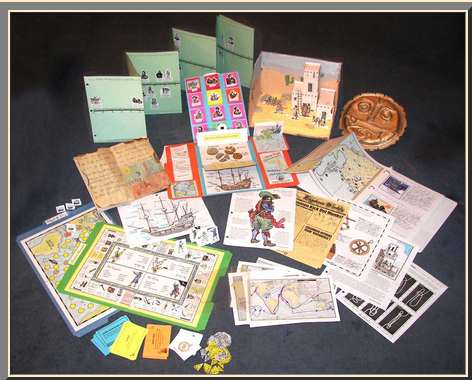
HSitW-logoNo, I am not suggesting you do this, but if you feel inclined to do so you may. 🙂 This is the name of a company that I have just discovered and I l-o-v-e their products. I first saw one of their lapbooks this year when I was reviewing work for a few students. The quality of these products is amazing and the activities that are being offered appear to not only be fun, but reinforce the lessons that have been taught.  The only caution I have is the artwork is so beautiful you may want to cut the pictures yourself, requiring extra time. I think it would be worth it, but of course, that is up to you.

History Through the Ages timelines are also of high quality. These can be used for a variety of purposes (large timelines or small timeline notebooks) and the timelines can be used to accompany some of the Mystery of History and  Diane Waring’s history courses. I love that there are products like this so you don’t have to create all of it yourself. This saves time and, to me, it is worth it! Here is a picture of their New World Exploreres. You can download a free sample lesson to preview before ordering. Home School in the Woods

Screen Shot 2013-08-26 at 5.23.14 AM