Archive by Author | Lisa McAfee

American Art History

As you begin to plan for next year’s curricula I wanted to share with you a series that I love! I think you will want to add this to your list of books to purchase.

American Art History by Kristin Draeger is a unique curriculum since it is written from a perspective of  fictional newspaper reporters.  Some lessons are presented as though the artists are interviewed, others, as if the reporters discovered details of the artist’s works and life through historical documents and careful study of their work.

Each volume has sixteen artists and is designed to be used once a week for students in grades 3-8, but you could adapt it for  younger and older students too. Because of the wealth of information and fun activities that are given for each lesson, I believe one lesson could be studied for two weeks. The lessons are suggested to supplement your American history curriculum and considered to take two hours, but you could do a little each day if you don’t have that much time. This curriculum would also be a fantastic co-op class. There are three books that are part of the American Art History volumes.

American Art History Volume II begins with Federal architecture and finishes with Georgia O’Keefe. Lesson one features the White House and its architect, James Hoban. This particular study interviews Mr. Hoban and has a treasure trove of information that I never knew before! The lesson has facts, photographs, and entertaining cartoons as well as a Spot the Forgery activity. Here your child looks at the forgery and compares it to the original. The purpose is for him to become familiar with the works of art and study them in greater detail in a fun and engaging manner. Here are pictures from the study of  Winslow Homer:

American History Art Bingo is a review game for the artwork you study throughout the year. Each student is given a unique bingo card with individual works as the bingo mat. You hold up the larger image of the artwork and call out the artist’s name, location, and date of the piece. The cool thing is that students memorize these facts without even realizing it! 🙂 You know what is remarkable? Once you have studied these pieces,  she will start seeing them all over,  in advertisements, movies, museums…

american-art-bingo-vol-two-457x600extra-american-art-history-bingo-cards-for-volumes-iii-iv-47-125x161

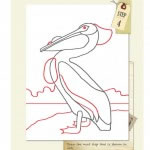
Drawing American Art Your child by this time will be itching to reproduce the artwork that you have been studying. He can interact with the artwork and can repeatedly practice if he enjoys a particular style. This book gives step-by-step instructions for a drawing project that corresponds to each chapter. You begin with a template that can be located on the website: artk12.com/downloads or photocopy the templates that are in the book. After the drawing  is completed, place the artwork in a plastic sheet protector and file them in a three-ring binder. Label your binder along with the year. This is a great keepsake and if you repeat the course in a few years you can look at the previous year’s binder to see the improvement that has occurred.

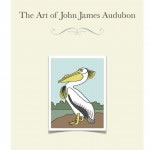
* All pictures are from the ARTK12 website.

I have received a free copy of these books from ArtK12 in order to review them and did not need to write a favorable review. Please go to their site to see more fantastic products! ARTK12 You can save as much as $54.00 if you order the book sets directly from their website. 

Indoor Play Activities

Living in a climate that is cold during the winter months can bring out the boredom comments. My boys knew better than to utter the words, “I am bored!” because I would have them do a chore for me since they obviously did not have enough to do. They actually were talking about that just the other day! 🙂

Here are some ideas to help with boredom for young and old alike.

screen-shot-2017-01-13-at-6-29-00-am

Kinetic Sand

Materials
1 cup fine sand
1/2 tbsp cornstarch
1 tsp dish soap
water (as needed)
*Food coloring

Directions
Step 1: In a plastic bowl, mix fine sand and cornstarch together.
Step 2: Add the dish soap and then add water a little at a time so that it holds together, but is not too wet. Combine thoroughly until well mixed.
* Step 3: Add food coloring (optional).
Step 4: Let dry for 1-2 hours.
Step 5: Begin playing!

The amazing thing about this sand is that it holds together well and it doesn’t make a mess! whaat?!  Add cookie cutters and plastic knives (if age appropriate) for your children to use. I can’t wait to use this myself! This is a stress reliever, creative play medium and excellent aid for fine motor skills.

School Connections Science- discuss objects have matter; Physical Education– fine motor skills; Health– relieving stress If you have a child who becomes frustrated or stressed, discuss using this as a means of taking your feelings out on an object rather than someone.

Oobleck Ingredients

  • 1 part water (1/2 cup)
  • 1.5 to 2 parts cornstarch (1 cup)
  • Small amount of food coloring (optional)

Mix ingredients

  • Start with the water in a bowl and add the cornstarch a bit at a time.
  • Stir with a plastic spoon until it has a gooey consistency. You may want to use your hands.
  • When the Oobleck is just right, slowly add food coloring, if you want. This can be a challenge to get it mixed properly.
  • Now you can play with it. Be sure to keep it in a plastic container as it is ooey gooey and can stick to surfaces. But, it is so worth making  and playing with it!

Things to do with Oobleck

  • Grab a handful and squeeze it. Let it ooze through your fingers.
  • Make a puddle and quickly drag your fingers through it.
  • Put it into a plastic container and shake it .
  • Jab at the Oobleck and then slowly let your finger sink in.
  • Roll some Oobleck into a ball. It becomes solid, but when you stop moving it, it will melt back into your hand.

Warning! Don’t drop Oobleck on cloth furniture, a deck, or sidewalk. It’s hard to get off.

  • Oobleck isn’t poisonous, but it tastes awful. Wash your hands after playing. Make sure children are supervised.
  • Wear old clothes, as oobleck tends to get messy. While it is messy, it will come out with a bit of water.
  • Lay a couple newspapers on the surface where you are playing.
  • If Oobleck is left out too long, it will dry out and turn back to cornstarch. Throw it away if this occurs.

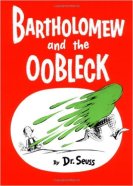
School Connections:  Science- you can discuss what is a Non-Newtonian fluid. Newton described how ‘normal’ liquids or fluids behave, and he observed that they have a constant viscosity (flow). … We call these ‘strange liquids’ nonNewtonian fluids. …NonNewtonian fluids change their viscosity or flow behavior under stress.  Reading– Read Bartholomew and the Oobleck. You can discuss weather, the consequences of our actions and wishes, being grateful, or what is a hero. 

Video  This is a wonderful reading of the story. Click on the word video to take you there.

 Interactive Book  A fun app to engage your student in the reading of the story. This is especially helpful for those that are not yet reading or not reading at this level, but like to have stories read to them.

51aj9mj1pal-_sx354_bo1204203200_


If you are interested in purchasing the book, click on it to take you directly to Amazon.

The Innkeeper of Ivy Hill

image001

Winter is the time of year when I like to curl up in a comfy chair with a blanket and read books. I just finished a terrific book that I would like to share with you.

I thoroughly enjoyed reading the endearing story of Jane Fairmont Bell, a young widow, who is the central character in the first book of a trilogy, Tales from Ivy Hill, by  Julie Klassen.  Set in the early 1800’s when coaching inns were the place for people to rest along their journey and get a meal or refreshments, Jane is the proprietor of an inn that her husband had left to her upon his death. Being at a disadvantage since her husband did not include her in the operations of the inn, Jane realizes that she is in risk of losing it due to mismanagement and untold secrets from her husband’s past.

Jane is uncertain as to what to do and certainly needs help with managing and running the inn if she is going to keep it.  Otherwise, not only will she lose her income, but also her home. Who can she trust to help her? Will her brother-in-law with a shady past be someone that she can lean upon or does he have ulterior motives? Can Jane put aside her feelings of inferiority to ask for her mother-in-law’s help? What about the mysterious stablehand who seems to know much more than just about horses? Help comes from a variety of unexpected sources that make this story so interesting.

I was sad when the book ended because I wanted to find out what was going to happen to Jane and the people of the village where she lives. One of my tests of a great book is if I am still thinking about the book several days later and this was definitely the case with The Innkeeper of Ivy Hill. I am looking forward to reading the next installment of her trilogy.

61q3qqe98l-_ux250_ Julie Klassen loves all things Jane–Jane Eyre and Jane Austen. She worked in publishing for sixteen years and now writes full time. Three of her novels have won the Christy Award for Historical Romance. Her book, The Silent Governess, was also a finalist in the Minnesota Book Awards, ForeWord Reviews Book of the Year Awards, and Romance Writers of America’s RITA Awards. Julie is a graduate of the University of Illinois. She and her husband have two sons and live near St. Paul, Minnesota. Visit http://www.julieklassen.com for more information.

I have received a free copy of this book from Bethany House in exchange for my honest review. I was not compensated in any other way. All opinions are my own. I am disclosing this in accordance with the FTC Regulations.

12252-multi-bethany-blogger-review-header-large


Passing on a Legacy

187740

I was looking on my bookshelf today and found a book that I had given to my mom nearly 20 years ago. It is called Reflections from a Mother’s Heart. It is a journal that has questions for you to answer about your childhood and is broken into months of the year so you can spend a year filling it in without feeling overwhelmed.

I am such a terrible journal writer that I found a duplicate of this book next to the one I had given my mother. It was given to ME from a friend of mine in 1998! I had begun the journal, but then family came along and I obviously never got to return to it. I also totally forgot about it. lol My goal is to finish this by June so it doesn’t sit on my shelf for another 19 years!

So, if you would like to leave a legacy of early childhood memories that your children can read about later and gain some insight into why you act the way you do, 🙂 perhaps consider completing a journal like this one.

I will leave you with a few questions from the journal so you can see what they are like. Of course, if questions do not pertain to you, then just skip them.

Who gave you your name and why?

Where was your childhood home located? Did you enjoy living there?

Did you have a family pet? What was its name? Describe it.

What toys did you like to play with?

Geography Ideas

Science has proven the more senses you involve when learning something new, the more it will help you to remember it. I can use all the help I can get and I think that might be true for your child as well.

I had the opportunity this summer  to see a book, Draw the USA, that your child can use for geography throughout the years. Using their artistic abilities, amazing maps can be created. Even if she is not an artist, she can still be successful with this since it is a step-by-step drawing book that begins with a basic shape and not attention given to every nook and cranny of the states. Draw the USA is broken into a step-by-step process and can be done as a  year long project as you are studying the states. I can guarantee that your budding geographer will remember the states better using this technique.

If your child would become frustrated with this, then purchase some tracing paper. He will benefit from this and you can always use the book again when he is capable of drawing it on his own. This book will certainly be a resource that you will use time and time again.

If, for whatever reason, you choose not to have your student draw, then you can purchase puzzles of  the United States. As she is working the puzzle, have her say the names of the states as she places it in the correct spot. Hearing, seeing, touching, involve quite a number of senses to aid in memorization.

You can also purchase placemats and ask questions of your children when you eat. For instance: “What state is north of Ohio?” or  “What states are along the west coast?”

When you are studying geography it is beneficial to have other supports or materials to help your student with the concept of landforms and geographical boundaries. I suggest purchasing a large wall map such as this one by Rand McNally so that you can study the states more in depth, looking at physical features such as mountain ranges, rivers, deserts, plains, etc.

61v7uvrclfl-_sy318_bo1204203200_

Atlases are excellent hands-on tools that children can study maps in greater detail. You can also teach exact location (latitude, longitude) better this way. We use atlases, such as the one pictured below, in my World Geography class when studying geography. Be sure to get an up-to-date atlas if you are studying the world as countries are renamed or even created, South Sudan and Kosovo come to mind.

61azitc-3al-_sx388_bo1204203200_

This author, Kristin J. Draeger, also has Draw the Europe; Draw Africa; Draw Asia; and Draw Canada and you can use the same ideas for teaching geography in these areas of the world as well. Hang your child’s finished works on the wall of your schoolroom when you finish. You may even want to join them and include your drawings on the wall!

img_2612