Archive by Author | Lisa McAfee

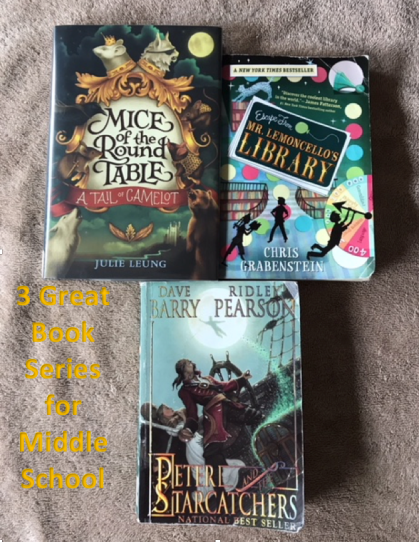
3 Great Book Series for Middle Schoolers

Screen Shot 2018-01-01 at 10.18.39 PM

Woo! Hoo! I am excited to share these series that are terrific for middle school students.  Not only are they each fantastic books, but you can let your bookworm read these without worrying about bad language or inappropriate scenes. You can even use these for read alouds for your entire family.

IMG_3995Goodreads recommended the first book, Mice of the Round Table and I am so glad that I read it! This is a fabulous and imaginative tale (tail) of the beasts that live in the kingdom of Camelot who must unite to defend and protect the kingdom of both man and animal against an evil force. I am really looking forward to reading the next book, Voyage to Avalon

IMG_3982

My niece recommended the book, Escape from Mr. Lemoncello’s Library. This book was not only fun to read, but it is set in Ohio and in a library (two things that are dear to me). Twelve lucky students are selected to have an exclusive overnight preview of the new town library that Mr. Luigi Lemoncello, an eccentric game creator has designed for the town. The catch is that once the students are there, they must use clues from library resources to be able to get out. I loved the references to other great books that were throughout the story. A bonus is at the end where there is a list of other books mentioned to read as well. There are also some word puzzles and sneak peaks of books that follow. Other books in the series include Mr. Lemoncello’s Library Olympics, and Mr. Lemoncello’s Great Library Race.

IMG_3997

Peter and the Starcatchers is a book about who else but Peter Pan? This is the story of how Peter arrives in Neverland and the adventures that await him and his friends. There are sword fights, mysterious happenings, and treachery, along with loyalty, bravery, and selflessness. I am eagerly looking forward to reading the other two books in this series, Peter and the Shadow Thieves, and Peter and the Secret of Rundoon

Setting Goals for Your Homeschool

pexels-photo-38196

Beginning the new year is a time to review how your school year has gone so far and what you would like to accomplish for the remainder of the academic year. Consider focusing on the following:

Academic goals- What were concepts and ideas your daughter learned since the beginning of the year? What are concepts that you want to have your son master by the end of the year? Write them down and review each month the ones that have been completed.

Personal goals- What goals do you have for yourself, both as an educator and personally? Have you considered going to a homeschool convention? If not, how about going this year?  Great Homeschool Conventions has several conventions throughout the United States. Do you have friends with which you can go places or call?  Consider joining a homeschool support group to encourage you on this journey (for information on groups in your area CLICK HERE)  or asking other homeschool moms to join you for a cup of coffee. If you have friends that do not homeschool, be sure to keep in touch with them too.

Marriage goals- For you who are married, homeschooling can put a strain on your relationship with your spouse. One thing that Dale and I did for several years was to have “couch time”. We would set aside one night a week to sit on the couch and just discuss how things were going. Sometimes we read a book on strengthening our marriage, other times we had a powwow to discuss ways to parent and issues that came up with our sons.  Be sure to keep connected, because believe it or not, one day you will no longer have your children at home and it will just be the two of you again. 🙂

May this year be a wonderful and special year filled with great “Aha!” moments as you and your son and/or daughter learn about the world in which we live. May your home be filled with laughter and fond memories. May you enjoy your children and the opportunity to homeschool. Happy New Year!

~ Lisa


5 Ideas for Teaching Health in your Homeschool

When some homeschool moms come to see me for their written narrative and I ask them about what did they teach or do for health I get a panicked look. I assure them that they have been teaching health all along, but that it is advised that they have a plan to cover specifics topics throughout the year. So, what kinds of topics do I suggest?

Disease Prevention-  Discuss with your son the importance of covering his mouth when he sneezes or coughs. I just came up with this idea to make the point of germs being airborne. You will need:

1 taper candle

1 candlestick

1 lighter

Light the candle and place it on a table. Have your son gently blow one time in the direction of the candle. See how his breath made the candle flicker. Have him continue to blow (or cough) as he backs up one foot. Continue this until the fame no longer flickers due to his blowing (coughing). I think you will be surprised at how far germs can be spread by not covering your mouth (up to 18 feet according to a few internet sources).

download Of course, the same idea goes for sneezing. According to wonderopolis.org, sneezes can actually travel as far as 200 feet! Ewww.  Have a discussion on which technique is most effective in stopping the spreading of germs. Is it sneezing into the hand? How about the elbow? Or is it a facial tissue or a handkerchief? Here is a Mythbuster video about testing these various methods “Catching your sneeze”.

Washing Your Hands helps to lessen the spread of disease as well. If you have a daughter who loves to cook, how about whipping up a batch of agar to grow bacteria? By making your own and then swabbing areas of your house that she thinks collects germs, she will be excited to see the bacteria begin to grow. Mad About Science has the recipe for you to make your very own agar. CLICK HERE As part of the experiment, have your daughter create a list of suggestions on places throughout your home where germs will be bountiful. Swab away! (Right after I finished writing this paragraph I went and disinfected my toilet handle. lol)

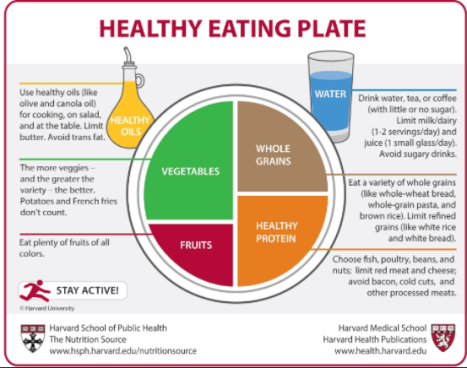
Eating Healthy Growing up, the FDA called the guide to eating healthy, the Food Pyramid, but now the title is Choose My Plate. Harvard has a great visual that explains the guide in more depth. Too bad potatoes and French fries don’t count. 😦Screen Shot 2017-12-18 at 10.41.53 AM.png

Have your family make a list of healthy snacks and meals that they will enjoy. We are not big bean eaters here, so making a black bean soup would be a waste of money and time. Choose dishes your family will enjoy. Try being adventurous and add a new vegetable every couple of weeks. As an adult, my vegetable eating has expanded beyond corn, broccoli, and cauliflower. Have you tried zoodles (zucchini noodles) or spaghetti squash? These are both fun for the children to try and they have such a mild taste that you can’t really taste the squash themselves.

Ideas for expanding the healthy lifestyle and incorporating school are:

  • Create a bar graph-Ask each family member what is their favorite vegetable. You can have three choices to make it easier (corn, green beans, peas). Share the results at the dinner table and serve the overall favorite.
  • Write a menu using the Healthy Eating Plate as your guide. Purchase the ingredients and have your son or daughter help if possible,
  • Create placemats with the Healthy Eating Plate as the design. You can do this by tracing one of your plates onto a piece of copy paper and copying the design and categories onto your plate. Your daughter may wish to decorate her plate’s border. If she isn’t writing and reading quite yet, make a photo collage of each category using grocery ads for pictures. Have the placemats laminated for longevity.

Exercise With the beginning of winter upon us, getting outside to burn off steam can be difficult. How about some of the activities I mentioned in my previous PE blog? If you would like your son to get some stretching and flexibility exercises, here is a YouTube video that is for young elementary students pretending to be different animals from around the world: CLICK HERE  I know you want to work out with your kids :), so here is a video for all of you: Kids Workout Video.

Rest!  It is extremely important for your son to get a good night’s rest. By allowing your body to rest, it gives it time to repair itself as well as rejuvenate and be ready to go for the next day. Without the proper amount of sleep, he cannot perform as well with his schoolwork and other activities. According to sleepfoundation.org, school-age children need between 9-11 hours and teens need 8-10 hours. If your son is having trouble getting to sleep, try increasing his level of activity during the day. I found this to be true with my sons.

Have a great day!

~Lisa


10 activities for Teaching Physical Education in Your Homeschool

download

Calisthenics, running laps, and taking showers are the first things that pop into my mind when I think of Physical Education. I believe this is because of the dreaded PE classes I had to take when I was in high school. I say dreaded because I wasn’t the athletic type and my endurance was pitiful. 😦 You can certainly do this as there is value in doing so, but here are some more ideas for your homeschool.

Sports teams and classes that are offered at the YMCA, gyms, or community centers can be counted as part of your Physical Education curricula. If that is not a possibility, then you can teach PE at home.  The main emphasis is providing activities for aerobic activity and fitness to your youngster.

Obstacle Course– You can create a simple course for your young athlete or make one more complex for your older child. If you are able to get outside you can incorporate a play set as part of the experience. Using a jump rope to walk along provides balance and you can lay it straight or fashion it into an S if your daughter needs a greater challenge. Have her throw a ball at a paper target, use a hula hoop for dual purposes to jump in as it is lying on the ground, and also set a number of prescribed rotations to complete. Crawling or hopping a certain distance gets those large muscles moving. The possibilities are endless. If you have an older student, have them create the course under your supervision. To make it even more fun and challenging, use a stopwatch and record the time it takes to complete the course. Each time your competitor can see if she can beat her previous time. To further extend this activity you can rearrange the course.

Indoor courses are fun and a wonderful energy- burner in inclement weather. You just need a large enough area to be able to set up your course. Normally I would not let my children walk on the couch, but part of the fun and allure for my boys to do this was they were allowed to crawl across the couch.lol  You can always put the cushions on the floor and have your son walk on them or hop from one to another. Here are additional things to do with your course. I have combined large and small motor skills since both need to be developed.  Tossing socks into a laundry basket; crawling under dining room chairs; lying down and scooting on your back; balancing a book on your head while walking to the next activity; hopping on one foot from one place to another; crab crawling; dropping 10 pennies in a cup; stacking plastic cups in a pyramid, etc.  I can see the wheels turning as you think about your own house and children. 🙂

Hide and Go Seek was a favorite activity for my children. This can be done indoors or out. Just a couple of rules need to be established. For instance, boundaries (outside- don’t go beyond the fence line or indoor areas that may be unsafe or you don’t want the children playing in or near).

Play Follow the Leader

Indoor bowling– Use 10 empty 1 or 2-liter plastic bottles and a tennis ball to play. Keep score and the one who reaches 50 wins. A variation of this would be to use a small beanbag and ten plastic cups that are in a pyramid. This would be a great challenge to older kids since this requires skill and patience.

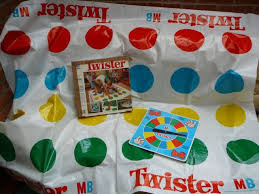
Play Twister If you don’t have the game, then create it by taping red, blue, green and yellow construction paper circles on the carpet and writing the directions on index cards. (right food red, left foot green, etc)
images-1.jpg

Balloon Games This is such a fun and inexpensive way to get your children moving. Blow up a balloon and have your child put it between their legs and walk from one end of the hall to the other end.

Balloon Tennis– You will need a 12-inch balloon, two paper plates, two paint stirrers, a glue gun, and masking or painters tape. Glue each stirrer to a paper plate to create your two tennis racquets. Using the tape, create a line (tennis net). See how many times the children can hit the ballon over the line. A point is awarded to the other person if you cannot return the balloon. The first person to reach 10 points wins. Balloon volley is the same idea- just without the racquets.

Body Balloonball– How many ways can you hit the balloon and keep it from touching the floor NOT using your hands? Keep score and if you have a partner, the first to use 5 different body parts gets one point. The overall winner is the first to reach 10.

Beanbag Toss– Your son can toss the beanbag at various targets on the floor (a laundry basket, see if he can land a beanbag inside a shoe, a paper towel that has a bull eye on it, etc.). If you have a little one and would like to incorporate more school subjects, how about a game that they need to toss the bag onto a certain color or a certain number? You can tape on the floor construction paper of primary colors and have additional papers with numbers. Call out directions (hit the green square. Hit the paper with the numeral 5 on it.) Let the game begin!

Tape Lines: Make 5-10 separate lines of tape, each about a foot apart, on your floor or carpet. Label the first one the “start” line and then give your kids simple instructions:

  • Long Jump: See how many lines they can jump over. Have them try and beat their best score each time. Experiment with arm swinging vs. arms behind their backs.
  • Run ‘n’ Jump: Now let them take a running start and see if they can jump even further!
  • Long Jump Backwards: Increase the difficulty by performing the tasks jumping backward.
  • Hop: How far can they jump on one leg?
  • Reach ‘n’ Stretch: How far can their leg reach with one foot on the “start” line?                                                                                                     Source: Whatmomslove.com

As with all physical activity, have your son or daughter stretch before and after so those muscles stay in great shape! 🙂

~ Lisa


Teaching Geography in Your Homeschool

The world has certainly gotten smaller when the access to television and the internet is just a click of a button away, transporting us to places beyond our home. How important is it for your daughter or son to know geography? I think it is essential in order for her/him to have a sense of place. We are a global community and when your child meets someone from a different part of the world or watches a program, they can have a general sense of where this is located. It is a distinct possibility that your child will travel outside of the country at some point. If not the country, certainly away from your home.lol Just in my family alone, both of my sons and all of my adult nieces and nephews and their spouses have all traveled or lived abroad.  We didn’t intentionally set out to have our children do this, but I think opportunity, curiosity, and a sense of adventure and/or purpose is what propelled them to do it.

I like to teach geography by beginning with where we live. I have two activities using technology that I am sure your family is going to love.

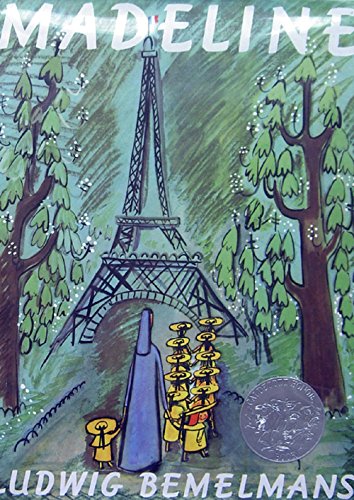
It’s fun to use Google Maps.  Begin by typing in your home address. It’s a little startling to see your home appear on the screen, but once you get used to it, you can rotate the image and see your neighbor’s house, you can go up or down the street, and you can even go across the street. Zoom out a little and talk about your city, continue expanding further and further, so that you see the state, the country, the world.  You could do this for quite awhile since I am certain that your daughter will want to look at other locations such as grandparents’ and friends’ homes. You can also type in a landmark and see pictures of places throughout the world. If you can’t go to Parsi next week and climb the Eiffel Tower, you can do it from the comfort of your home while eating croissants and reading Madeline. You don’t know about her? You can learn all about her by clicking HERE.  🙂 61prFmZQx9L

When Malcolm lived in Germany we could see the places he talked about and it gave me a sense of peace and also a bit more of feeling connected to him since I could now visualize the places when we spoke. With Ian currently living in Japan, I am able to see his apartment building, the neighborhood grocery store he tells us about, and the busiest intersection in the world that he and his wife cross several times a day. However, I don’t like to look at the world map and see where he is because I can “see” that he is literally on the other side of the planet from me. 😦

Geography can be quite interesting when students can make connections between themselves and people and locations different from that which they are familiar. When you go to the zoo, an amusement park, or a museum, etc., pick up a map and study it. Give your son real-life experiences of using maps and then applying that information by asking him to pick a location to go to and allow him to guide you there using the map. If it isn’t right, retrace your steps or make a course correction. What a great way to incorporate school into everyday experiences.

Geocaching is a fun way to learn about geography. By using the app and the map coordinates, you and your daughter go on treasure hunts. How fun is that?? There are literally geocaches around the world. You can also find them close to your home or you can create your own for others to find. Here is the website to find out more about it: Geocaching

Have a great week exploring and learning about the world around us!

~Lisa