Archive | March 2014

Play Ball! (translated: Go Outside and Exercise!)

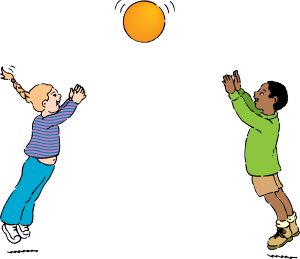
1195445636200577762johnny_automatic_playing_ball.svg.medToday is Opening Day for the Cincinnati Reds and is a big deal to the city. There is a parade, former players come back to see the game and be involved in festivities, and some parents take their kids out of school to attend the game and be a part of the fun.  Opening day always signals the beginning of Spring to me. We are finally seeing glimpses of that season and I am happy to see the temperatures are going to be in the 60’s after seeing cold temperatures and snow for many, many months.

How about celebrating Spring by going outside and playing some ball? Maybe you don’t have enough children for a baseball team, but all sorts of other games can be played involving balls.

Ball Games to Play

Volleyball This may be difficult to play unless you invite some friends over and you have a volleyball net, but you can play a variation of the game. Draw a line on the sidewalk and see how many times the ball can be hit in the air from one side to the other without it falling to the ground. A point is scored when the opponent cannot return the ball or steps over the line, or the ball goes out-of-bounds.

Catch Just toss a ball back and forth. You only need two people to play this game, which is great if you have an only child.  Have your child count how many times s/he is able to catch it. An added bonus is that you can include math in there too!

Pickle A variation of catch, but is played with three people. One person is in the middle and tries to intercept the ball as it is being tossed back and forth by the other two players. You can keep score by seeing ho many times each person intercepts the ball if you want.

Two Square You can use the sidewalk as a dividing line or you can draw your own square on the driveway. The idea is to stand parallel to the line and drop a large rubber ball on the ground and then hit it to your opponent. If the other person doesn’t hit it on the first bounce, you get a point. The first one to 10 (or what number you decide), wins. Did you know you can even purchase a ball that is perfect for that activity? It is called a playground ball.

Four Square This is a variation of Two Square and you can bounce the ball is any of the other squares. This makes the game a bit livelier, since you have to keep alert. You can do “dropsies” where you get low to the ground and drop the ball in the opponent’s square.  You can also bounce it really high, trying to bounce the ball in the other person’s square and not giving them an opportunity to hit it before it goes out-of-bounds. Your opponent cannot catch the ball, but must hit it with their hand. Make up your own variations and moves with the game. Maybe the players have to hit it with their elbows instead of their hands.

Tennis If you don’t have a tennis court nearby, play driveway tennis.

Relay Races Why not use a baseball or a tennis ball and have the children balance the ball on the top of their shoe? The first player who completes an up and back lap wins. You can also have the players bounce a ball up and back, the winner is the one who crosses the line first.

Dodge Ball This is not one of my favorites because it seems like someone usually gets hurt, but if you monitor how hard the ball can be thrown, the kids love playing. Decide on boundaries before beginning as anyone who steps/runs out of the boundary sit sour until the game is finished. One person is the thrower and the other players attempt to dodge the ball until there is only one player left. The player who is left is the person who gets to throw the ball the next time.

Kickball This is played just like baseball, but you play with a larger ball and kick it instead of hitting the ball. This can be modified if you do not have many people to play.

Get out there and enjoy the weather! You will not only have fun, but the children are having physical education and you can burn off some extra calories too if you join in the fun!

~Lisa


The Early Bird Catches a Co-op

bird_wormI was reviewing some information I had posted in July about homeschool co-ops and thought I’d send a note about when to inquire about them. NOW is the best time to do that as many co-ops are registering families before the school year ends. I have listed some reasons for and against participating in a co-op since it is important to consider what you are committing your family to participate in for the year.

3 Reasons to Join a Co-op:

  • Co-ops can enrich your academic program. Many co-ops have science labs, art, music, and physical education programs available to students. You may not have the equipment at your home or it can be difficult to do these activities by yourselves.
  • Co-ops provide social interaction opportunities for your child(ren) and you. It is not only important for your child to meet other children, but it is just as important for you to meet with other fellow homeschoolers. You just might meet your best friend at a co-op. 🙂
  • Co-ops support and encourage you. There were quite a few times that I needed some suggestions or a person to discuss matters with in regards to homeschooling. It’s nice to have other women who are on the same journey as you.

3 Reasons to Not Join a Co-op:

  • It is time consuming. You will be away from home for at least half of your school day. Look at your  school calendar and see how you will complete your academic subjects if you join a co-op. You will need to make accommodations to accomplish this, whether it is for your children to do schoolwork before you leave for co-op, or do it when you return home, or do it over the weekend. My boys were early risers so we did a math lesson beforehand.
  • It is a commitment. Once you make the decision to be involved in a co-op you are agreeing to be there for the entire duration of that session. Some co-ops have semester-long classes and some have year-long classes, so be sure and see what that entails before signing up for classes.
  • You will be required to help. A co-op is different than a drop-off program in that you will need to volunteer to help in some way. You may need to teach a class or be a classroom aide, so be sure to check and see what is expected of you.

If you are interested in finding out about co-ops here in the greater Cincinnati area, click HERE for a list of local co-ops. I hope you find a group that works for your family.

If, by chance, you don’t get into a co-op you could organize a small group of your own, but that’s a topic for another day…

~Lisa


Learning Styles

You may have read the interview with Jill Champagne that I posted concerning figuring out your children. We are all so complex, so it is hard to put a “label” on our children. While I am not saying we can lump everyone into a category, I do think there are three broad categories that we can say people learn best. If we can see what learning style best fits our children, this will help in the way that we teach our students. If I were to teach you something brand new, how would you prefer I go about doing it? Would you like me to tell you, show you, or would you like to be “hands-on”? The three categories are auditory, visual, and kinesthetic. 

Auditory students are those who prefer you to give them verbal instructions rather than showing them how to do it. I used to get upset with my oldest son when I would want to show him something and he would say’ “Just tell me how to do it, Mom. I can figure it out myself.” When I realized he learned best through verbal instruction I was able to relax and teach more that way for him. Students who are auditory like to have stories read aloud to them, and enjoy hearing lectures such as podcasts. They are the students who could listen to you read Story of the World for hours if you had the time! Sonlight would be a great fit for an auditory student since many of their stories are Read-Alouds. These scholars also learn from songs that and rhythms. Ian learned his multiplication tables through song and he says he still hears them in his head when he is trying to think of a certain product.

Visual students enjoy brightly teacher-chalkboardcolored textbooks, videos, and video games. Students that are able to best learn from this modality would do well with online courses or distance learning that both Bob Jones and ABeka offer. Other curricula to consider are: Teaching Textbooks, and science or history videos and computer games. Now, I am not saying all their schoolwork should be spent playing video games, but there are some terrific programs that I think are beneficial.

Kinesthetic students get in there and want to experience what you are teaching. Math-U-See is great for students because they can manipulate the pieces and understand what is being taught. If you have a younger student using items such as: counting bears, blocks, beads or pretzel rods (yum!) helps them learn. Lapbooks and unit studies with projects and curriculum such as Weaver and Heart of Dakota are great for students who need to be physically involved with learning.

Of course, each one of us does not learn solely through one means. I think the ideal way to learn is by using all of these in combination. Some subjects and new concepts lend themselves more easily to one way to teach better than another. But, if you are aware that your child learns the best from one of these ways of presenting information over another, use that style as much as you possibly can. Teach to your student’s strengths and help them develop in areas where they are weak.

~Lisa

If I Could Just Figure Out my Kids!

urlHow many times have you said that? I have a guest on my blog that I think will be beneficial in helping you to determine how to help you relate to your children as well as how to direct them in regards to their particular academic styles or your help you understand your family dynamics better.

My guest is Jill Champagne and here are some questions I asked her about this topic.

Lisa: Hi Jill, tell us a little bit about your business.

Jill: My business is Champagne Consulting and I provide individuals and families with the tools they need to help gain a better understanding of their personalities and communication styles. This understanding can then be applied to marriage, family, school, college or the workplace to become more effective, build stronger relationships and resolve conflict.

Lisa: That sounds interesting. What are the services you provide?

Jill: Currently, the tools I use to help my clients are the Myers Briggs Temperament Indicator, the Murphy-Meisgeier Type Indicator, and the Strong Interest Inventory. I have been trained and certified to administer and interpret these instruments and provide clients with one-on-one consultations to explain results and help apply them to their particular context.

Lisa: How would this help students in preparing for college or the workforce?

Jill: For a student preparing for college, these tools are especially helpful. High school students are in a unique time of discovering who they are and exploring their interests. They are discovering who God created them to be and what direction He is calling them to for the future. Using the MBTI and the Strong Interest Inventory together students can explore the questions: Who am I? Why do I want to work? Where do I want to work? What tasks would I enjoy? Answering these questions can make a difference in a student’s confidence and give them a successful head start in deciding a college major and career path. It can help focus their direction.

I provide a two-hour consultation when working with students to make sure there is plenty of time to go over their results and have time to discuss who they are and what they might like to do.

Families can also benefit from these tools. I have four children and these tools have been instrumental in our bonding as a family. Knowing each of our personality temperaments has helped us solve conflict and appreciate our unique personalities. It has also helped me understand each child’s learning style and help them with the different challenges they each face. I enjoy working with families and incorporate interactive activities to demonstrate the personality types and their unique strengths. We also look at family or “team” dynamics and develop strategies for improved communication and conflict management.

Lisa: Thanks so much, Jill. I appreciate you taking the time to answer my questions.

For more information, please visit her website at champagne-consulting.com or call her at 513-910-3977 if interested in speaking with her.

Mental Fitness

search

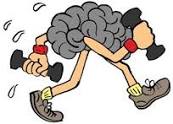
I like to help “the little grey cells” as much as possible. After all, that is part of being physically fit, right? 🙂 Here is an article from Lumosity  that gives you four ideas to stimulate your brain. I especially like the last idea of going on an adventure! I have italicized the sentences that explain what area of the brain is helped with that particular activity.

New things to try 
  •  Learn a new language

Learning a new language may do much more than make your travels easier. Bilingualism requires the flexibility to switch between languages, and a 2010 study published in Language and Cognition found that bilinguals were also faster at switching between other types of tasks. This study adds to other research suggesting that bilinguals have better executive control, a combination of cognitive processes that help you make decisions, control impulses, and plan thoughtfully.

  •  Pick up an instrument

You don’t need to become a rock star, but spending even a small amount of time practicing music may help keep you sharp. In a study by researchers at the University of St. Andrews, amateur musicians performed better than non-musicians on simple mental tests. The amateurs tended to respond faster while staying just as accurate. Pick up a guitar, flute, or harmonica this year.

  •  Do a good deed for someone else

The more altruistic you are, the healthier you may be. In a 2013 study, teens who volunteered with children for 10 weeks had lower cholesterol and inflammation levels than their peers who didn’t volunteer. It didn’t seem to matter whether the volunteer work was sedentary or active, but the teens who reported greater changes in altruistic behavior after the study ended also experienced the biggest health benefits. So do something for others this year — oddly enough, you might also be helping yourself.

  •  Go on an adventure

Going on an adventure may physically change your brain. In a recent study, mice who boldly went forth and explored their environment grew more new neurons than their less adventurous companions — even though all the mice were genetically identical.

While this study only examined mice, it shows a direct link between individual behavior and neuroplasticity, and may begin to explain how we develop individual personalities. Whether you travel to a country on your bucket list or find a spot in your city that you’ve never explored, take an adventure of your own.