Archives

Ideas for Teaching Subjects for Homeschool

Teaching subjects can get to be a bit overwhelming. So, how do you teach all of them? Where do you find the time? When students are just beginning school and in the primary grades remember attention spans are short, so teaching a lesson needs to be short too. Take small breaks and return to subjects if necessary. For example, 15 minutes of explaining and showing examples, 15- 30 minutes of practicing/ doing what has been taught.

Over the course of the next few weeks, I am going to be concentrating on teaching elementary students.  I don’t want these posts to be too long so I will be talking about a few subjects each week. I can see just concentrating upon just one subject at a time, but I’ll save that for a later date. So many years of teaching, so little time to explain. lol  If you have an older student, I promise to address teaching junior high and high school students in future posts; please stay tuned. 🙂

Language Arts

Reading- I believe that teaching a child to read is the single most topic she needs in order to succeed in life. As far as language arts is concerned, my concentration would be to only teach reading in Kindergarten and 1st grade until your daughter is reading fluently. Incorporating spelling, grammar and handwriting can be done informally through writing the alphabet, her name,  street address, creating homemade cards, writing simple stories, etc. If you are interested in teaching these with a formal program, this can be added to your studies once reading is progressing well.

Spelling and grammar- The best way to teach spelling and grammar is by incorporating these into reading and writing. Practice writing the words you are teaching your son to read. If he is able, he can write simple sentences and perhaps a story using these words, which will reinforce what he is learning.

Handwriting- While many schools are opting not to teach cursive, I have read studies that say this is good for your brain since both hemispheres are involved in the process. It also requires less of the pencil to be taken off of the paper and nearly all letters are made in a forward fashion. I think teaching handwriting formally with a program is important since you want your son to be able to not only write it (neatly lol), but also to be able to read it. I am encountering junior high students who can no longer read cursive. I wish I had the time to instruct them so that they can read old documents, communicate with others who use cursive, etc. Don’t you want your student to have every means of communication available to him? Copying passages of favorite literature or poetry or writing out spelling words or science terms is an easy way to incorporate this into your lessons.

Social Studies (Geography, History)

Geography- While teaching young students geography and history can be taught by learning your address, what state and country you live in. When reading a book that has a specific setting, have your daughter investigate where that is located. Have you used Google Maps or Google Earth? These are fantastic apps to see the world and where we fit into it. Do you have relatives that live out of state? Use google to show her where this is in relation to your home and to the world. Still using the app, you can pick a destination such as the Statue of Liberty and take a virtual tour. I think it’s a pretty cool way to teach geography.

History- With young students, I like to begin teaching history that is relevant to them. For instance, create a personal timeline with your son. Choose events such as his birth and things that are memorable to him (learning to ride a bike, losing a tooth, the birth of a sibling, etc.) Creating a family tree gives meaning to history as well. This can involve interviewing grandparents, aunts and uncles, etc., which can be a lot of fun.  Once the concept of things occurring in the past has been established, history takes on a bit more meaning since much of it is about people. Field trips are a fun way to teach history. You can go to a local history or museum and discuss what you see and the time period in which it occurred. Dressing up in period clothing like we did when we studied Ohio presidents, and reading a famous speech or reading a short biography such as the series of books by David Adler brings history to life. (Click on the book for the link.)

61PkugiK15L._AC_US218_


Homeschool Subjects to Teach

images

Reading, writing, arithmetic are the core topics for your school, but what do you need to teach besides these three? The best place to check would be your state’s homeschool laws because when you notify the school officials most states require specific topics to be studied. If you are teaching here in Ohio these are the topics that are required:

(a) language, reading, spelling, and writing;

(b) geography, history of the United States and Ohio; and national, state, and local government;

(c) mathematics;

(d) science;

(e) health;

(f) physical education;

(g) fine arts, including music; and

(h) first aid, safety, and fire prevention.

It looks like a long list and you may be wondering how to cover all of them. This week I will concentrate on these subjects and how to schedule them. The good news is you do not need to teach every subject every day. Of course, the 3 R’s, as they are frequently referred to (Reading, Writing, Arithmetic), need to be taught daily due to the amount of information that is taught and learned.

Social Studies, Science  If you have purchased a textbook and it is for an entire school year, then you will need to teach each of these subjects daily. But, if you have not and you have junior high or younger students, Social Studies and Science can be covered by dividing them throughout the week. For instance, you can teach Social Studies on Monday and Wednesday and teach Science on Tuesday, Thursday, and Friday, or vice versa depending upon your curricula or topics you are studying for the year.

Health, Physical Education These subjects can be taught once a week and can actually be incorporated together since many times when you are discussing health topics you include physical education.

Fine Arts This too can be taught once a week.

First Aid, Safety, and Fire Prevention The first two topics can be taught in conjunction with Health and Physical Education since you discuss injury prevention and naturally teach first aid as you care for scrapes and bruises. Fire Prevention needs to only be taught a few weeks for the entire school year and reviewed as necessary.

These are only recommendations and you can teach subjects as you like since there is nothing stated by law on how many days you teach or how much time you spend on each one. However, keep in mind that you are preparing your son or daughter to one day leave your home and be able to support themselves. Lay a strong, solid educational foundation for your student. The world job market is highly competitive and employers are looking for well-educated people to work for them. You are the perfect teacher to equip your scholar to succeed. 🙂

Looking ahead: Next week I will give you some ideas on how to teach each of these subjects. The following week I will discuss teaching high school subjects. 


Homeschool Rocks

2b05a665aee45d835b05a50946798419--the-rock-rock-rock

Picture from Pinterest

Each year our church fellowship has a week-long camping event with food, fun, campfires, and families. With almost half of our small group being children, activities throughout the week are something that we need to have for them to do. I saw a facebook group called Homeschool Rocks and thought decorating and hiding rocks with encouraging words or pictures would be a fabulous idea for our campout. Perhaps you might like to do it with your children too. I have included academic areas for you in parentheses so you can see how it applies to school. 🙂

You Will Need:

rocks

a bucket of warm, soapy water

paper towels

a pencil

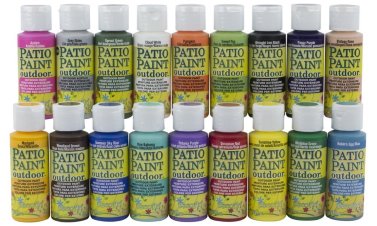
outdoor acrylic paints

paint brushes

newspaper

waterproof markers

Elmer’s glue

Modge Podge or some type of outdoor sealant

paper

a plastic jar or another container

plastic grocery bags- one per person

Instructions: 

  1. Collect First of all, you and the children collect rocks that you want to paint. The best kinds are smooth, especially for younger children since they will paint more easily.  (PE is covered since you are getting exercise hunting for rocks.)
  2. Clean After you have determined which rocks you would like to paint, clean them in a bucket filled with warm, soapy water. Rinse them and place on some paper towels to dry. The paint will adhere much better to a clean surface, and your children will be getting their dirty hands clean at the same time. (Health- Getting all that dirt and grime off is part of a healthy routine.)
  3. Paint Now it’s time to bring some life to those rocks! Cover a table with newspapers, and if you have small children who might get paint in more places than the rock, cover them too (an old shirt and pants will do the trick). Depending on what design you want to create, you may want to sketch lightly on the rock before applying the paint.  If details are being added, then a waterproof marker would be helpful to use. Outdoor patio paints are preferred so the rock weathers well. Allow to dry for several hours. (art)

710UNU6HvXL._SL1000_

  1. Seal  In order for your awesome rocks to be enjoyed for a long time, a sealant such as Modge Podge should be used. This will make the designs weather resistant and shiny. NOTE: If you have used permanent markers on the rocks, apply a thin layer of glue before applying the sealant to prevent smudging. Allow to dry according to the directions on the jar. 41O7V5Vq2FL
  2. Hide No, not you, the rocks! Since we will be camping, the children will go and hide their rocks so that fellow campers can find them. Each person that has hidden a rock can write a clue for others to find their treasure, thus creating a scavenger hunt.  (clues- writing;  directions- math, social studies)
  3. Find Put all of the clues in a plastic jar or other container and have each participant draw out a clue until they are all gone.Give each person a plastic grocery bag. Tell everyone to see if they can locate that rock based upon the clue. Help little ones who can’t read.
  4. Display Have a rock show so that everyone can enjoy the decorated creations.

I think everyone is going to enjoy doing this activity that it can be repeated as many times as you like. I would love to have you post your pictures if you do this.

~Lisa 

Solar Eclipse Activities

The solar eclipse on August 21st will be here before you know it. NASA has a education section that is just for homeschool!  NASA There are family activities, lessons, downloadable pdf’s, videos, book suggestions, and edible science projects.

If you would like a solar eclipse guide AND a pair of glasses, Lowe’s is the place to go!

748486121009.jpg

Here are some more books for your astronomer: Solar Eclipse 2017

510A3di3mLL._AC_UL160_

The Big Eclipse Activity Book   

51aTOF-8uKL._SX385_BO1,204,203,200_

Eddie’s Eclipse

518k7cN5BHL._SX394_BO1,204,203,200_


Boy Scouts of America has a DIY eclipse viewer that you can make from a shoe box.

Screen Shot 2017-08-17 at 6.36.43 AM


If you would like to create a visual for your future astronomer, here is a craft that you can create. I love this visual and used it in my Earth and Space Science class; your daughter will be able to manipulate the model of the sun, moon, and Earth to gain a better understanding of what occurs.  Not only can you make a solar eclipse, but all the phases of the moon and a lunar eclipse.  CLICK HERE

solareclipse.png

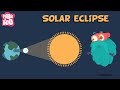
Here is a video for your children to watch:  Solar Eclipse

download.jpg

Be sure and take advantage of this event for your son to experience this rare phenomenon. Make sure you go over the safety issue of not looking directly at the sun during the eclipse.

Happy viewing!

~Lisa


Notebooking

What is Notebooking?

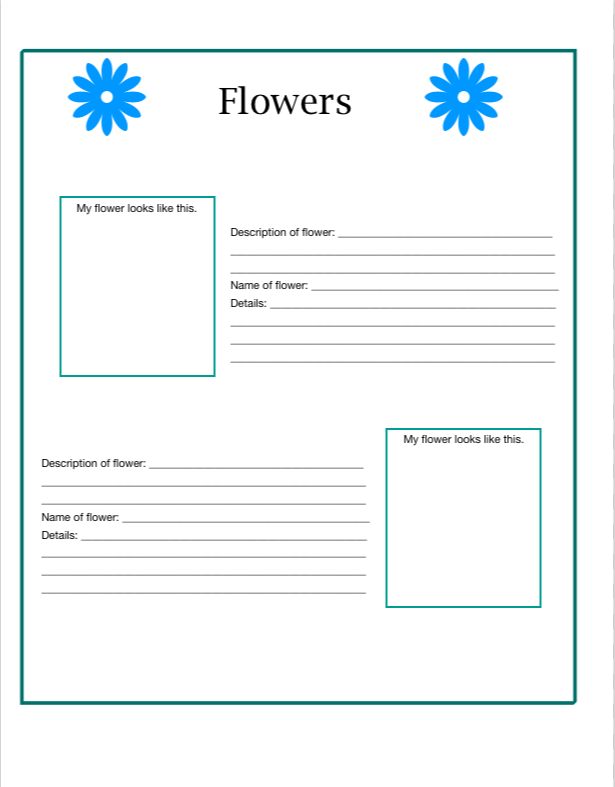
Essentially, notebooking is learning about a topic and then writing about it by means of a journal (notebook) page. It also includes some type of picture that is the focus of what is being studied. This can either be an image that is already on the page, or a space provided that the student can draw their own picture (or words that can be decorated). Download Flower Notebook Page

Screen Shot 2017-07-28 at 6.38.12 AM

What are the benefits to Notebooking?

  • Multi-age level- Every student can make a notebook page. Younger students can draw or color the page and you can write down what they are telling you about the topic. Older students can create pages independently.  You can use notebook pages when your family is learning a subject together such as science or listening to a book read aloud as in the case of a history topic or a novel. Each student has their own page and each writes what they have learned. The notebook pages can be modified to fit younger or older students, depending upon the needs of your children. As a further extension, each child can share what they drew and/or wrote with the family after everyone is finished with their notebook page. These can be saved and placed in a binder for documentation of the school year. 
  • Writing less- Perhaps you have a student who looks at a blank piece of paper and freezes on what to write. Maybe your son struggles with writing or does not have much to put down on paper. A notebook page is a way of helping him focus on the picture and write just about that topic.
  • Narrating- Instead of a worksheet, your daughter can draw a picture and write about what she is learning. This method synthesizes writing and knowledge to show what she has learned.
  • Summarizing- Notebook pages aid your son or daughter in taking information they have learned and condensing it into a few sentences or a paragraph.
  • Creating- For your daughter or son who loves to draw or doodle, this is perfect since s/he has an area to express themselves and their ideas instead of a blank area of a workbook page or a margin of notebook paper. 

What is included in a Notebook Page?

Here is where you can be creative! The page can be anything you choose, such as: 

  • a historical figure or event, a map, a battle, a timeline (social studies)
  • a scientific topic, terms (science)
  • vocabulary, a character from a book, literary elements (language arts)
  • a story problem, a formula, or a concept such as fractions  (math)
  • scriptures, a poem, lyrics, a speech, a quote, or a dictation passage
  • something in nature such as: an animal or a plant
  • an artist or a piece of artwork

Here is an example of a notebook page that has a picture of a flower and its parts. Click to download pageParts of Flower NBP

Screen Shot 2017-07-28 at 6.47.01 AM

What age student can do Notebooking?

That is the wonderful thing about notebooking pages; students of all ages can use them. From younger students who are learning the difference between about living and non-living things, to older students learning about photosynthesis, each pupil can use this format to further their studies. Everyone’s notebooking page will be unique since each student will write and draw what they have learned.

Is there a curriculum that use the notebook idea?

Notebooking Pages also has a free product sampler and if you like what you see, and I am sure you will, you can purchase a subscription. These pages can compliment what you are studying or can stand alone.

Apologia Science has notebooking pages for older and younger students. Click on the image to read more details.

495628