Archives

Ohio History

imagesHistory doesn’t have to come all from textbooks. Field trips in the summer are so much fun and provide the perfect opportunity to study local and state history. If you have small children and nap time is an issue, stay close to home. Many libraries and parks have programs that talk about local history. When I went on a creek hike  at a local county park the ranger discussed the habitat of the area and what has been spotted in years past.You see, history doesn’t have to be all about people. It can be about nature and habitats, but it can also be about buildings and events.

You can read the signage that are at  parks or along the roadside. Questions to ask your children could include, “What happened here? What was so important that there is a sign at this particular spot?” I have been known to make my husband stop the car and allow me to read the signs to see just what did occur in that area. These signs have led to interesting conversations and many times further investigation when we get home from our excursions.

One of the latest day trips I took was to a town east of us with no particular destination in mind. My dad and I just decided to take off for the day and see what was beyond our usual surroundings. We stopped at a courthouse some miles away and I began reading one of the signs out in the front. I discovered that there was a young man many, many years ago accused of a crime and he was being held in the courthouse before being taken elsewhere. The town was so enraged about the nature of the crime that they stormed the courthouse and shot several holes into the door! If I hadn’t read the sign that was on the square I wouldn’t have gone up the stairs to see the bullet holes for myself. I wouldn’t have even known they were there! Reading that sign and looking at that door made me feel a part of what had happened there instead of  thinking it was just another courthouse in a town.

51XidkbIg2L._SY300_Have you seen the book Kids Love Ohio by Michele Zavatsky? I used this resource with my family and there are so many things to do that it will take you years to visit the places that are in this book! You  and your family will have so much fun with the suggestions listed in the book and they are kid-tested too. There is even a day trip section with suggestions for lodging and food. This will save you hours of planning.

So, what if you don’t have the opportunity to go traipsing around. How about some of these ideas that are closer to home?

  • When teaching younger students you can print a map of Ohio and place it in a page protector. Give them clay or play dough and allow them to fill it in. You can make several copies and your student can paint it, color it, or decorate however you wish. Older students can label cities, rivers, points of interest, or counties and can color it as well. I would recommend that if students are labeling and coloring that colored pencils be used since they can provide color as well as being able to read what has been labeled. Here is a website that has several types of maps for  you to use. Maps of Ohio
  • Research your family tree. Who is from Ohio and where were they born? What if none of your family are native Ohioans? Well, you live here now, so what is your history?  🙂 What brought you here?
  • Learn about the indigenous animals of Ohio. Where are they found? Look at the area on a map if it isn’t near you.
  • Learn about the flowers, plants and trees of Ohio. Go on a nature walk and take a notebook, pencils, and a plastic baggie with you. Collect leaf samples and press them in a nature journal. If you have any ash trees nearby, be sure and get a leaf! It is sad, but the Emerald Ash Borer has been decimating the tree population and it will become rarer to find them in years to come.
  • Take a walk around your neighborhood. What buildings are old? Notice the architecture and what style is the house. There is a lot of history when it comes to building styles. For instance, columns on a porch or intricate patterns of Victorian homes. Each of these features has a history behind it.
  • Do you have buildings or parks that are named after people? Find out who they were and what contributions they made.
  • Go to the Museum Center. I would make this trip several times because there is a lot to see and do. You and your children can walk through a “cave”, investigate rocks and minerals, read about local history, and watch an Omnimax presentation.
  • Plan a trip to an art museum. I recently went to the Cincinnati Art Museum and read about Syrian art and architecture, looked at local artists’ works and enjoyed the spectacular cobalt blue chandelier that  hangs in the foyer. I only saw the first level in the time I was there. The museum is free and you only have to pay for parking. ($4.00)

I just discovered an online resource for teaching Ohio history from a Christian perspective.  There are lessons for children ages 3 through high school. If you are using ABeka textbooks, the notebook that is offered will be a great resource to you.  All 50 states are included on the State History from a Christian Perspective website. Click Here

Are you interested in some books about Ohio?  Here are titles to investigate:
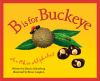
indexB is for Buckeye: An Ohio Alphabet by Marcia Schonberg a beautiful picture book with facts about Ohio. This book can be used for a wide range of ages.

index-3Cardinal Numbers: an Ohio Counting Book by Marcia Schonberg Not only is this a book about Ohio, but it is also a math book using pople and places that are specifically about Ohio.

index-1How to Draw Ohio’s Sights and Symbols by Aileen Weintraub I think this would be an excellent resource to have on hand if you are having your student draw.
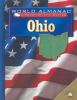
index-2Ohio: the Buckeye State, by Michael A. Martin This book provides information about our great state.

9780793395262_p0_v1_s260x420Ohio Jography: A Fun Run through Our State, Carole Marsh This book has a variety of fun activities with mazes, word searches, as well as topics to research.


Pay What You Want Sale

Shopping_Cart-1

Currclick is having a Pay What You Want Sale this weekend for curriculum, lapbooks, other resources and classes. The sale ends July 29, 2013.

The great thing is they have a wide variety of resources and classes beginning at preschool and going all the way to adults. Mom, you can even take a class yourself if you want. If you are interested in seeing what products are available Click here.

 Please pay a fair price for your items. Happy Shopping!

Extracurricular Options

circle label template sports sample There are a few limitations we homeschoolers have when it comes to playing team sports, mainly the number of participants. After all, I couldn’t have a baseball team with just my two sons and if you do have a large family, chances are not everyone is interested in playing the same sport. 🙂 If you are blessed to live in the Greater Cincinnati area there is a homeschool sports organization for your student to participate in team sports.

Cincinnati Trailblazers offers baseball, basketball, cross country, and volleyball for middle school and high school students. If you are interested and want to find out more information click here. If this option does not work out for you or you don’t live in Cincinnati, but you do live in Ohio, here is another option that just became available.

Ohio families who are looking for options for extracurricular activities (not just sports) are now afforded the opportunity to participate at the local public school. In the past it was a decision that each local school made, but now your student can participate in extracurricular activities such as: play on a team, be in a drama production, play in an orchestra, etc. Here is the information pertaining to the new bill that was passed. At this point, I do not know what type of requirements each school district would place upon homeschool families in order to participate. Be sure and investigate thoroughly before committing to participating. Please realize that it will take the schools time to put policies and procedures in place, so be patient and realize this may not happen this fall.

Story authored by Paula Bolyard: When Ohio Governor John Kasich signed the state’s $62 billion, two-year budget into law on Sunday night, June 30, 2013 (specific text, here), some homeschoolers were stunned to find out that tucked inside was language (3313.5312) expanding the rights of homeschooled and private school students. They will now be permitted to participate in extracurricular activities in the public schools in their home districts, including high school athletics. Without debate or fanfare, legislators added an amendment in the finance committee before the final vote giving homeschoolers (and private school students whose schools do not offer a particular activity) the right to join their local public schools for extracurricular activities:

“A student who is receiving home instruction…shall be afforded, by the superintendent of the school district in which the student is entitled to attend school…the opportunity to participate in any extracurricular activity offered at the district school to which the student otherwise would be assigned during that school year.”  Source: Ohioans for Educational Freedom

What does that mean? Investigative Learning

imagesI am a person who is curious. Curious about many things, but I am always curious about words and phrases and their origin. The word for that is called etymology. This word [etymology] is composed of two parts: the Greek word etymon, which means “the true sense of a word”, combined with the Greek element logia, which means “doctrine, study”. Combining these two parts gives us “the study of the true sense of words”, which can be said to be the ‘meaning’ of the word etymology.(source Behind the Name)

I spoke at the CHEC Orientation program yesterday and when I introduced myself I mentioned that I have a BS in Elementary Education and how I thought it strange you have 2 letters (B and S) for your degree. My unspoken thoughts were, “Why not something else? Why did they assign those letters? Why the combination of  the two words, Bachelor and Science? I didn’t even take that many courses in science!”

Why do people get a BA (Bachelor of Arts) when the only difference that I know of is that those students are required to take a foreign language. I don’t think many students who receive a BA have much more art than a BS student. I realized that was a rabbit trail, and I didn’t go down that trail when I spoke.  I am sure I didn’t clearly explain what I was thinking either! This was weighing on my mind so when I awoke today I was going to find out how exactly those letters (BS and BA) attached to college degrees actually meant.

“What is my point?”  It is this: curiosity is a good thing! It drives us to think beyond what is given to us and causes us to question and investigate. Isn’t this what we want our children to be doing as we teach them? Yes, it takes some time to go on rabbit trails, but it also what learning is about, going beyond the pages of a textbook.

So, how do you help a student who is curious about things? How do you help a student (like myself) who goes down rabbit trails easily and wanders off when work still needs to be done? How about keeping a running list of topics, ideas or words nearby so that when questions arise they can be investigated during free time. If you have a visual student you could put the list on large easel paper and put on the wall. If not, keep a clipboard near your desk and write down the questions to be investigated later. See, keeping your student on track while also validating that curiosity.

Research is an extremely important skill to be cultivated in our students, and frankly I find it makes the school day interesting. If you have younger students you may have to do the research and if there have been a million questions, pick the ones that are truly worth checking out.

What if you don’t have a student who is naturally curious? You could post a “Question of the Day” about topics you are studying. Allow 10 minutes of investigative time during your language arts class or assign it as part of their “homework” after your school day is finished.

Here are some questions to consider if your student isn’t naturally curious. Why is the sky blue? Why do we have bumps on our tongue? From where did the word onomatopoeia come? Does a house centipede really have all those legs? (eww!) Why do we yawn? How far is it to the moon? What is your name’s meaning? How far is it to Grandma’s house? How long would it take to get there if we drove, if we walked? Answering questions many times leads to other questions, which is a good thing!

Plan a time to discuss the answers that have been researched as that not only gives your student an opportunity to summarize and synthesize what they have discovered, but also sends a message that this is important in relation to life and learning. You can either makes these investigations part of your dinner conversations or as part of your school routine.

~Lisa

Okay, who is curious to know what I discovered about the academic degrees BS and BA? 🙂 I found several answers about the word bachelor.

The first answer I found was this one. eHow states, ” Initially, universities were attended by three distinct types of  individuals: attendees who listened, students who participated in discussions, and teachers who delivered the lectures. they were called scholars, bachelors, and masters respectively. Of French origin, the title is derived from knight known as, ‘chevalier bachelier” who committed himself to battle. Eventually, this phrase would designate the humblest of university students.” I love it!

The second answer I found came from elearnportal. ” Bachiler came to mean “an apprentice student,” or a student completing an initial level of training.  It was from this usage of the word that came the meaning of a young man in the service or working as an apprentice to a knight or skillsman in order to gain greater knowledge of a field.  Individuals of this status were not considered to have a mastery of the given field of study.

To grasp the final transformation, we must take a brief look at the common equivalent to the bachelor’s degree: baccalaureate. The term baccalaureate originated from the 17th century Latin word baccalaureus, meaning “student with the first degree.” In fact, baccalaureus is actually play on the Latin phrase for ‘laurel berries,’ or bacca lauri.   Laurel berries were presented as a prize at the Pythian Games, an athletic competition of ancient Greece.  Since this occasion, wreaths of laurels have been associated with great honor and academic achievement. ”

I also saw in my reading today that the Bachelor of Science is Bachelor of Behavioral Science, shortened somewhere along the line. Aha! This is making more sense! It doesn’t apply to “science” as I know it, no test tubes and dissections. A Bachelor of Arts degree has been shortened from Bachelor of Liberal Arts. That is probably why those who have a BA had to take a foreign language (liberal- broad) and those who did not have a BS. Now I know and you do too! I can rest easier today knowing that the letters (BS) I put down as a credential mean more than I had originally thought. 🙂 Now I wonder we get the term “degree” and why behavioral science?. ..

~Lisa

New Co-op and New Speech and Debate Club

Larger_cartoon_classroom

NEW CO-OP and NEW SPEECH & DEBATE CLUB

Location: Spring Hill Church of Christ,

2021 Brell Road, Middletown

Day: Tuesdays!

CO-OP

High School Classes will include: Apologetics, Marine Biology and Geometry

Younger Grades will be decided at the planning meeting.

Plus, we will have a Pre-School program

SPEECH & DEBATE CLUB

Club will be meeting after the Co-Op and have some additional

meetings to give dads an opportunity to participate.

Speech & Debate will involve some travel with tournaments,

which will be decided at the meeting.

If you are interested, the Planning Meeting will be

July 15th at 1p.m. at Spring Hill Church of Christ in Middletown.

This is a parent-run Co-OP and a parent-run Speech & Debate Club!

You can participate in one or both.

Parent input is vital! Hope to see you at the Planning Meeting.

Questions should be directed to:

Sarah Black haramisscarlet@yahoo.com or

Stephanie Garrett stephaniesgarrett@gmail.com