Archives

Homeschool Conferences/Conventions 2013

Nothing invigorates me more about homeschooling that being around a bunch of other homeschool moms. I have found a few conferences that perhaps you would like to attend this year that can give you a boost. I posted this blog earlier, but have updated it for 2013. You will find the conventions and conferences according to the dates in which they will be held.

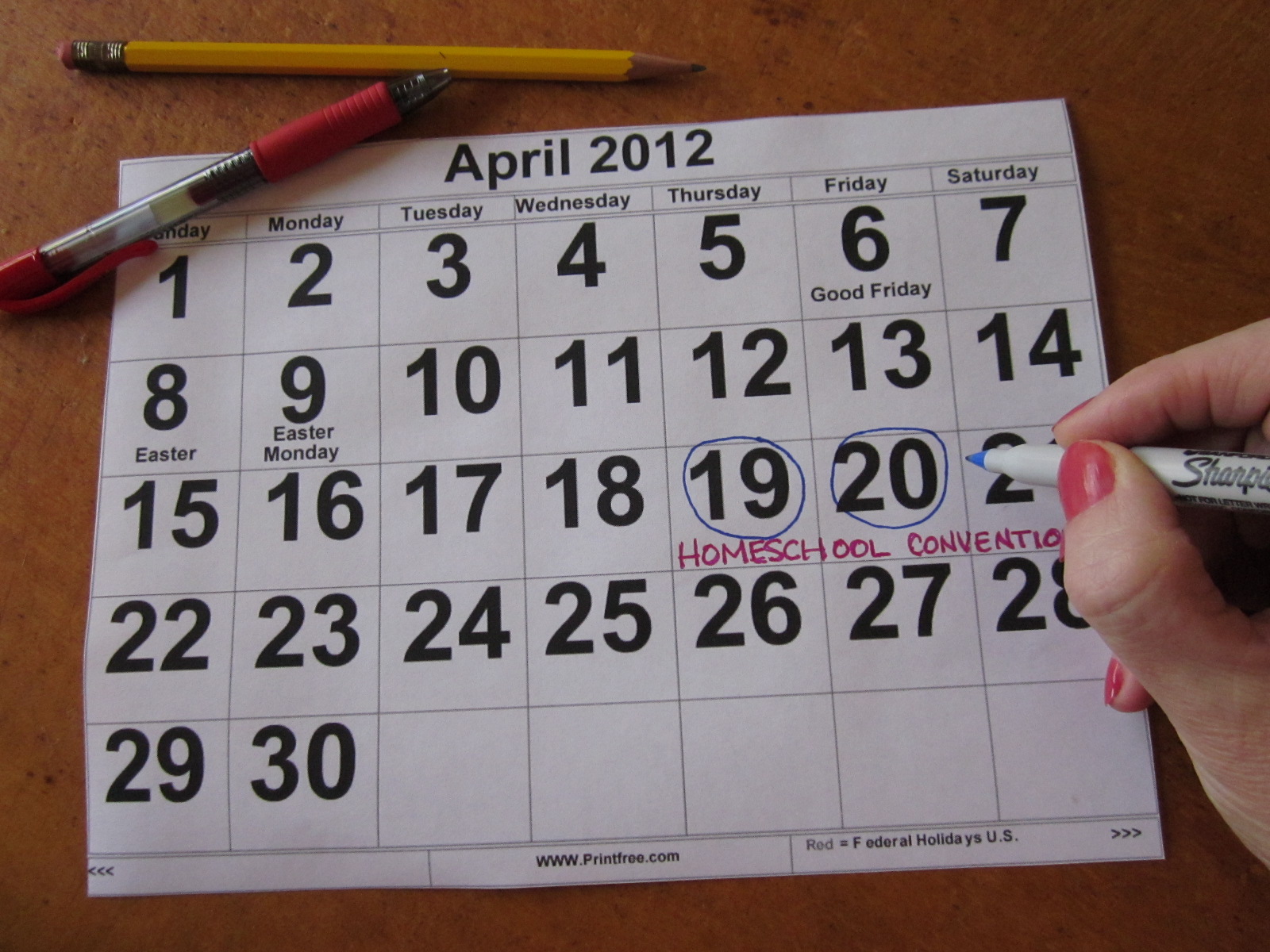
MACHE Homeschool Conference, St.Paul, Minnesota, April 19-20, 2013

Eastern (Tulsa) Oklahoma Homeschool Convention, Tulsa, Oklahoma, April 30-May 1, 2013

Ultimate Homeschool Expo another online option with several events throughout the year. The Ultimate Transformation Expo, May 13-17, 2013.

Tampa Bay Homeschool Conference, Tampa, Florida, May 23-26, 2013

Can’t get away, but would like to attend a home school conference? What about an online option? Schoolhouse Expo , May 28, 2013 will be about homeschooling through high school.

Indiana Home School Convention  May 31-June 1, 2013

Arizona Home Education Convention & Curriculum Fair, Phoenix, Arizona, June 14-15, 2013

CHEO Convention There are some great speakers lined up for this summer. June 20-22, 2013 This will be its 29th year! Akron, Ohio

So, you decided you are going to go. Great, but before you go there are some things you can do in order to make your convention experience worthwhile and enjoyable.

Some Conventions Tips:

Be sure and pre-register so you can save on the admission price.

Do your research before you go! Read what speakers are going to be at the conference, when they are speaking, and what topic are they addressing.  Read reviews of curriculum to find out what you’d like to look at when you attend. Create a list of must-have curriculum and books and a list of would-be-nice-to-have books. Write these items in a notebook and give each one a few lines so you can write comparison prices. Don’t forget art and writing supplies! Estimate how much you can afford to spend.

Don’t become overwhelmed. The curriculum hall at the conventions are monstrously  HUGE! Avoid the urge to buy the first thing you see. Use the notebook of the list you complied of items you are wanting to purchase before you went to the convention. Compare the prices of  vendors of the curriculum. Be sure to note the name of the booth and their location in the vendor hall. For instance: Bravewriter Aisle A next to Rainbow Resource, near the end on the right. I need a landmark, maybe you don’t.

Stick to your estimated budget! I know it is tempting to buy, buy, buy! Only purchase those items you know you will use. If you go home and find that you really needed that skid of construction paper order it online! It would have been difficult to fit it in your vehicle any way.

Wear comfortable shoes and clothes. You are going to be doing a lot of standing and sitting so wear what looks nice and provides maximum comfort.

Pack bottles of water and  healthy snacks. Food and drinks can be expensive and food lines can be long. You want to keep up your energy and brain power for the vendor hall and lectures!

Take a rolling cart, suitcase, or a backpack that you can unload if it gets heavy. The car is probably parked a distance that you are only going to make one or two trips maximum to the car, so be sure and take something that you know can handle the load of a lot of books and supplies. It is also going to be crowded so keep that in mind as you think about maneuverability of you and your burden carrier. 🙂

Consider asking your husband to attend. Dale accompanied me a few times and I appreciated his input about curriculum choices and viewpoint of the speakers we heard. If he can’t go, ask a homeschool friend to accompany you. Make it a fun time to be out and get rejuvenated.

Purchase the CD’s Couldn’t make it to hear all the amazing speakers? Why not buy the CD’s and ask a few friends to share the cost with you? This way you can listen to them whenever you like. If you think they would benefit more homeschool families, perhaps you can ask your local support group to purchase them for your lending library.

NOTE: These have already occurred, but I thought that you could keep them in mind for the future as they are well established conventions. Next year I will remember to update this in January instead of April. Sorry about that!

Great Home School Convention (Southeast), Greenville, South Carolina, March 14-16, 2013

Great Home School Convention  (Midwest) This is right here in Cincinnati, Ohio where I live. 🙂 April 4-6, 2013

Using Glyphs

I posted this yesterday and thought more explaining was needed in order for you to try and incorporate this idea into your homeschool classroom. Have fun! 🙂

“Glyphs? What are they?” you ask.  If you thought it sounded similar to hieroglyphics you would be right as that form of written language is associated with pictures. Glyphs are a nonstandard way of collecting data through either coloring or creating pictures. I have found them to be helpful with students for a variety of reasons. Each glyph ask questions about a certain topic and the reader then follows the directions based upon the response they gave. You can have your student do a glyph involving general questions or you can pick a specific subject. Students then either create a picture or color one that you have chosen. This happens by answering a series of questions you have written or you can find ones already done for you. Some questions could include, ” If it is Spring, draw a tulip and color it red. If it is Summer, draw a daisy and color it pink.” Another choice could be, “If birds build nests in the spring, draw and color the nest  grey. If birds build nests in the fall, draw and color the nest  brown.”

You can create your own glyph activity using free coloring pages found on the internet. I created a Spring glyph that you can download and this one does not include cutting, but rather coloring. Here are the directions. You can download them and the coloring page that I used for this glyph with the links I have provided following the directions.

  • If you like ice cream, color the ice cream cone brown.
  • If you do not like ice cream, color the ice cream cone red.
  • If it is Summer, color the sun orange.
  • If it is Spring, color the sun yellow.
  • If you like to go to the beach color the pail blue.
  • If you do not like to go to the beach color the pail green.
  • If you have planted seeds for your garden, color the seed packet purple.
  • If you have not planted seeds for your garden, color the seed packet pink.
  • If you like science color the balloons orange.
  • If you do not like science color the balloons black.
  • If you like to swim instead of ride a bike, color the flowers pink and purple.
  • If you like to ride a bike instead of swim, color the flowers orange and red.

Spring Glyph directions, coloring page

How about a space glyph?  You can check comprehension of a topic by the color chosen for each object. If you were studying space travel students color a rocket based upon the responses given. You can download my glyph or  you can make up your own questions, depending upon your need.Space GlyphCount Down coloring sheet

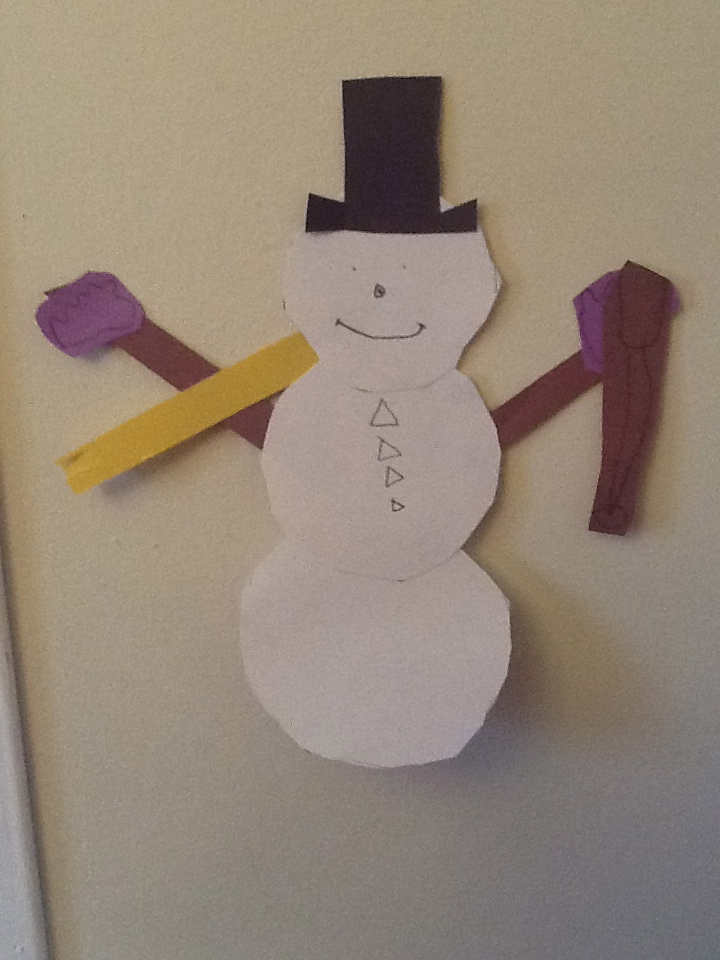
In early March I used a snowman glyph with a student I am teaching where he had to make the mouth of the snowman based upon what type of activity he’d rather do on a winter day. I decided that he would create and cut out the shapes for the snowman instead of drawing them as this helps with small motor skills and creativity. You can find the glyph instructions by clicking here. Here is what the snowman looked like when it was finished. I think it turned out well. 🙂

IMG_0088

So, why use glyphs?

  • Glyphs help students with decision-making and critical thinking.
  • Students practice following directions.
  • The glyph can be used as a language arts activity about the subject. A paragraph can be written about the topic of the glyph. This can help a student with paragraph writing since they could just take the data they have already been working with and make it into a paragraph.
  • Graphs can be made from the glyphs if you have more than one person participating. For instance if you had a glyph that pertained to summer activities you could graph one of the responses such as, “How many people like to go to the beach?”
  • Independent work can be encouraged through this activity. If you need to work with your preschooler and your second grader is waiting for you, have them complete a glyph.
  • You can tailor glyphs to fit your needs. Use this as an assessment tool in order to see if the topic was understood.
  • Students can create their own glyphs, which is a higher thinking process.

Nature Studies: Snow

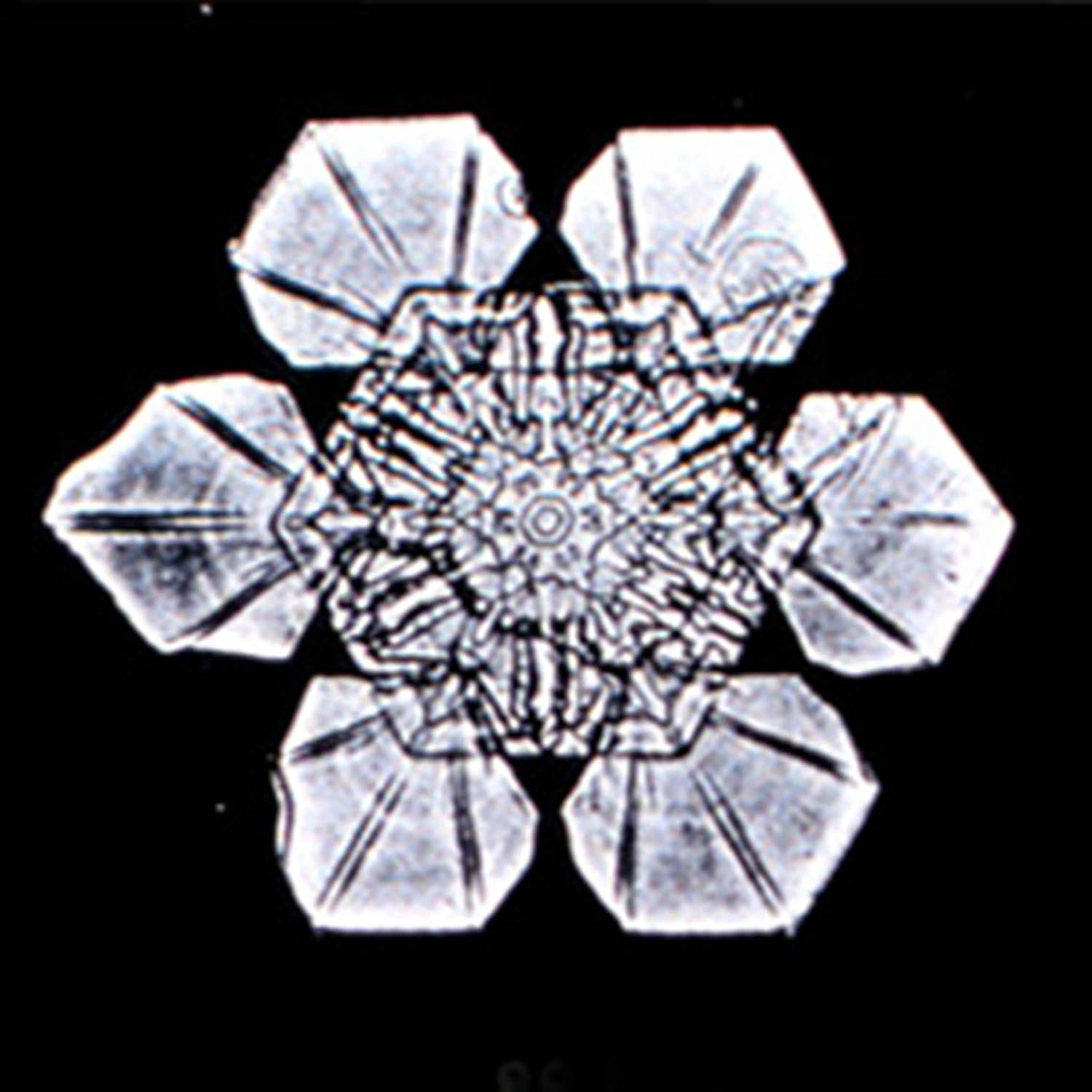
Snowflake1Studying nature should be a part of  every homeschool as it provides opportunities to observe and learn about the “real thing” and having firsthand experiences instead of reading about it in a book. In nature studies, each child has a nature notebook in which they draw pictures of the object and keep a record of observations they have made. It may be difficult to engage your student in the drawing portion of the nature study at the beginning, but with practice (child) and consistency (you), the nature study becomes a foundation of not only  art, but science, writing, and reading.

It looks like we are in for an early spring snowstorm here in the midwest, so how about making the most of the snow that is coming our way? You can do this study whether we get a little or a lot of the white stuff. ** If  you live in a different part of the country you can still do this as well, but you’ll have to use the internet instead of the real thing. 🙂

Some items to have in readiness for your snow nature study:

  • ziplock bags (to bring back to the house your items of nature you want to observe in detail)
  • a notebook
  • pencils (colored pencils too)
  • magnifying glass
  • camera
  • field guides, reference guides or electronic devices

If we are fortunate to still have snow falling when you begin, go out and capture snowflakes for observing. Put a piece of dark construction paper in the freezer for a few hours before you go out so the snowflakes will adhere to the paper without melting before you observe them. You can also use a dark piece of clothing if you don’t have paper. Notice how each snowflake is different. Sketch a few of the snowflakes.

Blue Snowflakes 121610

carlettasroundthebend.blogspot.com

Because the snowflakes will melt before you will be able to draw them, take some close up pictures to be used when you return inside. If you don’t have the opportunity to catch snowflakes you can search the internet for snowflake pictures and have your scientific student draw one or more of their choosing. Write down details of what you see. You can also download the observation sheet I have made for younger students to put in a nature notebook. Adjust the observation sheet as needed. Nature Notebook page- snow

More outdoor snow ideas for observation. Remember to do what you can outside and take pictures to refer to when you return to the house.

  • Observe the way the ice and snow adhere to the branches of trees, bushes, and plants.
  • Measure the depth of snow. You can write this in your notebook along with the date.
  • Observe animal tracks. Can you determine what animals made the tracks? Use an animal track book or an online guide such as this one: track guide
  • Is the snow easy or hard for making snowballs? Is the snow a “wet snow” or a “dry snow”? If you aren’t sure, shovel the driveway. (Tricky way to get chores done. 🙂 )
  • Put out bird feed. What birds come to eat your delectable treats? Write down the types and count the number and variety. You can do this for a few minutes if you have younger children or you can do it for 30 minutes with older students. Use a bird identification book or this internet source : online bird guide I love birds and consider them my “pets”. They are practically perfect in every way, no vet bills, no scooping up their daily messes, etc. I have this marvelous electronic field guide I use to help me identify newcomers. The app is called iBird.
  • Did you find something interesting? Can it be brought in the house? Put it in your ziplock bag. Do not take it in if it will destroy something (living or nonliving).

Once you have returned to the house, continue to draw pictures of what you observed or download the pictures you took while outside. Write the scientific names of  the drawings. Using the colored pencils, color in the drawings, coloring as true-to-life as possible and record the date.

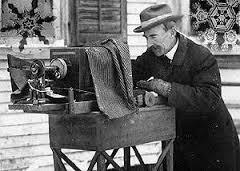
Note: The black and white snowflake photograph at the beginning of my post is one of Wilson”Snowflake” Bentley’s pictures. “Under the microscope, I found that snowflakes were miracles of beauty; and it seemed a shame that this beauty should not be seen and appreciated by others. Every crystal was a masterpiece of design and no one design was ever repeated., When a snowflake melted, that design was forever lost. Just that much beauty was gone, without leaving any record behind.” -Wilson Bentley

If you are interested in reading about him or his work, you can click here. There is also a children’s book called Snowflake Bentley or you can get as an audiobook . Here he is photographing snowflakes.

url-1

You can also add poetry about snow to your nature study notebook. The poems can be illustrated if desired. Here is one of my favorite poems by Robert Frost.

Stopping by Woods on a Snowy Evening

Whose woods these are I think I know.
His house is in the village, though;
He will not see me stopping here
To watch his woods fill up with snow.

My little horse must think it queer
To stop without a farmhouse near
Between the woods and frozen lake
The darkest evening of the year.

He gives his harness bells a shake
To ask if there is some mistake.
The only other sound’s the sweep
Of easy wind and downy flake.

The woods are lovely, dark, and deep,
But I have promises to keep,
And miles to go before I sleep,
And miles to go before I sleep.

Robert Frost

Have a great time and enjoy the snow. It is here for a limited amount of time. (Yippee because I am ready for Spring.)

~Lisa

Free Geography Curriculum

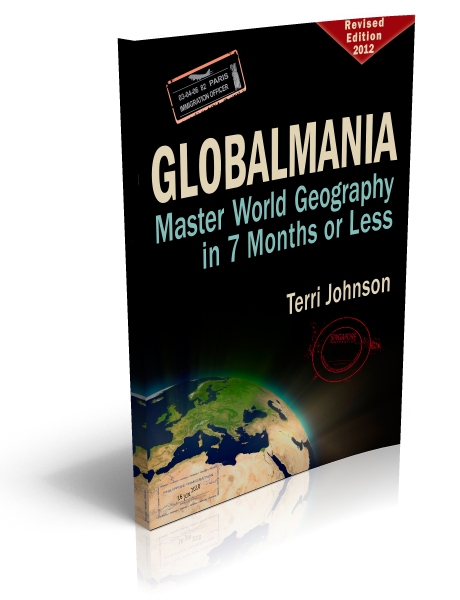
Globalmania_cropped-1Are you beginning to look at curriculum for next year? Here is a course worth checking out.  Globalmania is a program for that states you can learn World Geography in 7 months. This is regularly $14.95, but can be downloaded for free! They also have other products that include historical biographies and unit studies.


Unit Studies: Ideas and Benefits

TeepeesshI am a member of an egroup that is for homeschool families here in Cincinnati. A homeschool mom was asking about ideas for unit studies and here is my response to her.

A great place for unit studies is the internet. You can begin with a lapbook. There are wonderful topics of study on homeschool share that can be downloaded for free. They are literature-based and you can use as much or as little of the lapbook as you like. My boys really enjoyed them and I did too. I would call these lapbooks “unit studies” as that applies loosely to the idea of studying topics as a whole. A unit can vary in length from a day to a year.I have a few ideas to help get your creative juices flowing in terms of unit studies…

My oldest son is a wonderful writer and artist. He enjoyed the freedom of being able to write what he wanted in lapbooks instead of being told what to write. He could draw things as well. My youngest enjoyed the fact that there wasn’t a lot of space to write. He wasn’t intimidated by a scary “whole page” that I, on many occasions, put in front of him! He didn’t like to actually “write” so he would dictate facts or ideas sometimes to me, which I thought was fine since the idea was to get him to think and tell me what he knew. I found that when he had to write with a pencil or pen he’d write as little as possible. I am glad my oldest son enjoyed writing- that was a huge blessing to have one who did! He is still a wonderful writer, maybe unit studies help foster that?
I also encouraged drawing and thinking about what I read aloud to the guys by giving them a binder filled with blank paper. As I read to them the boys could draw what they thought was important, such as a battle, an event, a science concept, etc. You can have pictures to help your son if he can’t imagine anything to draw or can’t “picture” it. He can also write a poem, a short summary, or a list if he doesn’t like to draw. You might be able to find coloring sheets to go with the topic being studied or he could create a model or a diorama.I still have my oldest son’s history notebook and I showed it to him the other day (11 years later). He actually remembered drawing some of the pictures and could tell me a little about the stories. He said, “I thought I was really quite good when I did these.” Of course I told him he was and still is  a good artist! 🙂 Quite amazing that he was able to recall some of those events when he saw those pictures as I don’t think I could dredge up much of what I had read to him!

One time the boys and I studied Native Americans and they each made a teepee in our small  living room. It was so fun as I watched both of them “tell stories” through drawings like the Native Americans originally did on their portable homes. Ian drew scenes of baseball, hunting dragons and buffalo and deer (quite the mix!) and Malcolm drew trucks and Indians with bows and arrows shooting at buffalo (also quite the mix of modern and the past).It was great watching them help each other set up and sit inside of their creations. I used washable markers, sheets, and wooden poles that Dale had purchased from the hardware store. lol We did it another time because it was such a big hit and my brother-in-law gave me Tyvek. That was virtually indestructible! I let them wear “war paint” and they had a blast with that too.

You can incorporate any hands-on project into what you are studying. That was the beauty of doing units. I had one extremely bright, creative, slightly mischievous son and another son who couldn’t sit still for more than a few minutes and joined right in on the mischief or created his own special scenarios. This provided a great outlet for both of my very different learner-type sons.

If you want unit ideas KONOS has more than you can imagine. So, if you use the older editions just pick and choose what interests you.  The old books have a million projects and if you happen to use those, don’t try to do everything. It would take you years to get through it! It is a fantastic resource.I checked out her website and she has a lot of options to choose from do-it-yourself to it’s already done for you. I see it says semester long projects, but I bet they could be stretched out to a year as they are a bit pricey.

My advice is to start out with one or two units and ask your son what he’d like to do. I always found the enthusiasm level went up when the unit was chosen by one of the guys. You can set parameters if you want to direct what is being studied. You can also do a google search for free unit studies and you will be able to find quite a few. I always used a traditional math curriculum in conjunction with the units, but incorporated nearly all of the other subjects into the unit.

I am really glad we did unit studies as it gave confidence to my sons and provided a creative outlet . Unit studies also gave me “permission” to do some things that I think I otherwise would have said no to (like the teepee), thinking that doing something like that  wasn’t “school” because it is, it just looks a bit different. 🙂