Archive by Author | Lisa McAfee

Teaching Math in Your Homeschool

Using visual aids to teach mathematical concepts is vital when a student is first beginning to learn a concept. For instance: the difference between numeral and number. The definition for each of these according to Google is: a numeral is a symbol or name that stands for a number. Examples: 3, 49 and 12 are all numerals. So the number is an idea, the numeral is how we write it. Having objects on hand for your daughter to manipulate and interact with are extremely helpful. Children are concrete thinkers and using objects to count such as fruit or teddy bears or dinosaurs, etc., number lines, and unifix cubes for her to use will help cement these concepts.

Drill, drill, drill! When your son is first learning mathematical facts, it is important for you to review math facts daily until he knows them without having to add using his fingers.  Do you remember flashcards? Do you know why they have this particular name? You flash (quickly show) the answer to your mathematician first and then show them the problem. They repeat the answer back to you. As you continue to do this and you see that they are beginning to memorize the answers, you no longer will need to flash the answer.

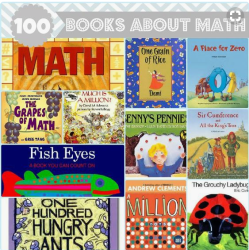
You can also play games to reinforce these concepts as well. I do not want to make this post extremely long, so next week I will share card game ideas you can play with your daughter or son. There are also math apps and books that teach mathematical concepts. I found a list of math apps and descriptions with them for you at Care.com Since today is Cyber Monday, Best Children’s Books has a sale going on today so you can snag a couple of great book titles for your child.  You can also find a fantastic list of Children’s books at Chasing SupermomScreen Shot 2017-11-27 at 6.16.46 AM

Have a great week! I hope you find some terrific new ideas to use in your homeschool with what I have shared with you today.

~ Lisa

Recycling: Practical and Impactful

After I taught Earth Science for a couple of years I realized how wasteful I was with the resources I have been given. I wasn’t going out and deliberately doing so, but if I threw away items that could be recycled, drove my car when I could ride or bike to do some of my errands made me realize that I could have a small part in conserving what resources we do have.

Just think, there is only so much fresh water to go around and every time we order a drink and throw the cup in the trash with ice in it we take away some of that water, never to be recycled again since it ends up in the garbage. This may seem silly, but I actually throw my ice and water out into the bushes as I exit from a restaurant if I am personally responsible for disposing of my trash. 🙂  Wouldn’t it be great if we could teach our children to be mindful of what they are throwing away and finding ways to conserve what we do have so that they and their children can enjoy things as much as we have been able to do. With recycling in mind, did you know that Ikea is recycling old mattresses?

download-1

Here are the details:

IKEA U.S. introduces national mattress recycling program

(Conshohocken, PA – October 2, 2017) IKEA U.S. announced today that in keeping with its sustainability strategy of ‘waste to resources’ it will be recycling all of its used mattresses. This includes old mattresses (any brand) that are picked up when new IKEA mattresses are delivered*, as well as all returned mattresses at IKEA stores. The goal is zero waste to landfill, with as much recycling as possible.

An estimated 18 million mattresses with box springs are disposed of in the U.S. each year, resulting in approximately 50,000 mattresses a day ending up in landfills across America. Some of these mattresses are illegally dumped adding to great landfill waste. IKEA understands mattresses need to be recycled to conserve resources such as steel, foam, and wood that is able to be used in new products.

At a minimum, 80% of a mattress can be recycled. The fabric and foam can be turned into carpet underlay and the felt and cotton can be recycled into new felt and insulation. The wood gets recycled into biofuel or other recycled wood products. While the plastic and steel is recycled by their respective recyclers or turned into new products.

In addition to the sustainability aspect of recycling mattresses, IKEA has also created a community donation program – a campaign called 5,000 Dreams – that focuses on supporting newly arrived refugee families in local IKEA store communities. Through three partner refugee organizations, IKEA has started to donate beds and bedding – 5,000 in total in the next two years – to refugee families who are making fresh starts with their families. The three established refugee organizations are the U.S. Committee for Refugees and Immigrants, the International Rescue Committee and the Ethiopian Community Development Council.

Teaching Science in Your Homeschool

images-1

Teaching Science can be a daunting task for those of us who are not inclined toward that academic area.  When I first began teaching, we team-taught and I was assigned the area of science. I ended up failing miserably at each and every experiment I undertook to demonstrate to my middle school students. It left a bad taste in my mouth, but I decided that when I taught my own children they would not find out that it was one of my least favorite subjects. I think I succeeded pretty well in keeping that opinion to myself for the most part. 🙂 How did I do that? I found simple science experiments that would accompany the topic we were studying. Sometimes I used a textbook, other times I concentrated on a topic that I thought we could do on our own through hands-on experiences and videos or field trips.  Here are a few ideas that I hope will inspire you.

Experiential is the one word that I say works best for students. You can talk about why the sky is blue or what causes beautiful hues in the evening, but if you can show that to your daughter through a hands-on experience, how much more that will make sense! Here is the information about seeing the color blue in the sky:  Why the Sky is Blue  and here is a video. Doing the experiment yourself afterward would be really fun for your son to enjoy.


You may be saying, “That’s great, Lisa, but I am short on time and I am not sure how to find experiments.”

Great point, but with a little planning and searching on the internet, you can have some amazing experiences, experiments, and explanations for your daughter. Am I saying you need to do an experiment for each topic? While that would be nice, it is not always practical or possible. Look through your science book or topics you are going to be studying and find some simple science experiments or activities to do.

Needing some science lessons for your daughter to do with you? Teacher.org not only has lesson plans for grades K-12, you can download and print them too!

If you do not have the time or inclination, then find a science video demonstrating the topic. Steve Spangler is a scientist who does a fabulous job of creating excitement for science and also doing some really crazy things. Here is his website:  Spangler Science

If you have a middle school or junior high student, here are some experiments to try as well as outcomes of the experiments so you know what to expect. 🙂 Hot Chalk is a great resource and if you need a visual index of experiments,Education.com has over 1000 from which to choose.


Ideas for Teaching Subjects for Homeschool

Teaching subjects can get to be a bit overwhelming. So, how do you teach all of them? Where do you find the time? When students are just beginning school and in the primary grades remember attention spans are short, so teaching a lesson needs to be short too. Take small breaks and return to subjects if necessary. For example, 15 minutes of explaining and showing examples, 15- 30 minutes of practicing/ doing what has been taught.

Over the course of the next few weeks, I am going to be concentrating on teaching elementary students.  I don’t want these posts to be too long so I will be talking about a few subjects each week. I can see just concentrating upon just one subject at a time, but I’ll save that for a later date. So many years of teaching, so little time to explain. lol  If you have an older student, I promise to address teaching junior high and high school students in future posts; please stay tuned. 🙂

Language Arts

Reading- I believe that teaching a child to read is the single most topic she needs in order to succeed in life. As far as language arts is concerned, my concentration would be to only teach reading in Kindergarten and 1st grade until your daughter is reading fluently. Incorporating spelling, grammar and handwriting can be done informally through writing the alphabet, her name,  street address, creating homemade cards, writing simple stories, etc. If you are interested in teaching these with a formal program, this can be added to your studies once reading is progressing well.

Spelling and grammar- The best way to teach spelling and grammar is by incorporating these into reading and writing. Practice writing the words you are teaching your son to read. If he is able, he can write simple sentences and perhaps a story using these words, which will reinforce what he is learning.

Handwriting- While many schools are opting not to teach cursive, I have read studies that say this is good for your brain since both hemispheres are involved in the process. It also requires less of the pencil to be taken off of the paper and nearly all letters are made in a forward fashion. I think teaching handwriting formally with a program is important since you want your son to be able to not only write it (neatly lol), but also to be able to read it. I am encountering junior high students who can no longer read cursive. I wish I had the time to instruct them so that they can read old documents, communicate with others who use cursive, etc. Don’t you want your student to have every means of communication available to him? Copying passages of favorite literature or poetry or writing out spelling words or science terms is an easy way to incorporate this into your lessons.

Social Studies (Geography, History)

Geography- While teaching young students geography and history can be taught by learning your address, what state and country you live in. When reading a book that has a specific setting, have your daughter investigate where that is located. Have you used Google Maps or Google Earth? These are fantastic apps to see the world and where we fit into it. Do you have relatives that live out of state? Use google to show her where this is in relation to your home and to the world. Still using the app, you can pick a destination such as the Statue of Liberty and take a virtual tour. I think it’s a pretty cool way to teach geography.

History- With young students, I like to begin teaching history that is relevant to them. For instance, create a personal timeline with your son. Choose events such as his birth and things that are memorable to him (learning to ride a bike, losing a tooth, the birth of a sibling, etc.) Creating a family tree gives meaning to history as well. This can involve interviewing grandparents, aunts and uncles, etc., which can be a lot of fun.  Once the concept of things occurring in the past has been established, history takes on a bit more meaning since much of it is about people. Field trips are a fun way to teach history. You can go to a local history or museum and discuss what you see and the time period in which it occurred. Dressing up in period clothing like we did when we studied Ohio presidents, and reading a famous speech or reading a short biography such as the series of books by David Adler brings history to life. (Click on the book for the link.)

61PkugiK15L._AC_US218_


Homeschool Subjects to Teach

images

Reading, writing, arithmetic are the core topics for your school, but what do you need to teach besides these three? The best place to check would be your state’s homeschool laws because when you notify the school officials most states require specific topics to be studied. If you are teaching here in Ohio these are the topics that are required:

(a) language, reading, spelling, and writing;

(b) geography, history of the United States and Ohio; and national, state, and local government;

(c) mathematics;

(d) science;

(e) health;

(f) physical education;

(g) fine arts, including music; and

(h) first aid, safety, and fire prevention.

It looks like a long list and you may be wondering how to cover all of them. This week I will concentrate on these subjects and how to schedule them. The good news is you do not need to teach every subject every day. Of course, the 3 R’s, as they are frequently referred to (Reading, Writing, Arithmetic), need to be taught daily due to the amount of information that is taught and learned.

Social Studies, Science  If you have purchased a textbook and it is for an entire school year, then you will need to teach each of these subjects daily. But, if you have not and you have junior high or younger students, Social Studies and Science can be covered by dividing them throughout the week. For instance, you can teach Social Studies on Monday and Wednesday and teach Science on Tuesday, Thursday, and Friday, or vice versa depending upon your curricula or topics you are studying for the year.

Health, Physical Education These subjects can be taught once a week and can actually be incorporated together since many times when you are discussing health topics you include physical education.

Fine Arts This too can be taught once a week.

First Aid, Safety, and Fire Prevention The first two topics can be taught in conjunction with Health and Physical Education since you discuss injury prevention and naturally teach first aid as you care for scrapes and bruises. Fire Prevention needs to only be taught a few weeks for the entire school year and reviewed as necessary.

These are only recommendations and you can teach subjects as you like since there is nothing stated by law on how many days you teach or how much time you spend on each one. However, keep in mind that you are preparing your son or daughter to one day leave your home and be able to support themselves. Lay a strong, solid educational foundation for your student. The world job market is highly competitive and employers are looking for well-educated people to work for them. You are the perfect teacher to equip your scholar to succeed. 🙂

Looking ahead: Next week I will give you some ideas on how to teach each of these subjects. The following week I will discuss teaching high school subjects.