Archive by Author | Lisa McAfee

Memorial Day History

memorial-day

Do your children know what we observe on Memorial Day? You can read this post to them; discuss the poem In Flanders Fields and have them copy it; attend a parade; visit a vet, or decorate graves of military personnel; making this holiday more personal as part of your history studies.  Here is the origin of this holiday from History.com

Memorial Day is an American holiday, observed on the last Monday of May, honoring the men and women who died while serving in the U.S. military. Originally known as Decoration Day, it originated in the years following the Civil War and became an official federal holiday in 1971. Many Americans observe Memorial Day by visiting cemeteries or memorials, holding family gatherings and participating in parades.

Early Observances of Memorial Day

The Civil War, which ended in the spring of 1865, claimed more lives than any conflict in U.S. history and required the establishment of the country’s first national cemeteries.

By the late 1860s, Americans in various towns and cities had begun holding springtime tributes to these countless fallen soldiers, decorating their graves with flowers and reciting prayers.

It is unclear where exactly this tradition originated; numerous different communities may have independently initiated the memorial gatherings. Nevertheless, in 1966 the federal government declared Waterloo, New York, the official birthplace of Memorial Day. It first celebrated the day on May 5, 1866, and was chosen because it hosted an annual, community-wide event, during which businesses closed and residents decorated the graves of soldiers with flowers and flags.

Henry Gunther

Concord/Wikimedia Commons/CC BY-SA 3.0

Decoration Day

On May 5, 1868, General John A. Logan, leader of an organization for Northern Civil War veterans, called for a nationwide day of remembrance later that month. “The 30th of May, 1868, is designated for the purpose of strewing with flowers, or otherwise decorating the graves of comrades who died in defense of their country during the late rebellion, and whose bodies now lie in almost every city, village and hamlet churchyard in the land,” he proclaimed.

The date of Decoration Day, as he called it, was chosen because it wasn’t the anniversary of any particular battle.

On the first Decoration Day, General James Garfield made a speech at Arlington National Cemetery, and 5,000 participants decorated the graves of the 20,000 Union and Confederate soldiers buried there.

Many Northern states held similar commemorative events and reprised the tradition in subsequent years; by 1890 each one had made Decoration Day an official state holiday. Southern states, on the other hand, continued to honor their dead on separate days until after World War I.

History of Memorial Day

Memorial Day, as Decoration Day gradually came to be known, originally honored only those lost while fighting in the Civil War. But during World War I the United States found itself embroiled in another major conflict, and the holiday evolved to commemorate American military personnel who died in all wars.

For decades, Memorial Day continued to be observed on May 30, the date Logan had selected for the first Decoration Day. But in 1968 Congress passed the Uniform Monday Holiday Act, which established Memorial Day as the last Monday in May in order to create a three-day weekend for federal employees; the change went into effect in 1971. The same law also declared Memorial Day a federal holiday.

Memorial Day Traditions

Cities and towns across the United States host Memorial Day parades each year, often incorporating military personnel and members of veterans’ organizations. Some of the largest parades take place in Chicago, New York and Washington, D.C.

Americans also observe Memorial Day by visiting cemeteries and memorials. Some people wear a red poppy in remembrance of those fallen in war—a tradition that began with a World War I poem, In Flanders Fields.

“In Flanders Fields” by John McCrae

In Flanders fields the poppies blow
Between the crosses, row on row,
That mark our place; and in the sky
The larks, still bravely singing, fly
Scarce heard amid the guns below.

We are the Dead. Short days ago
We lived, felt dawn, saw sunset glow,
Loved and were loved, and now we lie
In Flanders fields.

Take up our quarrel with the foe:
To you from failing hands we throw
The torch; be yours to hold it high.
If ye break faith with us who die
We shall not sleep, though poppies grow
In Flanders fields.


Record Keeping for your Homeschool

paper-571937__340

Before your children throw away all of their schoolwork for the year, stop them! It is helpful to keep a record of what your child has done not only for posterity’s sake but in the event that the superintendent’s office should question whether your child attended school. I was given the advice many moons ago to keep records for three years.

Also, it is fun to look back over the years and see what your child has learned. I actually kept a labeled binder of schoolwork for each year and just stored it in the attic. One of the hardest things to do was to throw it away after my sons had graduated. lol Silly, I know, but there was a lot of blood, sweat, prayers, laughter, and tears in those binders!

So, what kind of things would I recommend you to keep for your records?

  • Samples of your student’s best work. Pages or narratives from the beginning, middle, and end of the year would show a representation of the year.
  • Photos of activities such as experiments, sports, plays, field trips, nature studies, gardening, projects that have been completed, artwork. The sky’s the limit!
  • Programs of concerts, plays, church programs, recitals, etc.
  • List of materials used and topics studied
  • Report cards/ grades if issued
  • A copy of the portfolio review assessment or testing scores
  • A general reading list of books completed.
  • School photos
  • Achievement awards
  • High school transcript

Optional :

  • A school calendar
  • Lesson plan book
  • List of extracurricular activities

In a separate binder:

I advise you to keep your yearly notification records separate from your student’s school binder. These documents should be kept in a safe place and photographed in the unlikelihood of something happening to your official paperwork.

  • A copy of the completed Home Education Notification Form
  • A copy of your list of textbooks
  • A copy of the portfolio review assessment or testing scores
  • A copy of the topics you are studying for the year
  • The signed receipt from the school (Send your notification form by registered mail with a registered receipt)
  • Your excusal letter from compulsory education

Have a great week! If you are in need of a portfolio review please contact me. I would love to serve you and your family and help you to meet the requirement to homeschool here in Ohio.

~Lisa~


Nature Study in Home Education

Screen Shot 2019-05-10 at 11.00.27 AM

I have asked Pam Knudson if she would share with us about Outdoor Education. There is information at the bottom of the page about her classes should you wish to take one.

“Look deep into nature, and then you will understand everything better.” Albert Einstein

Spending time in nature strengthens mental health, improves focus and concentration, supports creativity and cognitive functioning and is a great way to get some exercise—but you knew that already.  You may already value nature study but what you may not know is how to squeeze another subject and the related planning into your homeschool week.

But what if prioritizing nature study could help support your whole homeschool year in a powerful way? Here are a few easy ways to make outdoor education a simple, refreshing, purposeful addition to your home education and you can start this spring!

Do it Together

  • Don’t just send them out to play; go with them!
  • Tell them it’s okay to get wet, dirty, and messy and that goes for you too!
  • Plan to do things together outside. Build a fort out of large sticks, plant a garden, play a game.

Be Present

  • Teach your kids to listen, look, smell, touch and taste. Model being fully present outside.
  • Be present by getting lost! Lay on your back and watch clouds with your kids.
  • Listen and talk to your child. Often a new environment can make conversations spark.
  • Sometimes just being quiet together outside can help them focus more on nature.

Take A Hike

  • Take a walk or hike with your children. Try a variety of parks or new places. Schedule a hike once a week with your family or as a meet up with friends.
  • You can also go on a programmed park hike. You would be amazed at what you can learn with your kids.
  • Try a unique hike like a color or texture hike or make a list of things you saw or heard.

Bring A Tool

  • Grab your camera or cell phone and take pictures together. Children often can take pictures from a fun or unique perspective.
  • Bring a magnifying glass or jeweler’s loupe or zoom in with that camera or a magnifying glass. You would be amazed at how different things look close up. It can truly open up a new world for you and your children.
  • Take binoculars along. Looking at birds, small animals or landscapes close up can bring so much to life for you and your children.
  • Grab a field guide or pull one up on your phone. Sometimes having a focus for your time outside can make it really engaging.
  • Book-Grab a great book from the library about any local nature focus. Read it outside and then find it! For example; you could read a book about maple trees then go find maple trees and maybe find a place that does maple sugaring.

Take a Class with Me!

Pamela Knudson ( B.Sc.Ed. & OCVN) Experienced Educator & Certified Naturalist

  • Yea, it is totally a plug for my classes but I promise they are really good and will launch your homeschool nature studies into an exciting, and engaging journey. So let me introduce myself…Hi There, I am Pam.  I am a fellow homeschool parent, and an Ohio Certified Volunteer Naturalist. I taught in the public school system before starting my family and homeschooling my children. I am passionate about nature and education! I teach nature themed classes to children all over the world. You can click on my profile, scroll down and see all the classes I offer.


  • Nature Journal BasicsThis is my most popular class.  Nature Journaling is a fantastic way for students observe, and get their thinking on paper. My basics class teaches kids basic tools to help them to better observe and think about nature. It is a class that often has children from all over the world sharing the nature they encounter through their journal. NATURE JOURNAL BASICS 

Screen Shot 2019-05-10 at 11.06.11 AM.png

  • Nature Journal Club
    • A fun way to connect with other students and embrace nature journaling and make it their own. NATURE JOURNAL CLUB  
  • Art and Nature
  • Nature and art blend beautifully in my short nature art series. Students will learn about an artist and a nature focus of their art. They will learn some nature facts about that focus and make an inspired art project. ART AND NATURE CLASS 
  • Screen Shot 2019-05-10 at 11.01.28 AMGreat Deals– If you are new to Outschool I can give you a code to get $20 off of any class. And because you are reading my friend Lisa McAfee’s blog, I can offer you an additional discount! Just let me know when you sign up that you know Lisa and, of course, love her blog!

Screen Shot 2019-05-10 at 11.08.52 AM.png


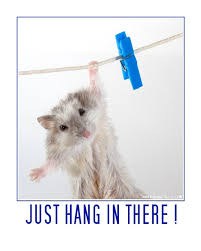
Hang in There!

download

May has snuck up on me and the academic year is quickly coming to an end. I am feeling a bit rushed and overwhelmed as I try to wrap up everything for school. I have a feeling I am not the only that is feeling like this. I wanted to encourage you today to hang in there. Finish strong and keep on the course you have made. You will feel good knowing you accomplished the goals you set.  Here are a few ideas to help.

Take one day at a time. You still time to finish school so don’t panic if you feel that you aren’t where you want to be.  what is it that you can do today? What things do you want your children to learn t-o-d-a-y?

Set manageable goals. What 3 things do you want your children to do in terms of learning? Think of it like this… Today we are going to 1) review the 3’s multiplication tables; 2) read a story and concentrate upon accuracy;  3) observe the clouds and write a poem about them.

Stick with it. I don’t know about you, but Spring Fever is a real thing in my life. I am antsy to get outside and do anything but school. I am sure your kids are right there with me! lol So, I try to think of the day and break it up into smaller segments.  Write lesson plans and then take a 10-minute outdoor break. Grade papers for an hour and then take a 5-minute break to get some fresh air, etc. I find that if I set smaller tasks in front of me with some reward of being outside for a bit of fresh air on these beautiful days I have a better outlook on things.

Take advantage of the weather. No matter where you live, we have great days to be outdoors. Why not do a nature study on plants and animals? Grab your phone, take pictures of cool things you find. You can show the pictures when you return and have your children write a story about what you saw and did.  Let the kids draw animals or plants they see and do some research on them for another day of school.

Soon it will be summer, so hang in there! Have a great week! ~Lisa~


Safety Ideas for Severe Weather

Screen Shot 2019-04-29 at 8.52.14 PM.png

Spring is upon us and the chance of severe weather is a possibility. So, why not take the time to prepare your family in case the electricity goes off or you need to go to the basement. I think being prepared ahead of time will be less stressful AND you can teach safety as well.

Make an emergency kit. Gather supplies and place them in a plastic bin with a lid. If you find you need to be in the basement waiting out a storm you can pass the time knowing that you have some supplies for the family. FEMA recommends the following items:

  • Waterproof matches
  • Candles
  • Protein bars or snack crackers
  • Water – one gallon of water per person per day for at least three days, for drinking and sanitation
  • Food – at least a three-day supply of non-perishable food
  • Battery-powered or hand crank radio
  • Flashlight
  • Extra batteries
  • First aid kit
  • Whistle to signal for help
  • Dust mask to help filter contaminated air and plastic sheeting and duct tape to shelter-in-place
  • Moist towelettes, garbage bags and plastic ties for personal sanitation
  • Wrench or pliers to turn off utilities
  • Manual can opener for food
  • Local maps
  • Cell phone with chargers and a backup battery
  • Plasticware, paper plates
  • A change of clothing for each person
  • Personal care products (toothbrush, deodorant, etc.)
  • Plastic bags- quart and gallon size
  • Add a deck of cards or a travel game to the bin for you to play in case you need to be in the room for a long period of time.
  • Have a blanket and pillow and/or a sleeping bag so that you can be comfy.

School Ideas (safety and other subjects):

  • Create the emergency kit together. Have your child gather the clothes, food supplies, etc.
  • Discuss the importance of seeking shelter during a storm.
  • Show your son or daughter where a good place would be to go to in the event of a severe storm. Practice going there and turning off the lights to simulate failed electricity.
  • Have you or your child look at a map to locate tornado alley.
  • Identify cloud types
  • Discuss what creates a thunderstorm, a severe storm, and a tornado

Be Safe! ~Lisa~