Archive by Author | Lisa McAfee

Chores: Teaching Responsibility

yellow-latex-gloves-on-dish-rack-4039452.jpgChores serve several purposes. One way is to have some additional help with household and yard duties. Another is listening to instruction and following directions. And, the last but what I feel is the best purpose, is they help teach responsibility.

Did you ever want a pet when you were growing up? Do you remember one of the first things you would say after you asked? I will feed it and clean up after it. Ah! You were using your powers of persuasion to make the argument that you would be responsible. Did it work? 🙂

Children can begin at a young age to help with chores around the house. Always show your child how you would like the chore to be done and follow up with them afterwards to see that it was done according to your directions and satisfaction. Here are some ideas to consider, but make a list based upon the capability of your child.

Ages 2-3

  • Pick up toys, books
  • Put dirty clothes in laundry
  • “Wash” dishes
  • “Sweep” floor

Ages 4-5

  • Help make bed
  • Fill empty pet bowl (water, food with supervision)
  • Help set the table
  • Match socks

Ages 6-7

  • Straighten bedroom
  • Make bed
  • Get the mail
  • Put away folded laundry
  • Collect garbage from around the house
  • Help set the table

Ages 8-9

  • Pick up room, things around the house
  • Fold laundry
  • Set the table
  • Make simple lunches (sandwiches; humus and veggies, etc.)
  • Bake desserts (with supervision)
  • Load/ unload dishes in dishwasher
  • Put away dishes

Ages 10-11

  • Be responsible for personal items (Pick up, put away)
  • Iron clothes
  • Rake leaves
  • Collect library books and get ready for returning
  • Clean bathroom
  • Load washing machine (with supervision)
  • Put clothes in dryer
  • Take out and bring back garbage cans on trash day

Ages 12-13

  • Keep room tidy
  • Change bedsheets
  • Take showers regularly (For you mothers of boys, I had to put that one in!)
  • Mow the lawn
  • Watch younger siblings for short periods of time
  • Prepare basic meals
  • Unload washing machine and dryer
  • Vacuum
  • Per care (walking dog. grooming cat, etc.)

Ages 14+

  • Do all chores from younger ages
  • Watch siblings
  • Check automobile’s oil, change tires
  • Bring in and put away groceries
  • Do family’s or own laundry
  • Mop the floor
  • Create one meal a week.

Of course, you can do other things with chores.

  • Add or delete what chores that work for your family. The above lists were just to give you an idea of things your child could do. Many of these chore options were taken from the Focus on the Family’s website.
  • You create cards with chore descriptions for easy reference once you have instructed and overseen chores.
  • You can create a simple chore chart with the name of the chore on the left-hand side and the days of the week that you want them completed on the right-hand side.
  • You can have your child earn some cash by giving them a weekly allowance. How much to pay then is up to you. This would be a terrific finance lesson on saving, spending, giving to the church or another charitable organization.

Have a great week! ~Lisa ~ 

Project-Based Learning for High School

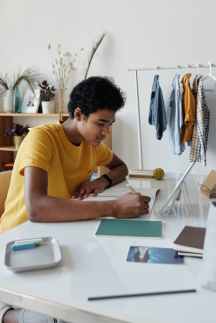
boy wearing yellow shirt while writing on white paper

Photo by Julia M Cameron on Pexels.com

Not everyone learns best by the traditional means of reading a textbook, and some subjects are better through hands-on experiences. I happened across a website that offers classes in the format of projects that are live, virtual project-based classes.

Sora offers a wide variety of work + study projects that students are doing with businesses and organizations. Pupils get the opportunity to collaborate with other  classmates and professionals to build a portfolio of real life experiences. High school credit is also given when students complete the class. Currently there are three tracks that are available: Content Writing, Graphic Design, and Video Editing, with plans to offer more areas of study.

Online classes are 5 Days/Week from 9:30AM-1:00PM EST and the student must complete 180 hours for each class.  A pupil can be enrolled in either their full-time program ($300-$800 per month) or their part-time program ($250-$500 per month). Some other nice features are grades and transcripts are given for completed classes and there are counselors to help guide your student with the graduation process. I think is a great help and takes the pressure off of you to decide credits given, classes to take, etc.

Sora offers an Open House for you to be able to see what it would be like to attend. This would be a way to have a first-hand experience of the program. Your student will participate in workshops and meet some of the students and staff. Here is the link for the Open House: CLICK HERE

Have a great week! ~Lisa~


NASA Image of the Day

Do you have any space enthusiasts in your house? With amazing pictures and interesting headlines, NASA Image of the Day is just the resource to inspire your want-to-be astronaut or astronomer. There are pictures of current discoveries as well as pictures from past space programs. Here is just a sampling of what is shown on the website.

Screen Shot 2020-06-15 at 6.25.42 AM

The image below shows you the information that accompanies each daily photograph.

Screen Shot 2020-06-15 at 6.31.03 AM

 Reach for the stars!  ~Lisa~ 

Homeschool Planet

downloadI have heard of Homeschool Planet over the years and always intended to check it out. I wish I had done this earlier because this looks like a great resource for you. Homeschool Planet has taken the unenviable task out of lesson planning and record keeping, giving you more time to spend teaching and being with your family. When you purchase the lesson plan bundle it will automatically schedule your whole year or semester for you. Right there is something to consider and what a time-saving feature this is for you! The lesson plan package gives you the publisher- recommended course of study; assignments with boxes to check off to show completed work; and automatic lesson updates if you need to change things. Other features include:

  • “Daily Digest” email reminders to help you and your child stay on track
  • Grade your student’s work to recognize or reward completion.
  • Track attendance for states where this is required.
  • Generate reports and reminders

There are so many subject areas to choose from (language arts, science, math, history, art, unit studies, and other subject areas). You can see if you like it since they have a one week free trial to see if you like it. HOMESCHOOL PLANET

Have a great week! ~Lisa~

All views are my own and I was not asked to review this nor do I receive any compensation. I just thought this would be helpful to you. 🙂 


Having Healthy Kids

Screen Shot 2020-06-01 at 7.15.25 AM

Being healthy is important in order for us to live life to its fullest. It is also a subject that we are required to teach as Ohio homeschool parents. 🙂 Today I want to focus on how to help our children stay mentally healthy. The news coverage of Covid-19 and now the unrest of the nation affects all of, even our children. So, how do we help them not be fearful when they hear or experience things that are sacry?

Let them know they do not need to be afraid. As a parent, I know you would do anything in your power to keep your son/ daughter safe. Reassure him/her of that and they can come to you whenever they feel scared. I know we tell our children that when situations arise, but let them know this often. I have to admit, I don’t always like being the grown-up and I would rather not be the “strong one”. However, if I can bring peace and stability to my children and now grandchildren, I will gladly be the person who says it’s going to be okay. My hope and peace are in things eternal.

What are ways you can help your child overcome fear?

  • Talk about what is scaring them. Sometimes we think we know what it is that is causing our children to be afraid, but it might not be that at all. It will help them to voice their concerns.
  • Validate them and their feelings. It doesn’t help to just dismiss what your daughter or son is afraid of, let them know it’s okay to be scared. Fear is a good thing when it is not blown out of proportion. You have taught your son not to play with matches because it is harmful and that is a healthy parameter to have in our lives.
  • Reassure them that you are there for them. When I am scared I talk to my husband. He doesn’t always have to offer a solution, but just a listening ear helps me to be able to talk about what is causing me to be afraid.
  • Sit close to your child, hug them. Sharing something that is scary makes you feel vulnerable. Just being close will help your child feel that security they need. If you don’t think they would be open to a hug, give them a pat on the hand, a squeeze on their shoulder or a quick side-hug. I can’t help it, I give my family hugs even when they are out of sorts because I want them to know I care and that’s one way I show them.
  • Write a note of encouragement. It’s nice to have something for your child to refer back to after you have talked. Maybe your child doesn’t want to talk about what is bothering them. They will know you love them and you are there for them if you write a note. It doesn’t have to be long or mushy. lol  Just an, ” I love you and am here for you” is all that is needed sometimes.
  • Check back at a later date. See how your son/ daughter is doing. It is reassuring to  know you haven’t forgotten.  If they are still fearful and it is getting in the way of their everyday activities, you may want to talk with someone like  a doctor or counselor about it.

Have a great week! ~Lisa~